


The Comptroller-General of the Nigeria Customs Service (NCS), Adewale Adeniyi, has pledged the Service’s full support for Nigeria’s ambition to build a $1 trillion economy, declaring that the target is achievable through effective implementation of policies and economic reforms.
Adeniyi said the country must move beyond ambitious plans and political rhetoric to deliver concrete, measurable results capable of transforming the economy.
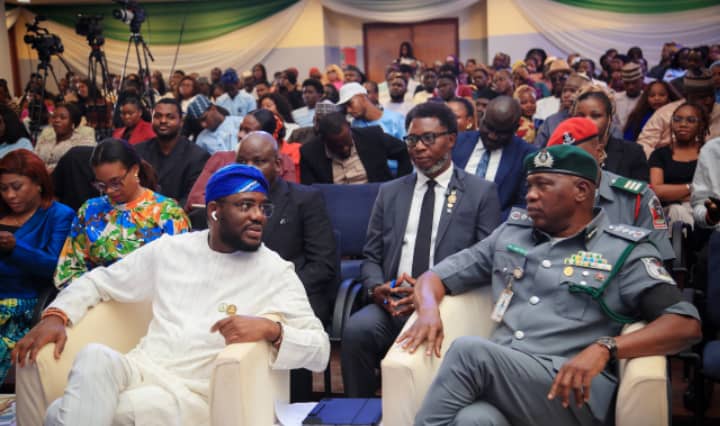
The Customs boss spoke while delivering a keynote address at the New Nigeria Festival held at the Shehu Musa Yar’Adua Conference Hall, Abuja.
He stressed that achieving the $1 trillion economic target required deliberate action, effective coordination and commitment from government institutions, businesses and citizens.
According to him, the Customs Service has begun taking practical steps to support the national economic ambition through its ongoing modernisation reforms.
He listed the deployment of the B’Odogwu platform, the Authorised Economic Operator (AEO) programme and the Advance Ruling mechanism among the initiatives designed to facilitate legitimate trade, improve predictability in the trading environment and strengthen revenue generation.
“Execution is nothing if it is not concrete. We have to move from ideas to action and ensure that whatever we plan translates into results. That is how we can begin to see the kind of transformation we are talking about,” Adeniyi said.
He noted that the Customs Service occupied a strategic position in Nigeria’s economic transformation because of its responsibilities in revenue collection, trade facilitation and border management.
The CGC explained that efficient customs administration could support businesses by making legitimate trade easier, improving certainty for traders and creating an environment conducive to economic growth.
He, however, cautioned that the responsibility for achieving the $1 trillion economy could not be left to government agencies alone.
Adeniyi called for stronger collaboration among public institutions, the private sector and citizens, stressing that all stakeholders must take ownership of the country’s economic aspirations.
He maintained that the success of the target would depend on the ability of institutions to translate policies and strategies into practical outcomes that could be measured.
The Customs chief reaffirmed the Service’s commitment to implementing reforms that would improve trade processes, enhance revenue collection and contribute to Nigeria’s broader economic development.
He urged stakeholders to prioritise implementation and accountability, saying the country’s economic ambitions could only become reality when plans were backed by concrete action.