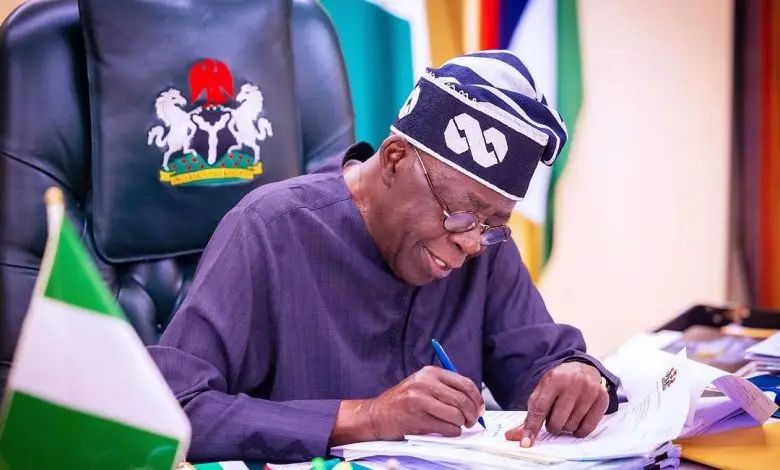


Fresh controversy has trailed the proposed 2026 Appropriation Bill as a civil society organisation accused key officials in Nigeria’s finance team of undermining the implementation of the 2024 and 2025 budgets, thereby weakening public confidence in the new fiscal proposal before the National Assembly.
The National Vanguard for Accountable and Transparent Democracy (NVATD), during a protest at the National Assembly in Abuja, alleged that poor capital releases under the supervision of the Minister of Finance, Mr. Wale Edun; the Minister of State for Finance, Dr. Doris Uzoka-Anite; and the Accountant-General of the Federation, Mr. Shamsedeen Babatunde Ogunjimi, have stalled government performance across critical sectors.
Secretary General of the group, Dr. Harry Linus, claimed that the alleged failure to properly implement previous appropriations has created a ripple effect now casting doubt on the credibility of the 2026 budget.
According to him, the situation was highlighted by the recent remarks of the Minister of Health and Social Welfare, Prof. Muhammad Ali Pate, who lamented the low release of funds under the 2025 health budget while defending his ministry’s estimates before lawmakers.
Dr. Linus argued that if contractors handling projects under the 2024 budget had been paid — reportedly to the tune of over ₦4 trillion — implementation of the 2025 budget would have been stronger, lending greater credibility to the 2026 proposal.
“The projects in the 2024 budget were executed by contractors, many of whom borrowed from banks. Those projects were commissioned, yet payments have not been made. Without servicing the 2024 budget, fresh contracts under the 2025 appropriation cannot move forward,” he said.
The group alleged that the funding gaps have contributed to challenges across sectors, including health and education, and called for greater accountability within the nation’s fiscal management system.
NVATD urged the National Assembly to intensify oversight and consider withholding approvals for agencies that failed to effectively implement previous budgets, except in essential sectors such as health, education and security.
The protest followed Prof. Pate’s disclosure before the House Committee on Healthcare Services that only ₦36 million — from overhead allocations — had been released out of the ₦218 billion appropriated for the health ministry in the 2025 budget.
Pate attributed the weak capital budget performance to cash flow constraints and systemic bottlenecks, particularly the bottom-up cash planning model operated by the Office of the Accountant-General of the Federation. He noted, however, that personnel costs were fully released and utilised.
As debate over fiscal discipline intensifies, the allegations have placed renewed scrutiny on Nigeria’s budget implementation framework, raising broader questions about accountability, coordination among economic managers and the credibility of the annual appropriation process.
2026 Budget Under Fire as CSO Accuses Finance Team of Crippling 2024, 2025 Appropriations