


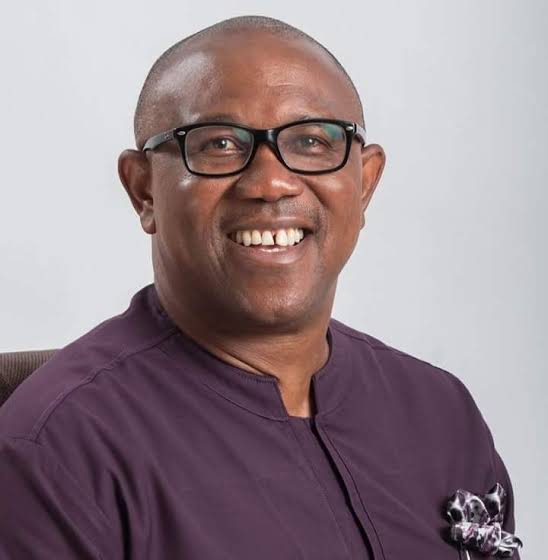
Chief Chekwas Okorie, National Chairman of the Igbo Agenda Dialogue (IAD) and founding father of the All Progressives Grand Alliance (APGA), has warned that Peter Obi’s electoral strength could pose a fresh challenge to President Bola Tinubu in the 2027 presidential election.
Okorie argued that Obi’s performance in the 2023 election had exposed the limitations of conventional political structures, demonstrating that popular support could challenge the influence of established parties and powerful political figures.
He also criticised Anambra State Governor, Professor Chukwuma Soludo, over his reported political differences with Obi, urging him to focus on the challenges confronting his administration rather than engage in what he described as a personal vendetta.
Speaking on the political landscape ahead of the 2027 general election, the IAD chairman said the next presidential contest would test whether established political structures could continue to determine electoral outcomes or whether voters would increasingly prioritise candidates of their choice.
According to him, Obi secured approximately 6.1 million votes in the 2023 presidential election despite the relatively limited political infrastructure of the Labour Party at the time.
He said the outcome challenged the long-held assumption that extensive party structures and the backing of influential political figures were indispensable to winning presidential elections.
Okorie maintained that the political circumstances that shaped the 2023 election might not be repeated in 2027, making the next contest a fresh test for Tinubu and other presidential aspirants.
Okorie Tackles Soludo Over Obi
On Soludo’s reported comments about Obi and the unfolding political debate, Okorie said political disagreements should not distract attention from the broader issues shaping the country’s future.
He described Soludo and Obi as political siblings who emerged from APGA, arguing that their shared political history should encourage a more constructive approach to their differences.
The APGA founding father also recalled Soludo’s political association with the Peoples Democratic Party before he joined APGA, noting that movement across party lines was a familiar feature of Nigerian politics.
He questioned Soludo’s approach to the political debate surrounding Obi, particularly given his description of the governor as one of the early political leaders to endorse Tinubu ahead of the 2023 presidential election.
Okorie cited the Osun State governorship election as an example of how voters could reject the influence of federal power and prominent political figures when choosing their preferred candidates.
He argued that the outcome demonstrated that political influence and established structures did not automatically translate into electoral victories.
The IAD chairman also challenged Soludo to demonstrate how his political influence could improve Tinubu’s electoral performance in Anambra State and the South-East in 2027.
He recalled that Tinubu secured approximately 5.3 per cent of the votes cast in the South-East during the 2023 presidential election, questioning whether the governor could significantly improve that performance in the next contest.
Okorie further warned that the outcome of the next Anambra State House of Assembly election could have implications for Soludo’s relationship with the legislature during the remainder of his tenure.
‘Igbo Presidency Cannot Be Ruled Out’
On arguments that an Igbo person could not become Nigeria’s president, Okorie dismissed such claims as historically uninformed, insisting that Nigeria’s political history did not support ethnic restrictions on presidential ambition.
He urged those making such assertions to examine the First Republic, when political alliances and electoral calculations were shaped by several considerations beyond ethnic identity.
According to him, the National Council of Nigeria and the Cameroons (NCNC), associated with the late Dr. Nnamdi Azikiwe, enjoyed substantial electoral support during the period.
He argued that political decisions at the time were also influenced by considerations of national stability and the formation of a federal government.
Okorie maintained that historical political choices should not be interpreted as evidence that the Igbo people were unwilling to support candidates from other ethnic groups or that candidates of Igbo origin could not secure nationwide support.
He also cited the election of a Fulani politician by voters in Enugu in 1960 as an example of the willingness of voters in the region to support candidates from outside their ethnic group.
According to him, the politician was subsequently returned to the legislature as an independent candidate after his party declined to nominate him for another term.
Okorie said the example reinforced his position that electoral support should not be determined solely by ethnic identity.
He insisted that every Nigerian who meets the constitutional requirements should be free to aspire to the presidency, adding that the legitimacy of any president should derive from constitutional provisions and the votes of citizens.
Wike, Rivers Politics and 2027
Okorie also addressed comments attributed to the Minister of the Federal Capital Territory, Nyesom Wike, concerning the 2023 presidential election and political developments in Rivers State.
He argued that the 2023 election exposed the limitations of conventional political structures, pointing to Obi’s performance as evidence that voters could support a candidate without the extensive machinery traditionally associated with major parties.
The IAD chairman said political alliances and the contributions of influential individuals should be considered when assessing Tinubu’s victory in 2023.
He particularly highlighted the support base associated with former President Muhammadu Buhari as an important factor in Tinubu’s electoral performance in the North.
Okorie questioned the tendency to attribute the outcome solely to political strategy, arguing that the contributions of other political actors and voting patterns across the regions deserved consideration.
He said the 2027 election would provide an opportunity to determine whether the alliances that shaped the previous contest could be sustained under different political circumstances.
Governors Cannot Dictate Presidential Votes
On the influence of South-East governors and the position of Ohanaeze Ndigbo, Okorie argued that governors should not automatically be regarded as the decisive forces in presidential elections.
He acknowledged that governors could exercise considerable influence over local political contests but cautioned against assuming that they could dictate how citizens would vote in general elections.
The IAD chairman also expressed agreement with Ohanaeze Ndigbo on issues concerning the political interests and aspirations of the Igbo people.
He disclosed that he had been associated with the organisation since 1976, when he joined as its youngest member, describing his longstanding involvement as a source of insight into the political history and concerns of the Igbo community.
Okorie said discussions about the 2027 presidential election should be guided by historical facts, electoral realities and the democratic rights of Nigerians to choose their leaders.
He maintained that neither ethnic prejudice nor assumptions about the political preferences of particular regions should determine who could aspire to lead Nigeria.