


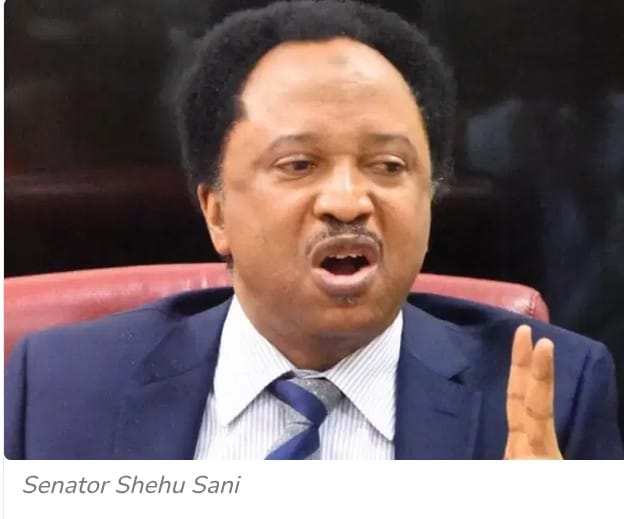
Former Kaduna Central Senator, Shehu Sani, has criticised former Vice President Atiku Abubakar over his promise to restore fuel subsidy if elected president in 2027, describing the pledge as impracticable and a ploy to win votes.
Sani, who is seeking the Kaduna Central Senatorial seat, said Atiku’s position amounted to a political “Trojan horse”, arguing that it contradicted the former vice president’s previous stance on fuel subsidy removal and economic reforms.
Speaking with journalists at the weekend, Sani accused Atiku of changing his position for electoral advantage and urged Nigerians to scrutinise the promise carefully.
“What he is saying is outright deception of Nigerians,” Sani said.
The former lawmaker argued that Atiku had historically supported economic policies associated with the World Bank and International Monetary Fund, including currency devaluation, privatisation and the removal of petroleum subsidy.
Sani said it was therefore questionable for Atiku to now promise a return to subsidy, insisting that Nigerians should not take the pledge at face value.
He maintained that restoring subsidy would be financially difficult for the country, recalling that Nigeria had spent trillions of naira on petroleum subsidy while the system was also allegedly exploited through fuel smuggling and other fraudulent practices.
“For a number of reasons, what he said is virtually impracticable,” he said.
According to Sani, the removal of subsidy has created additional resources for state and local governments to finance infrastructure and essential services.
“Now, the removal of subsidy has also been able to provide resources for sub-nationals, for state governments and local governments, for them to be able to use for roads, schools and hospitals,” he said.
He also questioned the sustainability of subsidy payments at a time when a substantial portion of government revenue is being committed to debt servicing.
Rather than returning to subsidy, Sani urged political leaders to prioritise the rehabilitation and expansion of Nigeria’s refineries to reduce dependence on imported petroleum products.
“If any politician makes pledges to revamp our refineries, so that we can refine our own crude oil, then he is making sense,” he said.
The former senator further argued that bringing back subsidy would not necessarily reduce the prices of goods and services, warning that it could create further distortions in the economy.
“And let us not deceive ourselves. The return of subsidy will not bring down the prices of commodities. It will simply distort the economic stability of our country,” Sani stated.
On the 2027 general election, Sani called on political parties and presidential candidates to focus their campaigns on policies, programmes and issues that directly affect Nigerians.
He warned against the use of ethnic and religious sentiments to mobilise voters, stressing that Nigeria’s history of conflicts should discourage politicians from deploying divisive rhetoric.
Sani also faulted opposition politicians who, according to him, were seeking validation from United States President Donald Trump and the European Union in their efforts to challenge President Bola Ahmed Tinubu.
He described the approach as unhealthy for Nigeria’s democracy and sovereignty.
“The idea of seeking easy route to power by striving towards seeking validation of President Donald Trump and the EU is not helpful to our democracy,” he said.
The former senator urged opposition parties to concentrate on winning the confidence of Nigerian voters rather than seeking foreign intervention in Nigeria’s political affairs.
“Opposition should concentrate on issues and make themselves available and appealing to the electorate rather than trying to criminalise the President or criminalise his political ambition or seek President Trump or the EU to disqualify him,” he said.
Sani maintained that Nigeria’s political battles should be settled through democratic institutions and the ballot box, rather than through ethnic or religious mobilisation or appeals to foreign powers.