


Maiduguri, Nigeria — November 11, 2025
Suspected Boko Haram fighters launched a brazen late-night raid on a remote Christian village in Nigeria’s restive northeast, torching a church and wounding two residents before being driven back by troops, local sources said Monday.41
The assault on Pemi village in Chibok Local Government Area of Borno State—infamous as the site of the 2014 mass abduction of 276 schoolgirls—unfolded around 10:30 p.m. on Saturday, November 8, according to counterinsurgency expert Zagazola Makama and a local resident.12 No fatalities were reported, a small mercy in a region scarred by the jihadist group’s decade-long insurgency.
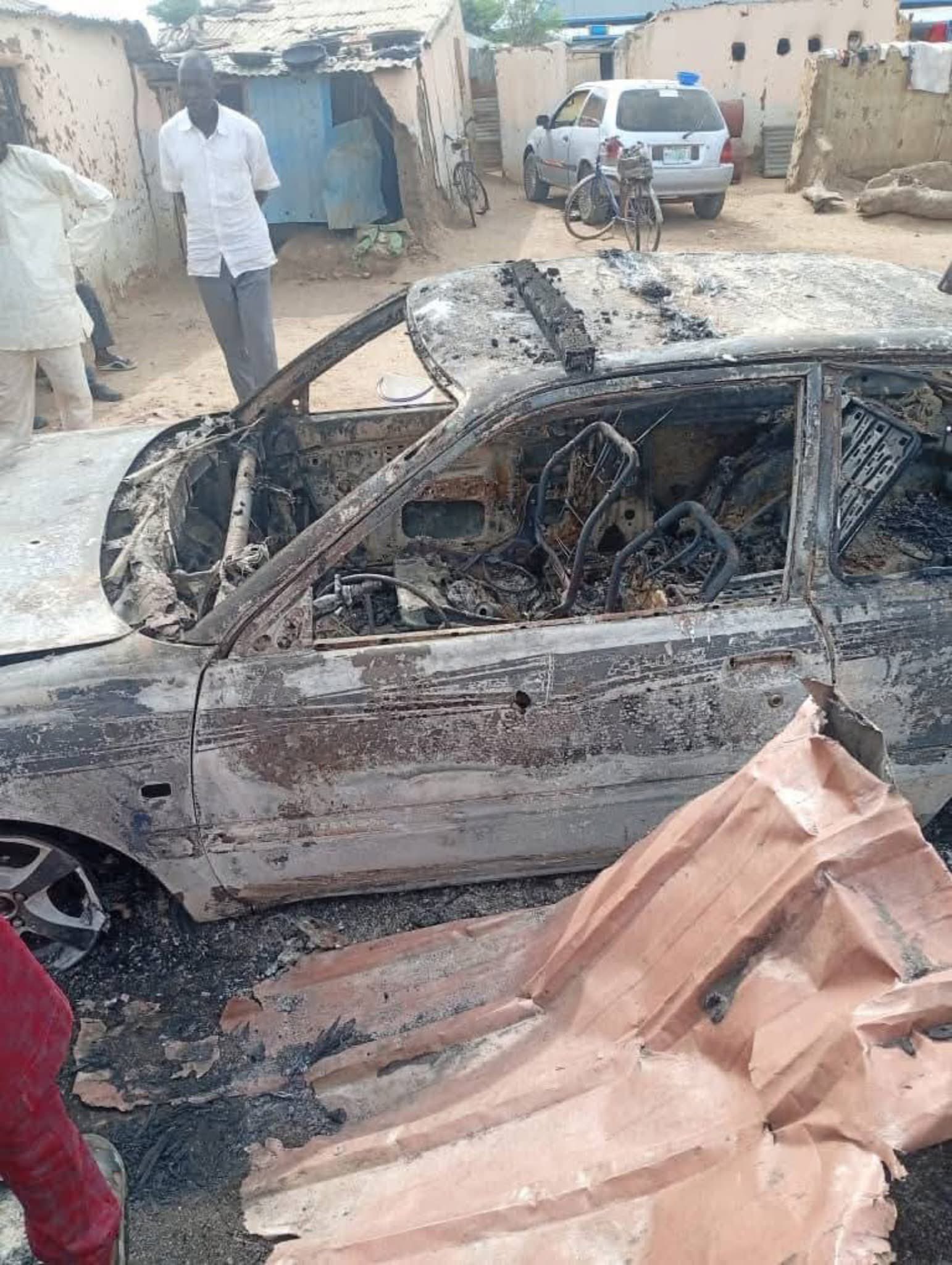
Zariyi Yusuf, a Pemi resident, posted photos on X showing the charred remains of the Evangelical Church Winning All (EYN) building, alongside smoldering homes, shops, and vehicles.2 “This is Chibok, yesterday (on November 8). Boko Haram took down a Church and it’s not even making news. Glory to God, no lives were lost,” Yusuf wrote, capturing the community’s mix of relief and frustration.4
Makama, a respected analyst on Lake Chad Basin security, detailed how the gunmen—suspected Boko Haram operatives—fired sporadically into the village before troops from Operation Hadin Kai, Nigeria’s multinational counterterrorism force, intervened alongside the Civilian Joint Task Force (CJTF) and other agencies.1 The clash forced the attackers to retreat, but not before Mallam Bukar, 30, sustained a gunshot wound to his left leg and Yama Sumai, 40, was shot in his right hand.
The victims were airlifted to General Hospital Yola in neighboring Adamawa State, where medical staff confirmed they are “responding well” to treatment, Makama added in his X post, which garnered hundreds of engagements.10
This incident marks yet another blow to Chibok, a predominantly Christian enclave that has endured repeated Boko Haram incursions since the group’s infamous April 2014 kidnapping, which thrust the conflict into global headlines. Over 90 of those girls remain unaccounted for, and the area has seen a surge in attacks this year, including a May assault that killed 14 and razed homes.23 Borno Governor Babagana Zulum condemned similar strikes in May, blaming both Boko Haram and its splinter, the Islamic State West Africa Province (ISWAP), for compromising military outposts and terrorizing civilians.2122
The raid comes at a precarious moment for Nigeria-U.S. relations, just days after President Donald Trump designated Nigeria a “Country of Particular Concern” for alleged religious freedom abuses, citing thousands of Christian deaths attributed to Islamist militants.4 Trump’s October 31 statement referenced Open Doors data showing Nigeria accounting for over 70% of global faith-based Christian killings in 2024—more than 3,100 victims—and warned of aid cuts or even military action if the violence persists.4
Presidential aide Daniel Bwala responded on November 10 by expressing optimism for an imminent Tinubu-Trump summit to “clarify misunderstandings” and highlight shared anti-terrorism goals, including U.S. arms sales that have bolstered Nigeria’s fight against Boko Haram.4 Yet, with insurgents like Boko Haram—whose name translates to “Western education is forbidden”—escalating tactics in 2025, including drone strikes and alliances with bandits, experts warn the group’s grip on Borno remains firm.1317
Local voices, including a November 9 X post from a Chibok resident pleading for “immediate security intervention,” underscore the human toll: fear, displacement, and a plea to #EndTerrorNow.3 As the Nigerian military claims successes in repelling attacks, the cycle of violence in the northeast—responsible for over 35,000 deaths since 2009—persists, testing both domestic resolve and international partnerships.
The Theatre Command of Operation Hadin Kai has not issued an official statement on the Pemi raid as of Monday afternoon, but sources indicate heightened patrols in Chibok to prevent reprisals. For residents like Yusuf, the burned-out church stands as a stark reminder: in Chibok, survival is news enough.

