


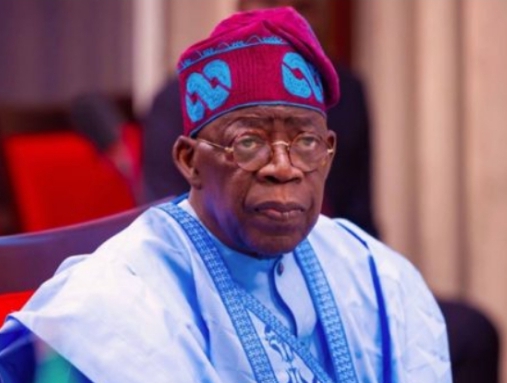
President Bola Ahmed Tinubu has declared security emergencies in high-risk parts of the country, vowing to end attacks on civilians and religious communities through intensified military and intelligence operations.
The President has approved expanded joint security operations and sustained deployment of forces to flashpoint areas repeatedly hit by violence, kidnappings and attacks on worshippers.
Backing the President’s directive, the National Security Adviser (NSA), Mallam Nuhu Ribadu, said the measures were not mere words but actions already being implemented on the ground.
Speaking on Thursday at the inauguration of the US-Nigeria Joint Working Group in Abuja, Ribadu announced the expansion of early-warning and rapid-response systems, alongside the creation of a national database to track deaths and casualties from violent incidents.
According to him, the initiative will strengthen evidence-based decision-making, improve accountability and sharpen Nigeria’s overall security response.
“Investigations and prosecutions related to attacks on religious communities have been intensified to ensure violence is met not only with force, but with justice,” Ribadu said.
He stressed that protecting all Nigerians—regardless of faith—remains a core priority of the Tinubu administration.
“Nigeria is a plural society. Any violence framed along religious lines is treated as an attack on the Nigerian state itself,” he declared.
Ribadu explained that the government’s approach combines security operations, legal action, humanitarian safeguards and transparent communication to rebuild public trust.
He urged Nigerians to judge progress by long-term improvements rather than isolated incidents, noting growing institutional capacity to prevent, counter and punish violence.
The NSA also highlighted broader US-Nigeria cooperation covering democracy, rule of law, regional stability and counter-terrorism, warning that extremists must not be allowed to exploit social or religious divisions.
US Under Secretary for Political Affairs, Allison Hooker, described the partnership as grounded in shared interests in security, trade, energy and regional peace.
However, she expressed concern over the reported abduction of more than 170 Christians in Kaduna State on January 18, urging Nigeria to strengthen protection for freedom of worship.
Hooker recalled former US President Donald Trump’s October 31, 2025 designation of Nigeria as a Country of Particular Concern, noting that meaningful progress has since been made in protecting vulnerable groups.
“I am here to expand this partnership and deepen our joint efforts against violence,” she said.
Minister of Information and National Orientation, Mohammed Idris, said the dialogue reflected deepening strategic ties between both countries, built on trust and shared responsibility for civilian safety and religious freedom.
He cited improved intelligence sharing and coordination between US AFRICOM and Nigerian forces, particularly in operations such as Operation Hadin Kai and Operation Fasan Yamma.
Idris also disclosed US commitments to deliver long-pending military equipment, including drones, helicopters and spare parts, as well as offers of surplus defence hardware to support Nigeria’s security operations.

