

The Nigeria Correctional Service (NCoS) has disclosed that 64 per cent of inmates across custodial centres nationwide are awaiting trial, a development that continues to fuel overcrowding and strain correctional facilities.
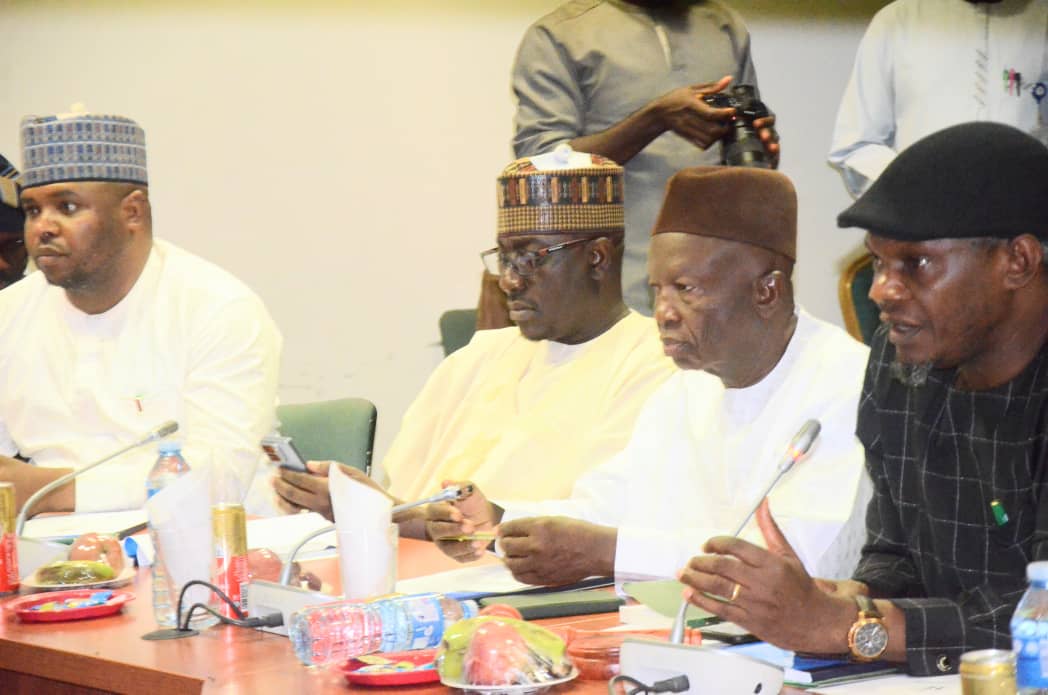
Controller-General of Corrections, Mr. Sylvester Nwakuche, made the revelation on Wednesday while defending the Service’s 2025 budget performance and presenting its 2026 estimates before the House of Representatives Committee on Reformatory Institutions in Abuja.
He stated that as of February 9, 2026, the total inmate population stood at 80,812. Of the figure, 51,955 are awaiting trial, 24,913 are convicted, while 3,850 fall under other detention categories.
“The high proportion of awaiting trial inmates underscores the urgent need for reforms in our correctional system,” Nwakuche said, stressing that the Service is not only responsible for custody but also for the rehabilitation and reintegration of inmates into society as law-abiding citizens.
On the 2025 budget performance, the Controller-General disclosed that the Service received a total allocation of ₦184.63 billion covering personnel, overhead and capital expenditure.
Out of the ₦124.31 billion approved for personnel costs, ₦112.68 billion — representing 90.6 per cent — was released and fully utilised for salaries, pensions and health insurance under the Integrated Payroll and Personnel Information System (IPPIS).
Recurrent overhead releases stood at 73.7 per cent. Of the ₦38.03 billion allocated, ₦27.28 billion was expended on inmate feeding, leaving ₦10.75 billion outstanding. Operational expenses, including staff training, court duty vehicles, electricity, security and facility maintenance, amounted to ₦6.49 billion.
Capital funding recorded the weakest performance. Only ₦3.22 billion, representing 22.2 per cent of the ₦14.50 billion appropriated, was released, leaving ₦11.27 billion unreleased.
Nwakuche emphasised that capital funds are critical for constructing and rehabilitating custodial facilities, procuring operational vehicles and security equipment, deploying ICT infrastructure and biometric inmate registration systems, as well as supporting prison farm operations.
Although not primarily a revenue-generating agency, the Service realised ₦84.65 million as internally generated revenue in 2025. It currently has 33,024 staff nationwide.
For 2026, the NCoS proposed a budget of ₦198.85 billion. The breakdown includes ₦138.30 billion for personnel costs and ₦50.40 billion for recurrent overhead, with ₦14.83 billion earmarked for feeding an estimated 91,100 inmates.
The Service also requested an additional ₦90.38 billion to boost capital allocation to ₦100.50 billion. Furthermore, it sought approval to settle ₦30.38 billion in promotion arrears and ₦25.16 billion owed to contractors.
In his remarks, Chairman of the House Committee on Reformatory Institutions, Hon. Chinedu Ogah, underscored the need for urgent reforms, improved infrastructure and presidential assent to the Correctional Service Trust Fund Bill.
“Our core duty is the budget defence of the 2026 Appropriations,” Ogah said, adding that enhanced funding and decentralised infrastructure would strengthen rehabilitation, vocational training and agricultural programmes within custodial centres.
He also highlighted ongoing efforts to expand educational opportunities for inmates, noting that about 10 study centres of the National Open University of Nigeria have been established in correctional facilities nationwide, offering free academic programmes.
Ogah called for greater private sector involvement and urged the National Security Adviser to provide operational support to the Service, pointing out that while other security agencies handle arrests and prosecution, the correctional authorities bear responsibility for custody, rehabilitation and reintegration.
The committee is expected to review the Service’s 2025 performance in detail before concluding deliberations on the proposed 2026 budget.
64% of Nigerian Inmates Await Trial as Correctional Service Seeks Urgent Reforms