


…Imagwe Demands Details of New Proposal, Says Nigerians Deserve Policy Clarity
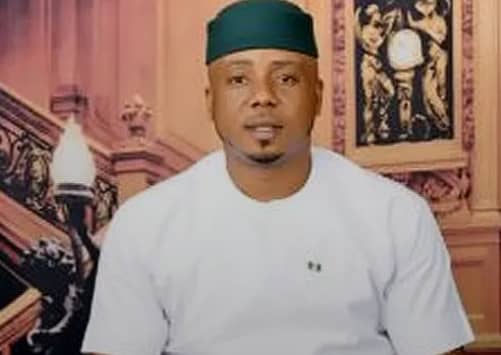
Former National President of the National Association of Nigerian Students (NANS) and former Senior Special Assistant to President Goodluck Jonathan on Youth and Student Matters, Comrade Jude Imagwe, has challenged former Vice President Atiku Abubakar to explain the principles behind his changing positions on major national issues, particularly fuel subsidy.
Imagwe, a public affairs analyst and governance expert, said there was nothing wrong with a political leader changing his position when circumstances or evidence changed, but insisted that such a shift must be properly explained to Nigerians.
In a commentary posted on his Facebook and X accounts on Friday, Imagwe argued that Atiku, having served as vice president for eight years and contested the presidency several times, should be subjected to a higher standard of policy consistency, judgment and accountability.
He said Atiku’s latest position on fuel subsidy deserved serious policy debate rather than being dismissed as a simple attempt to restore the old subsidy regime.
According to Imagwe, Atiku had for years been associated with market-oriented economic reforms and the removal of petrol subsidy.
He noted that as recently as May 2026, Atiku reportedly described subsidy removal as “inevitable and long overdue,” while criticising the Tinubu administration over the manner in which the policy was implemented and the hardship that followed.
Imagwe, however, said Atiku had more recently indicated that he would restore subsidy if elected president in 2027, arguing that savings from the current policy had not sufficiently translated into improvements in education, healthcare, security and poverty reduction.
The former NANS president acknowledged Atiku’s clarification that his proposal was different from the old import-subsidy arrangement.
“His newly outlined proposal is described as a departure from the old import-subsidy regime: a targeted production subsidy for domestic refineries, subject to a predetermined fiscal ceiling and independent auditing. That is a policy proposition worthy of debate,” he said.
Imagwe said the debate should therefore focus on the details of the proposed policy, including what changed in Atiku’s economic thinking, why production subsidy is now preferable to the market-oriented position he previously advocated and the potential annual cost to the country.
He also questioned who would benefit from the proposed subsidy, how it would reduce prices for consumers rather than merely increase refinery margins, how it would interact with the Petroleum Industry Act and existing market structures, and what safeguards would prevent regulatory capture.
He further asked what evidence existed to show that the proposed model would reduce the cost of living more effectively than targeted social protection, transport support or direct assistance to vulnerable Nigerians.
“That is the policy debate Nigeria deserves,” he said.
Imagwe maintained that consistency in leadership did not mean refusing to change one’s position, but rather explaining the reason for such a change.
“Consistency does not mean refusing to change; it means explaining why you changed,” he said.
He argued that Nigerians should be able to identify the principles guiding a leader’s decisions even when individual policies evolve.
The governance expert also referred to the controversy surrounding the killing of Deborah Samuel in Sokoto in 2022, which he said raised broader questions about political leadership and consistency.
He recalled that a post from Atiku’s verified account had condemned the killing and called for justice before it was deleted. Atiku later explained that the post had been published without his personal approval and condemned the murder, saying Islam did not permit individuals to take another person’s life outside due process.
While acknowledging the explanation, Imagwe said the episode raised questions about whether political leaders could maintain clear and courageous moral positions when issues involved religion, ethnicity and political constituencies.
He also examined Atiku’s movement across different political platforms, stressing that changing political parties was not, in itself, proof of poor leadership.
However, he said repeated movement between political platforms created an obligation for politicians to demonstrate the principles that remained constant regardless of the party or coalition through which they sought power.
“Because leadership cannot ultimately be defined by the vehicle through which one seeks power. It must be defined by the principles one carries regardless of the vehicle,” he said.
Imagwe also called for a stronger culture of opposition politics in Nigeria, arguing that opposition leaders should remain active beyond election periods.
He said former vice presidents, governors, presidential candidates and other major political figures possess sufficient influence to maintain policy teams, develop alternative budgets, propose legislation and monitor government commitments even while outside government.
According to him, credible opposition politicians should be able to identify the shortcomings of government policies, present alternatives, state their costs and funding sources, and establish measurable outcomes.
Imagwe, however, cautioned that criticism of Atiku’s position should not distract from the genuine economic hardship facing Nigerians.
He acknowledged that Atiku was entitled to question whether the benefits of subsidy removal had sufficiently improved the lives of ordinary Nigerians and demand greater accountability over federation revenues and subsidy-related savings.
“That is a legitimate accountability question,” he said.
He added that Nigeria’s cost-of-living crisis was real, noting that economic reforms, including subsidy removal and currency liberalisation, had placed significant pressure on households.
According to him, the removal of an unsustainable subsidy could be economically necessary while its implementation could simultaneously be poorly managed, inadequately cushioned or insufficiently explained to citizens.
“Good policy analysis must be capable of holding both propositions at once,” he said.
Turning directly to Atiku, Imagwe urged the former vice president to provide detailed explanations if his position on subsidy had genuinely changed.
“Sir, perhaps what Nigeria needs from you now is not another political repositioning but greater policy clarity,” he said.
He challenged Atiku to publish the details of his proposed subsidy model, including its fiscal ceiling, beneficiaries, safeguards, projected impact on pump prices and measures to prevent corruption.
Imagwe also urged Atiku to subject the proposal to scrutiny by economists, petroleum-sector specialists, organised labour, civil society organisations and the wider public.
He said such scrutiny would help Nigerians determine whether the change in position amounted to responsible policy evolution or political inconsistency.
“If the policy survives that interrogation, changing your mind may prove to be leadership rather than inconsistency,” he said.
“But if political positions continually change without sufficient explanation, citizens are entitled to ask whether conviction is following evidence or following elections.”
Imagwe stressed that his comments should not be viewed as an attack on Atiku but as part of a wider demand for accountability from all Nigerian politicians.
He urged Nigerians to move away from personality-driven politics and judge political leaders based on the consistency, cost and measurable outcomes of their policies.
“When politicians make promises, preserve them. When they change positions, ask why. When they propose programmes, demand costs. When they criticise government, request alternatives. When government announces success, demand evidence,” he said.
He concluded that political leaders owed Nigerians clear explanations whenever they changed major policy positions because their decisions could affect millions of lives.
“A leader is entitled to change his mind. But leadership carries an additional responsibility: When your decisions can change the lives of millions, you owe the people more than a new position. You owe them the reasoning that brought you there,” he said.
Imagwe said the fundamental question before Atiku was therefore not merely why he changed his position, but what principle remained unchanged when his position changed.
“Until political leadership in Nigeria can answer that question convincingly, our problem will remain larger than subsidy, larger than political parties and larger than any individual candidate. It will remain a question of trust,” he said.


