


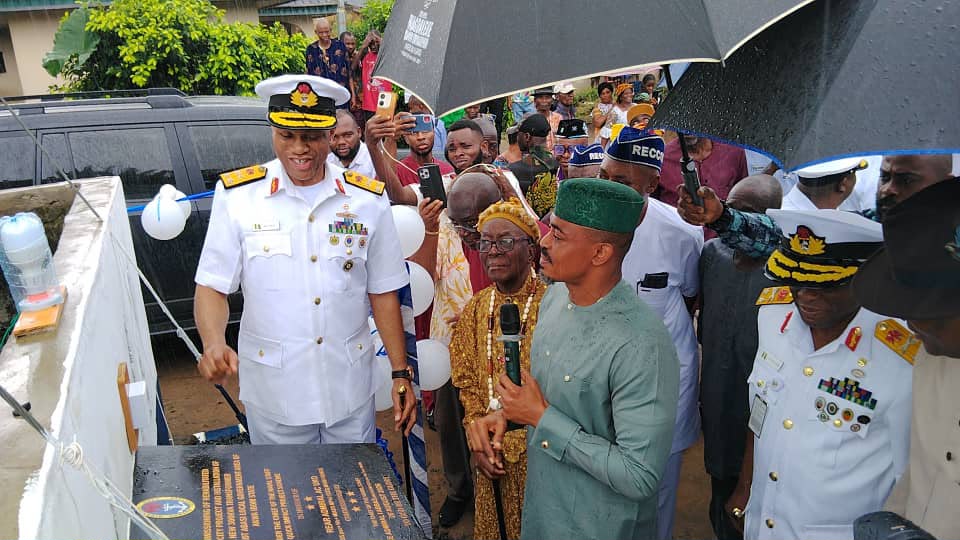
The Nigerian Navy has ended about 15 years of electricity blackout in Nduk community, Ikot Abasi Local Government Area of Akwa Ibom State, with the commissioning of a 300KVA transformer and extension of power supply to the area.
The project, inaugurated on Wednesday on behalf of the Chief of Naval Staff, Vice Admiral Idi Abbas, by the Flag Officer Commanding, Eastern Naval Command, Rear Admiral Chiedozie Okechie, involved extending electricity from an existing 11KV feeder to Nduk community.
Abbas said the intervention was part of the Nigerian Navy’s civil-military cooperation programme and the Chief of Naval Staff Special Intervention Quick Impact Projects designed to address critical needs in communities.
The Chief of Naval Staff described the project as a significant intervention, stressing that reliable electricity remained essential to economic development, education, commerce and security.
According to him, restoring electricity to Nduk would improve residents’ quality of life and create an enabling environment for businesses and other economic activities to thrive.
“Security and prosperity of the nation are strengthened when communities are empowered through meaningful development,” Abbas said.
He explained that the Navy’s intervention projects were aimed not only at providing immediate relief but also at strengthening mutual trust and cooperation between the military and civilian communities.
Abbas urged residents to take ownership of the newly installed facility by protecting and maintaining it to ensure that it continued to serve the community and future generations.
He commended the facilitator of the project for identifying electricity as a critical need and supporting an intervention capable of providing lasting relief to the people.
“Through this noble initiative, he has demonstrated that leadership is most meaningful when it positively impacts the lives of others,” he said.
Also speaking, the Director of Operations, Naval Headquarters, Rear Admiral Aniefiok Uko, said the Navy’s presence in Nduk demonstrated the importance it attached to projects that promote development, cooperation and mutual trust between the military and host communities.
Uko explained that the Chief of Naval Staff intervention projects were established under the Navy’s civil-military cooperation programme, giving serving Rear Admirals an opportunity to execute development projects in their communities.
He said the initiative reflected the Navy’s commitment to improving citizens’ welfare, strengthening relationships with host communities and contributing to national development.
Uko described the Nduk electricity project as particularly significant because it addressed a challenge that had persisted for about 15 years.
He expressed optimism that the restoration of electricity would unlock new economic opportunities, improve living conditions and contribute to the overall development of the community.


