


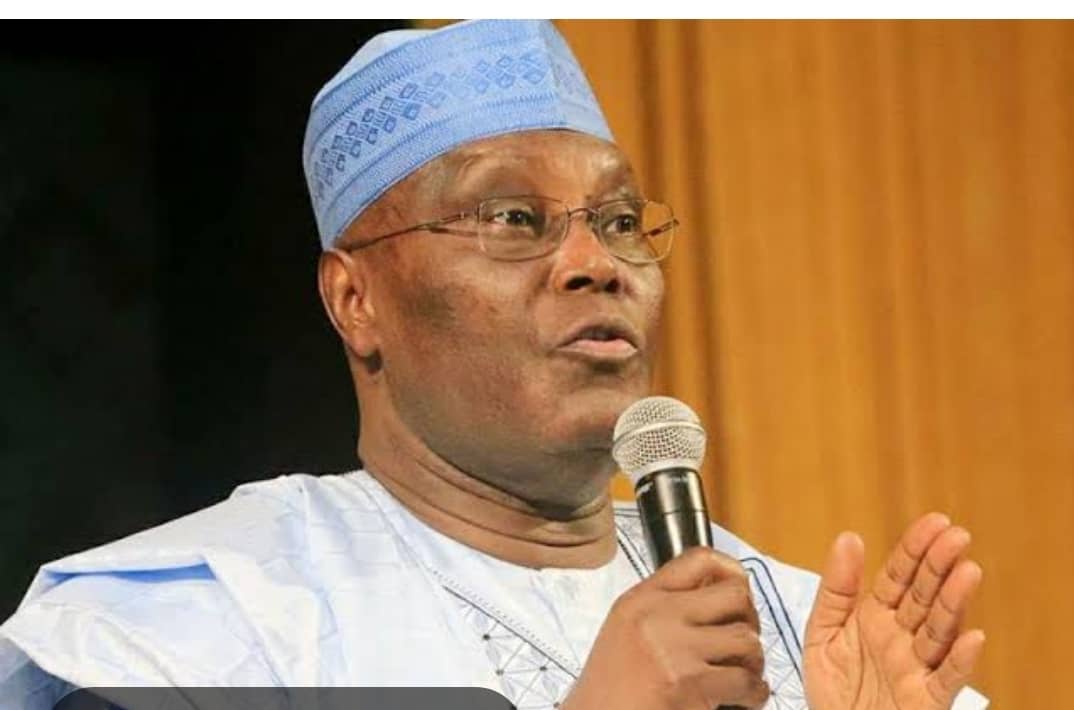
Former Vice President Atiku Abubakar has welcomed the Independent Petroleum Marketers Association of Nigeria (IPMAN)’s call for targeted government intervention to support domestic refiners and reduce the price of petrol, saying the position validates his advocacy for measures to make energy more affordable for Nigerians.
Atiku, in a statement issued in Abuja on Thursday by his Senior Special Assistant on Public Communication, Phrank Shaibu, said IPMAN’s position was significant because petroleum marketers were directly involved in the purchase, distribution and sale of petrol and understood the effect of high fuel prices on businesses and households.
He said the association had “come late to the conversation” but had reached what he described as the right policy conclusion — that government intervention in domestic refining could help bring down petrol prices.
“IPMAN is now saying that government cannot simply stand aside while petrol prices punish Nigerians and that deliberate subsidy around domestic refining can help bring prices down. That is precisely the policy principle President Tinubu and his government have spent weeks trying to ridicule,” Atiku said.
The former Vice President distinguished his proposal from the previous subsidy regime linked to petrol imports, arguing that any government support under his plan would be tied specifically to domestic production and refining.
He said Nigeria should prioritise refining its crude oil locally instead of continuing to depend heavily on imported petroleum products.
“My principle is simple: subsidy follows the barrel. Strengthen the Nigerian barrel, strengthen Nigerian refining and ensure that the benefit follows that barrel all the way to the Nigerian consumer,” he said.
Atiku maintained that his proposal was consistent with the objectives of the Petroleum Industry Act (PIA), particularly its emphasis on developing domestic petroleum processing capacity and ensuring access to petroleum products.
He questioned the economic rationale of producing crude oil locally while Nigerians continue to struggle with the cost of refined petroleum products.
“What is the value of producing crude oil if the taxi driver in Kano, the teacher commuting from Kubwa, the trader in Onitsha or the farmer moving produce to Lagos cannot afford the fuel derived from it?” he asked.
Atiku also criticised the Tinubu administration’s handling of fuel subsidy removal, arguing that government’s assessment had failed to adequately reflect the impact of high petrol prices on household purchasing power.
He cited the DailyFuels Fuel Affordability Index, which he said ranked Nigeria 91st in fuel affordability and estimated that the average Nigerian needed about 44 minutes of work to afford one litre of petrol.
According to him, a 40-litre tank would represent about 29.5 hours of work under the methodology.
Atiku said fuel affordability should be measured by its impact on Nigerians’ incomes rather than by comparing petrol prices in dollar terms with those of other countries.
“A teacher does not experience fuel policy through a government spreadsheet,” he said, adding that higher fuel costs have a ripple effect on transportation, food distribution, production and household expenses.
The former Vice President described his proposed intervention as part of a broader cost-of-living strategy aimed at restoring purchasing power and reducing the impact of high energy costs on the economy.
He also invited IPMAN to participate in developing and monitoring his proposed petroleum policy ahead of the 2027 elections.
Atiku said petroleum marketers had valuable knowledge of the downstream sector, including areas where distortions, leakages and other challenges could undermine government interventions.
“Our commitment is clear: subsidy under our administration will strengthen domestic refining, expand local capacity, prevent arbitrage, operate transparently and deliver measurable relief at the pump,” he said.
However, Atiku accused the Tinubu administration of potentially considering a return to fuel subsidies ahead of the 2027 elections after previously opposing such interventions.
He alleged that the government could be contemplating what he described as an “electoral-season” intervention to reduce public anger over rising living costs.
“This is not compassion. It is electoral desperation,” Atiku alleged.
He argued that Nigerians would be able to distinguish between genuine economic relief and measures introduced primarily for political purposes ahead of the election.
Atiku said IPMAN’s position had strengthened the case for targeted intervention in domestic refining, even though the association had not adopted every detail of his proposal.
“What matters is that one of the most important groups in the downstream petroleum sector has independently arrived at the central proposition Tinubu mocked: deliberate intervention around domestic refining can be used to pursue lower prices for Nigerian consumers,” he said.
He said the emerging policy debate should focus on domestic refining, affordability, transparency and tangible relief for consumers.
Atiku reiterated that energy affordability would be a major component of his 2027 campaign, saying his proposed approach would prioritise local refining capacity and ensure that government support translates into measurable benefits for Nigerians.
He concluded by contrasting his proposed policy direction with the Tinubu administration’s approach to fuel subsidy removal.
“Tinubu made Nigeria expensive. Atiku will make Nigeria affordable again,” he declared.