


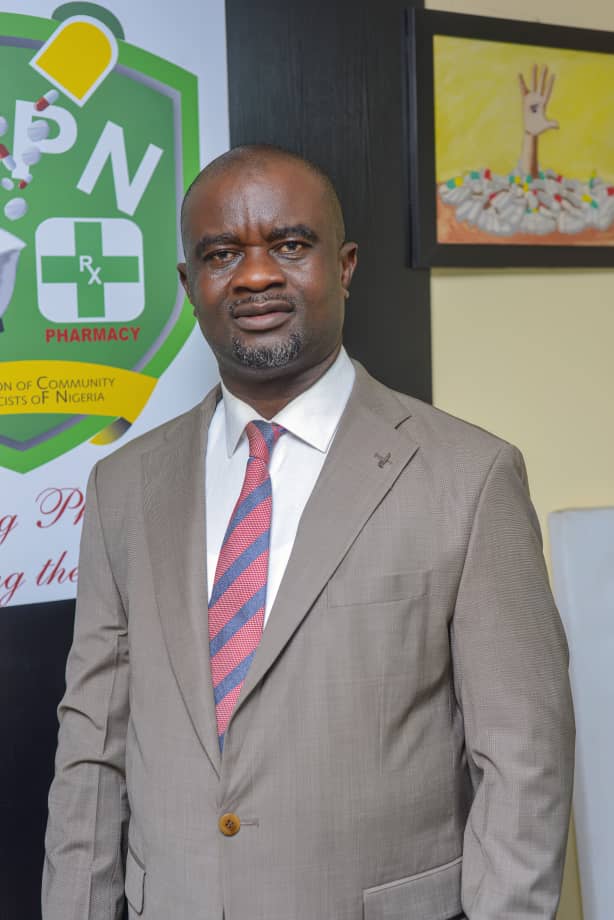
The Association of Community Pharmacists of Nigeria (ACPN) has issued a blistering warning to the National Assembly, urging lawmakers to halt the creation of new health commissions and instead repair the “collapsed oversight system” crippling existing health institutions.
In a strongly worded statement signed by its National Chairman, Pharm. Ambrose Omokhafe Ashore, FPSN, the association said it was alarmed by fresh proposals at recent public hearings calling for the establishment of a Surrogacy Commission, a Tertiary Health Institutions Commission, and multiple Sickle Cell Centres across the country.
The ACPN dismissed the proposals as “economically unrealistic, administratively wasteful, and legally unnecessary,” insisting that the National Health Act (NH-Act) 2014 already provides the statutory framework for regulating tertiary healthcare through the National Tertiary Health Institutions Standards Committee (NTHISC).
“The attempt to create three commissions from structures already established in the NH-Act 2014 is unnecessary, especially concerning organ trafficking regulations and surrogacy procedures that are already captured under the NTHISC,” the statement said.
The pharmacists argued that the real problem is not the absence of commissions but the National Assembly’s failure to perform its constitutional oversight role.
“What is missing has been proper oversight responsibilities by the National Assembly, which ought to strengthen the NTHISC to carry out its statutory functions,” the group added.
Although acknowledging the heavy burden of sickle cell disease in Nigeria, the ACPN described as financially reckless the proposal to establish several Sickle Cell Research Centres at once. It noted that key national research bodies such as NIPRD and NIMR remain grossly underfunded.
“Presently, NIPRD doesn’t enjoy a recurrent or capital expenditure budget of up to ₦20 million monthly. It is not appropriate to contemplate setting up parallel structures when gross underfunding persists in this research institute,” the association warned.
It also criticised the proposed organogram for the new centres, describing it as “unprecedented and administratively ridiculous.” Instead, the ACPN recommended the creation of a single national Sickle Cell Research Institute, supported by the 73 existing Federal Health Institutions.
The association further highlighted what it termed a “systemic failure of governance” within the Federal Ministry of Health, citing leadership gaps, partisanship, and administrative neglect. It listed several major red flags including:
- Non-reconstitution of boards across 73 Federal Health Institutions
- Failure to inaugurate boards of 13 regulatory councils
- Dormant boards in multiple MDAs
- Critical vacancies left unfilled for more than a year
The ACPN also referenced the ongoing JOHESU strike, which began on November 15, 2025, describing it as a symptom of deeper dysfunction worsened by 12-year unpaid entitlements and persistent government delays.
With Nigeria’s health budget already stretched thin, the association urged lawmakers to embrace cost-effective reforms instead of multiplying bureaucracies.
“One of the challenges, despite the highlighted absurdities, is a paucity of funds to support needed reforms. This must therefore compel very realistic initiatives,” the ACPN said.
The statement ended with a clear message to the National Assembly:
“Finally, the ACPN urges the National Assembly to create new bureaucracies only when it becomes obviously necessary.”

