


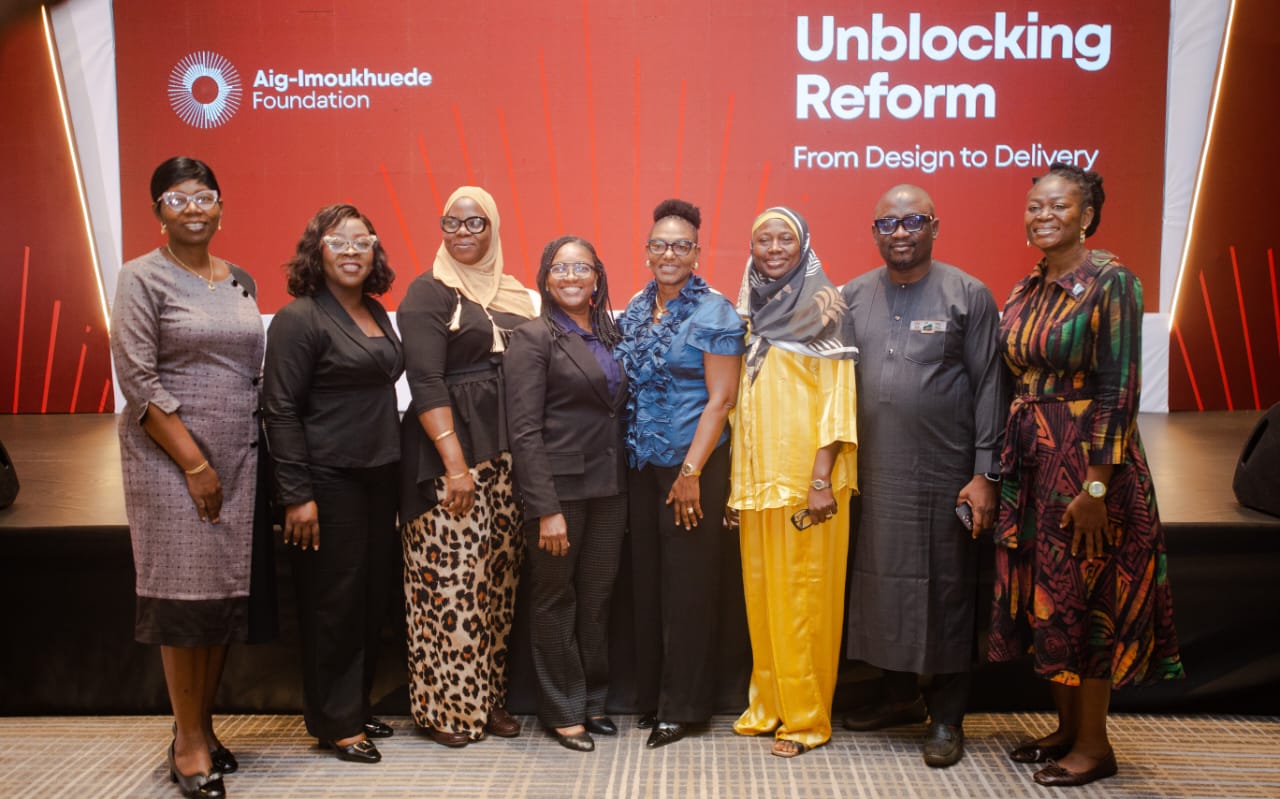
The Aig-Imoukhuede Foundation, a philanthropic organisation focused on strengthening public sector leadership development across Africa, brought together public sector leaders, alumni and reform stakeholders in Lagos for its 2026 Public Sector Reform Convening, themed “Unblocking Reform: From Design to Delivery” on 14 October.
The event builds on the Foundation’s ongoing work with its alumni network, a growing community of public sector reform leaders across the continent, and draws on an analysis of alumni reform projects, which identified stakeholder engagement, communication, organisational culture and collaboration as key factors shaping implementation success.
Speaking at the event, Ofovwe Aig-Imoukhuede, Executive Vice Chair of the Aig-Imoukhuede Foundation, emphasised that successful reform depends on understanding the institutional realities that shape implementation and building the support needed to sustain change.
“This is not to suggest that every objection to reform is unreasonable or that resistance can simply be overcome through better communication. Rather, effective reform leadership requires an understanding of institutional contexts, a willingness to listen to those affected and a deliberate effort to build the support necessary for implementation.”
The programme featured a keynote by Olabode Shuageeb Agoro, Lagos State Head of Service, a panel on “Advancing Reform: Building Buy-In and Coalitions,” and an in-conversation session with experienced reform leaders, all focused on stakeholder engagement, communicating change and sustaining reform over time.
Agoro highlighted the importance of addressing the underlying challenges that hinder reform implementation, noting that resistance may stem from gaps in skills, resources or understanding.
“A capacity gap cannot be resolved by repeating an instruction. Leaders must communicate the purpose of reforms, align institutions around their objectives, provide the resources and capabilities required for implementation, and ensure that accountability continues long after implementation. People always feel better if they are carried along. Nobody wants to feel that they don’t matter. So it is always important to engage at all levels.”
Participants also took part in an interactive Reform Reality Check and a Reform Solutions Lab, working in multidisciplinary groups to develop practical approaches to organisational support, stakeholder engagement and collaborative action, identifying actions they could adapt to their own institutions.
The convening is part of the Foundation’s broader effort to position its alumni network as a platform for peer learning, strategic dialogue and collaboration among public sector reform leaders, ultimately helping to ensure that reforms are not only well designed , but implemented in ways that translate into better outcomes for citizens.