


The Federal Government and state governments have called for single-digit mortgage interest rates and repayment periods of up to 35 years to make homeownership more affordable for Nigerians amid the country’s growing housing crisis.
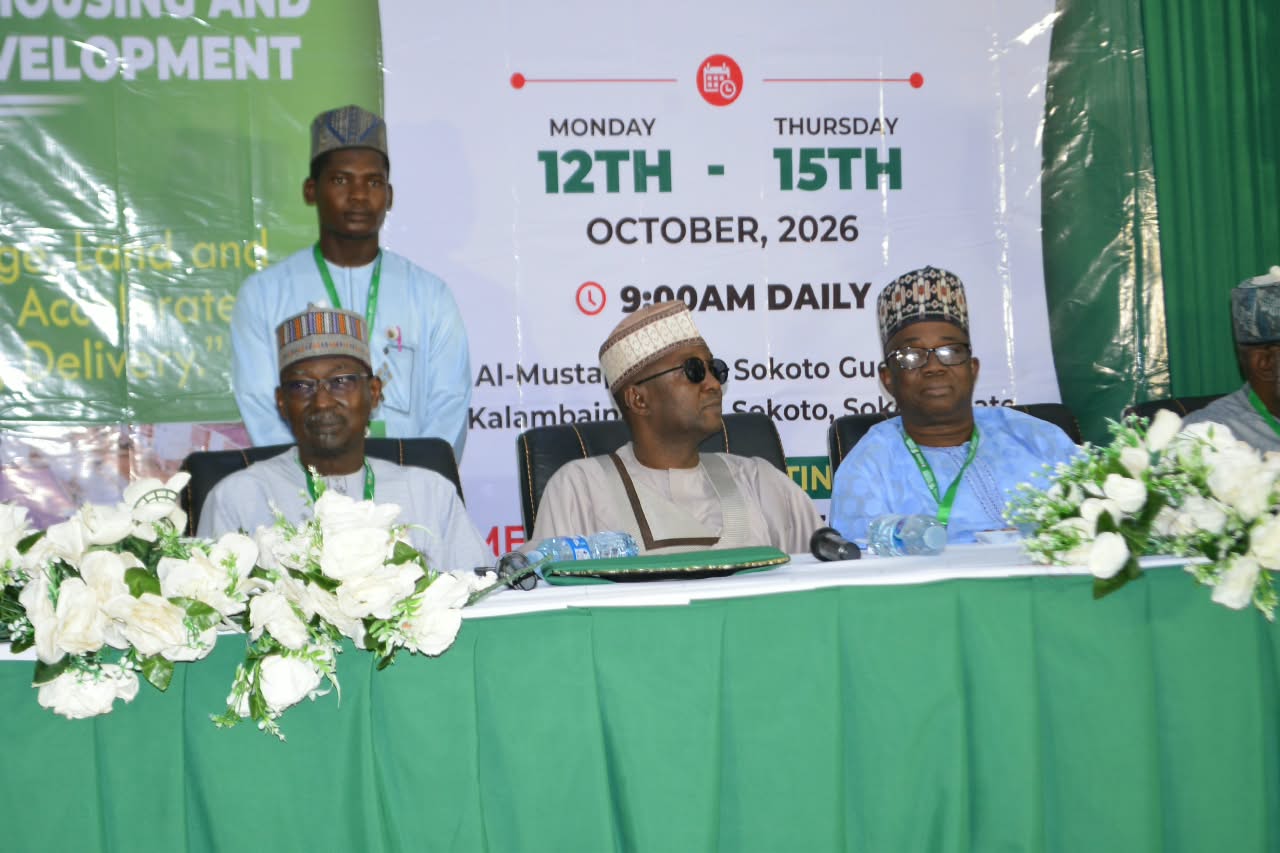
The proposed reforms were highlighted at the 15th meeting of the National Council on Land, Housing and Urban Development (NCLHUD), holding in Sokoto from October 12 to 16, 2026.
Sokoto State Commissioner for Lands, Housing, Survey and Country Planning, Barrister Nasiru Aliyu Dantsoho, said reducing mortgage rates and extending repayment periods would ease the financial burden on prospective homeowners and improve access to housing.
In a statement issued on Monday by the Federal Ministry of Housing and Urban Development and signed by its Director of Press and Public Relations, Badamasi Haiba, the ministry said the meeting was focused on strengthening land administration, mortgage financing and institutional frameworks to accelerate inclusive housing delivery.
Dantsoho expressed concern over Nigeria’s housing deficit, estimated at more than 14.5 million units, adding that about 50.6 million people were living in unsafe housing conditions.
He described the situation as alarming and called for urgent, sustained measures to address the shortage of decent and affordable homes.
The commissioner advocated a reduction in mortgage interest rates from double-digit levels to single digits, alongside an extension of repayment periods from 25 to 35 years.
He also called for mortgage schemes that accommodate Nigerians in the informal sector, including traders, farmers and other self-employed people who often struggle to meet the requirements of conventional housing finance programmes.
Dantsoho urged financial institutions, particularly the Federal Mortgage Bank of Nigeria (FMBN), to improve funding for housing finance and introduce flexible repayment arrangements that reflect the different income patterns of borrowers.
He further stressed the need for states to digitise land administration systems to improve transparency, reduce delays and facilitate access to land for housing development.
Earlier, the Director of Planning, Research and Statistics at the Federal Ministry of Housing and Urban Development, Mukhtar Iliyasu Umar, said the council offered an important platform for stakeholders to examine challenges in the housing sector and develop practical solutions.
Umar explained that deliberations would follow a three-stage process involving the consideration, harmonisation and adoption of policy recommendations on land administration, housing and urban development.
He said the effectiveness of the final resolutions would depend on sound technical analysis, practical recommendations and a thorough harmonisation process.
Also speaking, the Permanent Secretary of the Sokoto State Ministry of Lands and Housing, Engr. Ahmad Moyi Tambuwal, outlined measures being taken by the state to improve land administration.
These include digitising land records, reducing the time required to process Certificates of Occupancy and providing land for mass housing projects under the Federal Government’s Renewed Hope Housing Programme.
Tambuwal said affordable housing required more than the construction of residential buildings, stressing the importance of efficient land administration, accessible mortgage financing, effective policies and collaboration between government institutions and private-sector players.
“The delivery of adequate and affordable housing requires more than the construction of houses. It also depends on efficient land administration, accessible mortgage finance, effective policies and stronger collaboration among government institutions and private-sector stakeholders,” he said.
The meeting, themed “Strengthening Mortgage, Land and Institutional Systems for Accelerated and Inclusive Housing Delivery,” brought together representatives of federal and state governments, professional associations and regulatory bodies in the built environment.
Participants are expected to share experiences, identify institutional gaps and harmonise policies aimed at improving land administration, expanding access to housing finance and accelerating housing delivery across the country.
Recommendations from the technical sessions will be harmonised for consideration at subsequent stages of the council meeting.
The Federal Ministry of Housing and Urban Development reaffirmed its commitment to promoting accessible, affordable and inclusive housing for Nigerians.