


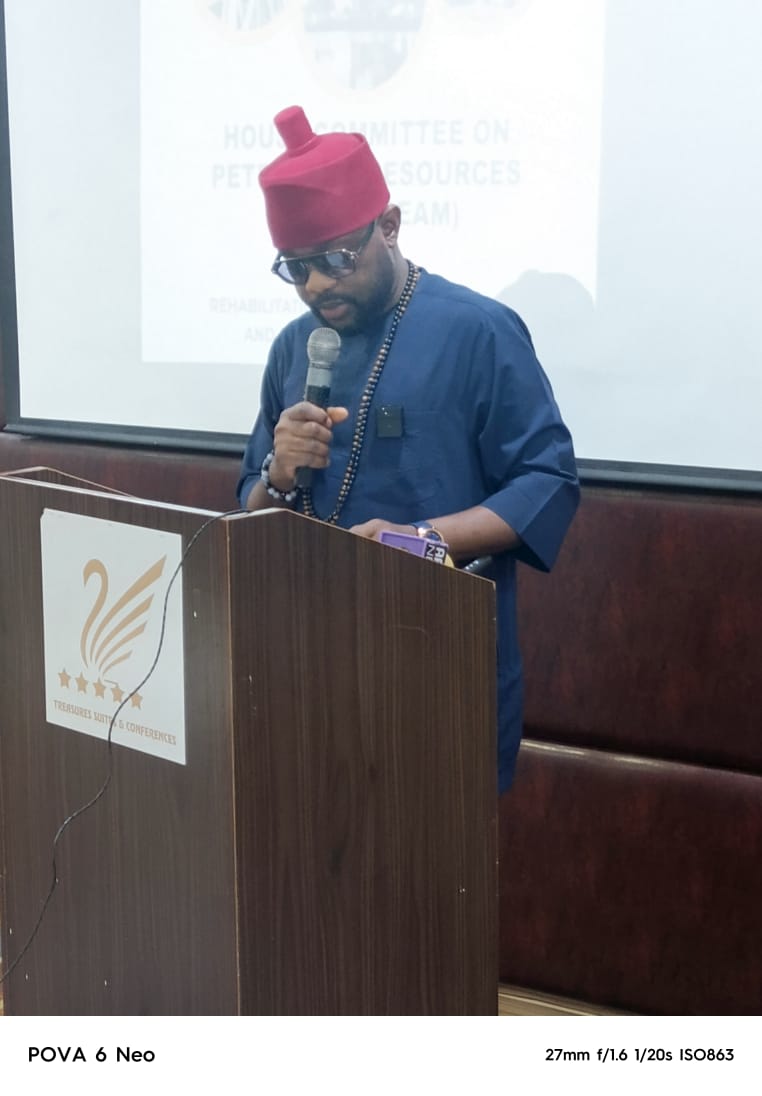
ABUJA – The House of Representatives Committee on Petroleum Resources (Downstream) has announced a strategic shift toward proactive and evidence-based oversight of Nigeria’s critical oil sector, moving beyond reactive interventions to prevent future crises.
Chairman of the Committee, Hon. Ikenga Imo Ugochinyere, declared this new direction on Monday in Abuja during his welcome address at an end-of-year capacity-building workshop organized by the Nigerian Midstream and Downstream Petroleum Regulatory Authority (NMDPRA) for committee members and staff.
A Shift in Legislative Strategy
Ugochinyere stated that the committee’s focus for the coming period would be on strengthening anticipatory oversight to ensure stability in a sector that directly impacts national welfare through fuel pricing, inflation, and transportation costs.
“Regulation and legislation are not parallel lines; they are complementary forces,” Ugochinyere said. “When regulators and lawmakers understand each other’s mandates, constraints and expectations, the Nigerian people ultimately benefit.”
He outlined the committee’s core commitments, which include supporting policies that encourage local refining, storage, and logistics efficiency, ensuring regulatory accountability, promoting market transparency, and protecting the interests of citizens while sustaining investor confidence.
Building on a Year of Engagement
The chairman reflected on the committee’s activities throughout 2025, which were marked by sustained engagement with the reforms of the Petroleum Industry Act (PIA), extensive stakeholder consultations, and focused oversight on fuel availability and pricing stability.
“We have interfaced with regulators, operators, labour unions and consumer groups to balance national interest with market realities,” he noted, highlighting challenges related to importation, local refining capacity, and distribution infrastructure.
He commended the NMDPRA for organizing the workshop, describing it as “timely and strategic” and a reflection of the collaborative spirit intended by the PIA. Ugochinyere emphasized that capacity building is now a “critical necessity” for effective governance in the complex petroleum landscape.
Central Role of Committee Staff
Paying tribute to the committee’s secretariat and support staff, Ugochinyere described them as the “quiet force” behind successful hearings, reports, and oversight visits.
“Your role is not auxiliary; it is central to the effectiveness of this Committee,” he stated, underscoring that as legislative work grows more technical, the need for well-trained, knowledgeable staff becomes paramount.
He urged all participants to engage actively in the workshop, challenge assumptions, and focus on translating the knowledge gained into “better laws, stronger oversight and improved outcomes for Nigerians.”
The workshop brought together lawmakers, committee staff, regulators, and resource persons to deepen understanding of the evolving downstream sector and reinforce collaborative governance under the PIA framework.

