


The Independent National Electoral Commission (INEC) has rolled out its roadmap for the 2027 General Election, stressing early planning, strict adherence to the rule of law and the conduct of elections that are free, fair, credible and inclusive.
INEC Chairman, Prof. Joash Amupitan, SAN, said the commission is strengthening its leadership capacity, operational systems and institutional cohesion to meet rising public expectations ahead of the polls.
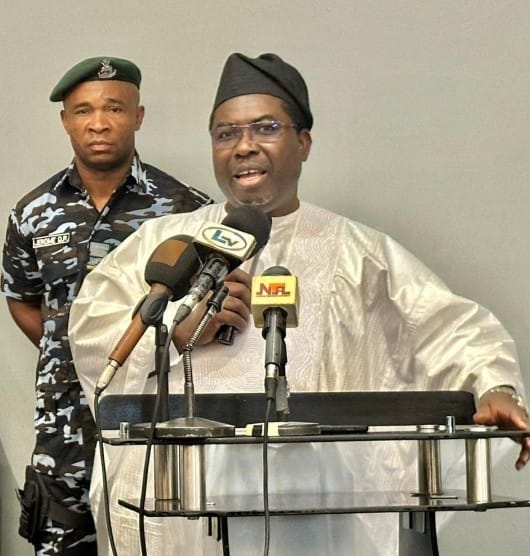
Amupitan spoke on Friday, January 9, 2026, at the opening of a two-day Induction and Strategic Retreat for newly appointed National Commissioners and Resident Electoral Commissioners (RECs) in Lagos.
He explained that although the 2027 General Election is INEC’s main focus, the commission must first successfully conduct other major elections, including the Federal Capital Territory (FCT) Area Council elections in February 2026 and the off-cycle governorship elections in Ekiti and Osun states.
According to him, these elections will serve as testing grounds for voter register management, logistics and the deployment of election technology such as the Bimodal Voter Accreditation System (BVAS).
The INEC boss outlined five non-negotiable principles guiding the commission’s work: elections free from interference, fairness to all political parties and candidates, credibility at national and international levels, transparency at every stage of the process, and inclusivity to ensure no eligible voter is disenfranchised.
He also drew attention to the growing number of young, first-time voters ahead of 2027, describing them as digitally savvy citizens with high expectations for transparency and accountability.
“To earn their trust, our systems must be inclusive, technologically sound and beyond reproach,” Amupitan said, adding that credible elections in 2027 would strengthen long-term confidence in Nigeria’s democratic institutions.
On the legal framework, the INEC chairman assured Nigerians that the commission would continue to operate strictly within the Electoral Act, 2022, and any amendments, warning that violations of established procedures would attract sanctions.
He disclosed that the retreat is built around 17 critical thematic areas, including logistics, Continuous Voter Registration (CVR), election security, political party regulation, campaign finance transparency, result management, and the training and welfare of election personnel.
Amupitan said the engagement would also expose new commissioners and RECs to INEC’s institutional structure, ethical standards, legal framework and election timelines, while allowing experienced officials to share lessons from past elections.
Earlier, Lagos State Resident Electoral Commissioner, Ayobami Salami, welcomed participants, describing the retreat as a key step in INEC’s institutional development.
Salami said the programme provides room for reflection, strategic alignment and consolidation at a time of heightened public expectations of the electoral process.
Also speaking, Director of Planning and Monitoring, Mrs Helen Ajayi, said the retreat aims to familiarise new commission members with INEC’s legal and administrative architecture while encouraging experience sharing among state-level election managers.
She noted that insights from the retreat would help improve election planning, logistics and credibility ahead of the 2027 General Election.

