


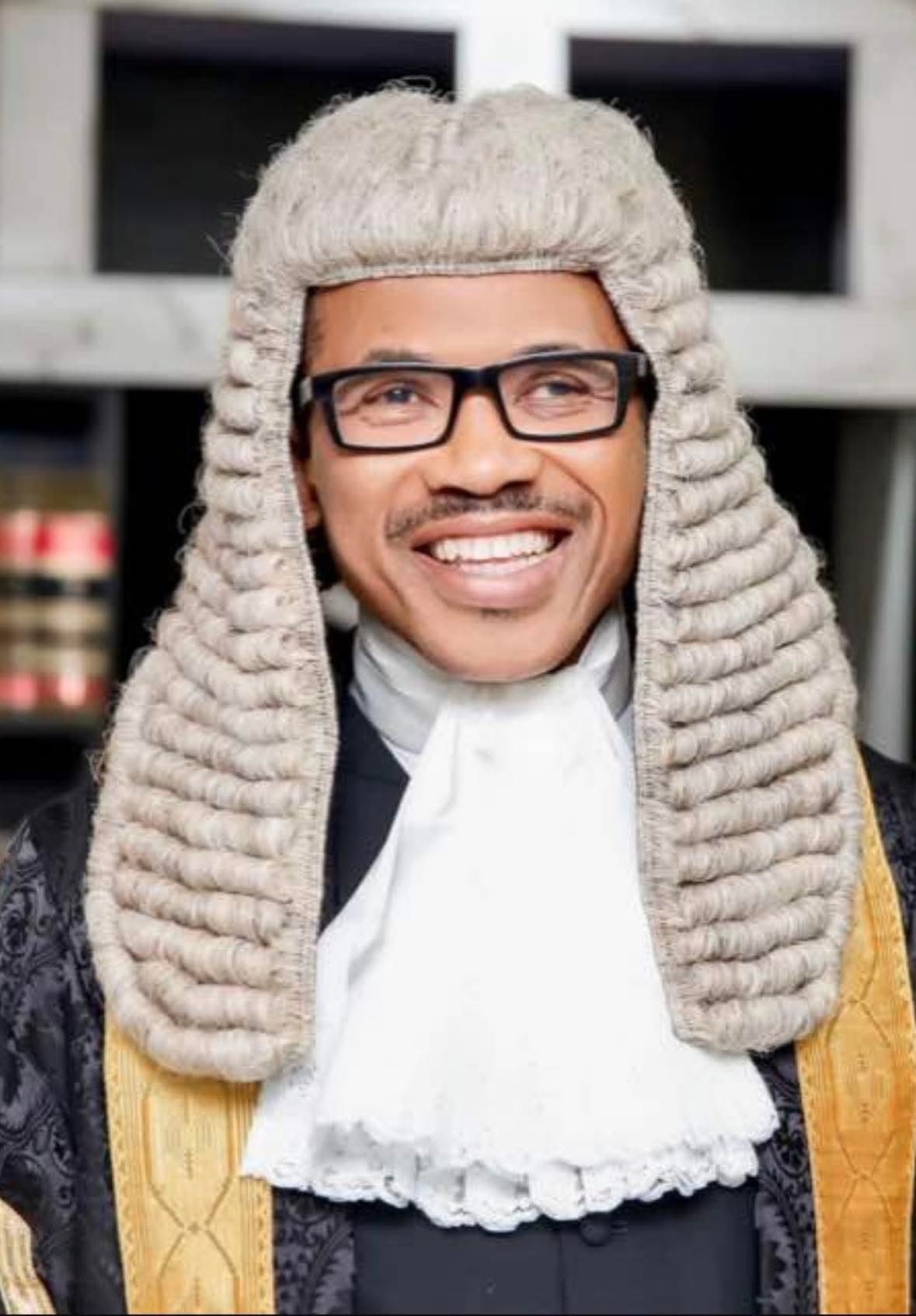
The Attorney-General and Commissioner for Justice in Ondo State, Dr Kayode Ajulo, has called on the United Nations and the international community to give Africa a fair opportunity to realise its enormous potential, saying correcting distortions in world maps should go beyond cartography.
Ajulo, in a piece titled “Africa Was Never Small: When the United Nations Finally Corrects the Map,” said the long-standing way Africa has been represented on world maps had contributed to misconceptions about the continent’s size, importance and possibilities.
He explained that while the Mercator projection was developed principally for navigation, its distortion of relative land sizes created a misleading impression, with Greenland appearing comparable in size to Africa, despite Africa being about 14 times larger.
“Africa did not change when that image became familiar. The representation did,” he said.
According to him, repeated exposure to such representations in classrooms, atlases and public institutions can influence how people perceive the world, stressing that accurate representation matters because it carries deeper meaning.
Ajulo, however, noted that Africa’s value should never depend on how it is depicted, pointing to the continent’s ancient civilisations, intellectual traditions, cultural diversity, natural resources and human capital.
He said Africa must move beyond a global narrative that focuses mainly on poverty, conflict, disease and corruption, and embrace a narrative that recognises its potential to make significant contributions to global development.
“Africa is not merely a continent with problems. It is a continent with possibilities of global consequence,” he stated.
The Ondo State Attorney-General said the major challenge was how to transform those possibilities into shared prosperity by addressing inequalities in education, access to capital, technology, healthcare, employment and governance.
He said an egalitarian Africa should be one where “birth does not predetermine destiny”, stressing that children in rural communities deserve access to quality education, farmers should have access to finance and modern technology, entrepreneurs should be able to obtain capital without political connections, while African scientists should have the facilities needed to conduct research on the continent.
“These are not demands for privilege. They are demands for fairness,” Ajulo stated.
He also urged the international community to see Africa as a partner rather than merely a recipient of aid, calling for stronger African representation in global decisions on finance, trade, technology, climate policy and security.
Ajulo equally challenged African governments to strengthen institutions, uphold the rule of law and ensure that the continent’s abundant natural resources are converted into public value and improved living standards.
“The world must treat Africa more fairly. Africans must govern themselves more effectively. Both are necessary,” he said.
He maintained that the true measure of Africa’s progress should not be the number of skyscrapers or the wealth accumulated by a few individuals, but whether ordinary Africans have access to quality education, healthcare, decent jobs, justice and the freedom to pursue meaningful lives.
According to him, Africa should neither seek pity nor permission, but partnership among equals, noting that the continent’s future is inseparable from that of the global community.
Ajulo concluded that the significance of correcting the map would ultimately depend on whether the recognition translates into reforms, resources into prosperity and Africa’s vast potential into genuine opportunities for its people.