


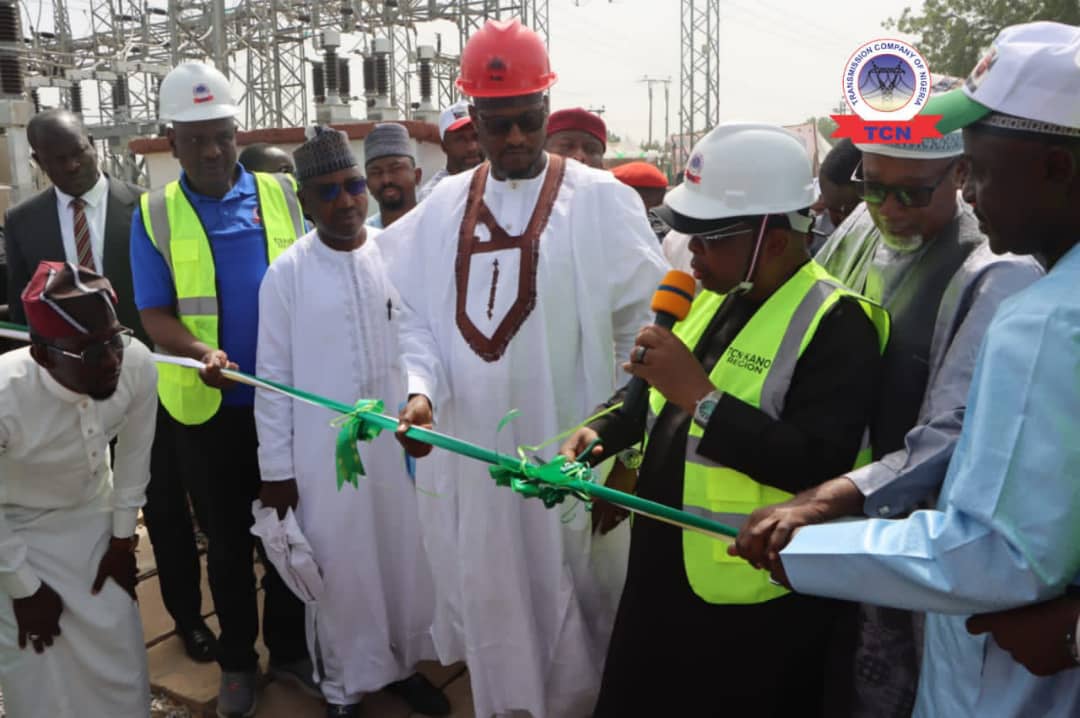
Nigeria’s electricity transmission network is set for improved bulk power delivery following the commissioning of new transmission substations and transformers in Kano and Katsina states by the Minister of Power, Joseph Olasukanmi Tegbe.
The projects, commissioned on October 22 and 23, 2026, are intended to ease pressure on existing substations, strengthen electricity supply to industrial and commercial centres, and create additional capacity to meet growing demand.
According to the Federal Ministry of Power, the projects include new transformers at several substations in Kano, two 60MVA transformers at Kankia in Katsina State, and the groundbreaking for a new transmission substation at Mashi. The minister also inspected an ongoing 200MVA gas-insulated switchgear (GIS) substation at the 330kV Katsina facility.
Speaking at the commissioning ceremonies, Tegbe said the projects reflected the Federal Government’s commitment to strengthening electricity infrastructure under President Bola Tinubu’s Renewed Hope Agenda.

“With these projects just inaugurated, the Federal Government has opened a new route for bulk electricity to reach the industrial and commercial corridors where investment, production and employment depend on it,” he said.
He added that the investments would create new supply points, ease pressure on existing facilities and support electricity delivery across Kano’s industrial, commercial and residential areas.
Kano Projects Target Industrial and Commercial Demand
In Kano State, Tegbe commissioned the Walalambe Transmission Substation, equipped with two 40MVA transformers.
At the Kumbotso Transmission Substation, he commissioned new 300MVA and 100MVA transformers, while additional 100MVA transformers were commissioned at the Dakata and Dan Agundi transmission substations.
The minister said the projects would help relieve overloaded substations and create capacity to serve previously unmet electricity demand.
He also highlighted the connection of Lee Group of Companies to the national grid through a dedicated 33kV feeder, describing the development as an example of how transmission infrastructure could support industrial growth.
According to Tegbe, the company had operated off-grid for more than 30 years before the connection.
He said the Ministry of Power had been directed to prioritise the development of three energy zones to promote a more balanced distribution of electricity infrastructure across the country.

The minister also pledged to work with the Kano State Government and relevant electricity-sector stakeholders to coordinate projects and avoid duplication.
Katsina Gets Additional Transformer Capacity
In Katsina State, the minister commissioned two 60MVA transformers at the Kankia Transmission Substation, increasing its installed capacity from 60MVA to 150MVA.
The ministry said the intervention would strengthen the substation’s ability to support electricity transmission to communities in the state.
Tegbe also performed the groundbreaking ceremony for a new 120MVA transmission substation at Mashi, comprising two 60MVA transformers.
When completed, the facility is expected to provide additional capacity equivalent to approximately 96MW, improving bulk power delivery to Mashi and neighbouring communities.
The minister said outstanding issues involving rights of way and compensation for project-affected persons had been resolved, allowing construction to commence.
“Today, we break ground in Mashi with a clear purpose, which is to build electricity infrastructure that supports livelihoods and gives this community greater room to grow,” he said.
Tegbe also inspected construction work on the 200MVA GIS substation at the 330kV Katsina Transmission Substation.
The Federal Ministry of Power said the Katsina projects were being delivered by the Federal Government through the ministry and the Transmission Company of Nigeria (TCN), with funding support from the World Bank.
TCN Says Projects Will Ease Transmission Constraints
The Managing Director and Chief Executive Officer of TCN, Sule Ahmed Abdulaziz, said the commissioned projects would expand network capacity and address constraints affecting electricity transmission.
He said the interventions included modernising control rooms with digital control and protection panels, expanding the 33kV busbar and installing additional outgoing feeders.
Abdulaziz said the Mashi substation would strengthen bulk electricity delivery, improve voltage performance and provide room for future growth in demand.
“As the Transmission Service Provider, TCN remains committed to developing and maintaining the transmission infrastructure required to convey bulk electricity to distribution companies for onward delivery to consumers,” he said.
He added that the company would continue working with the Nigerian Independent System Operator (NISO), Kano Electricity Distribution Company (KEDCO) and other stakeholders to improve the efficiency and reliability of the electricity supply chain.
The TCN chief said similar completed and ongoing projects were being implemented across the country’s six geopolitical zones as part of efforts to expand transmission capacity, rehabilitate existing facilities and modernise critical equipment.
Minister Warns Against Vandalism
Tegbe urged host communities to protect the newly commissioned facilities against vandalism, warning that damage to transmission infrastructure could undermine investments aimed at improving electricity supply.
“Please help us protect this infrastructure and ensure our vigilance is stronger than ever, to fight the challenge of infrastructure vandalism across the country,” he said.
Abdulaziz also urged communities to respect transmission right-of-way corridors and report suspicious activities around electricity infrastructure.
The projects are part of broader government efforts to strengthen Nigeria’s transmission network. However, their impact on electricity availability to households and businesses will depend on effective operation of the facilities, the capacity of distribution networks and the ability of distribution companies to deliver the additional power to consumers.
Source: Federal Ministry of Power / Transmission Company of Nigeria.


