


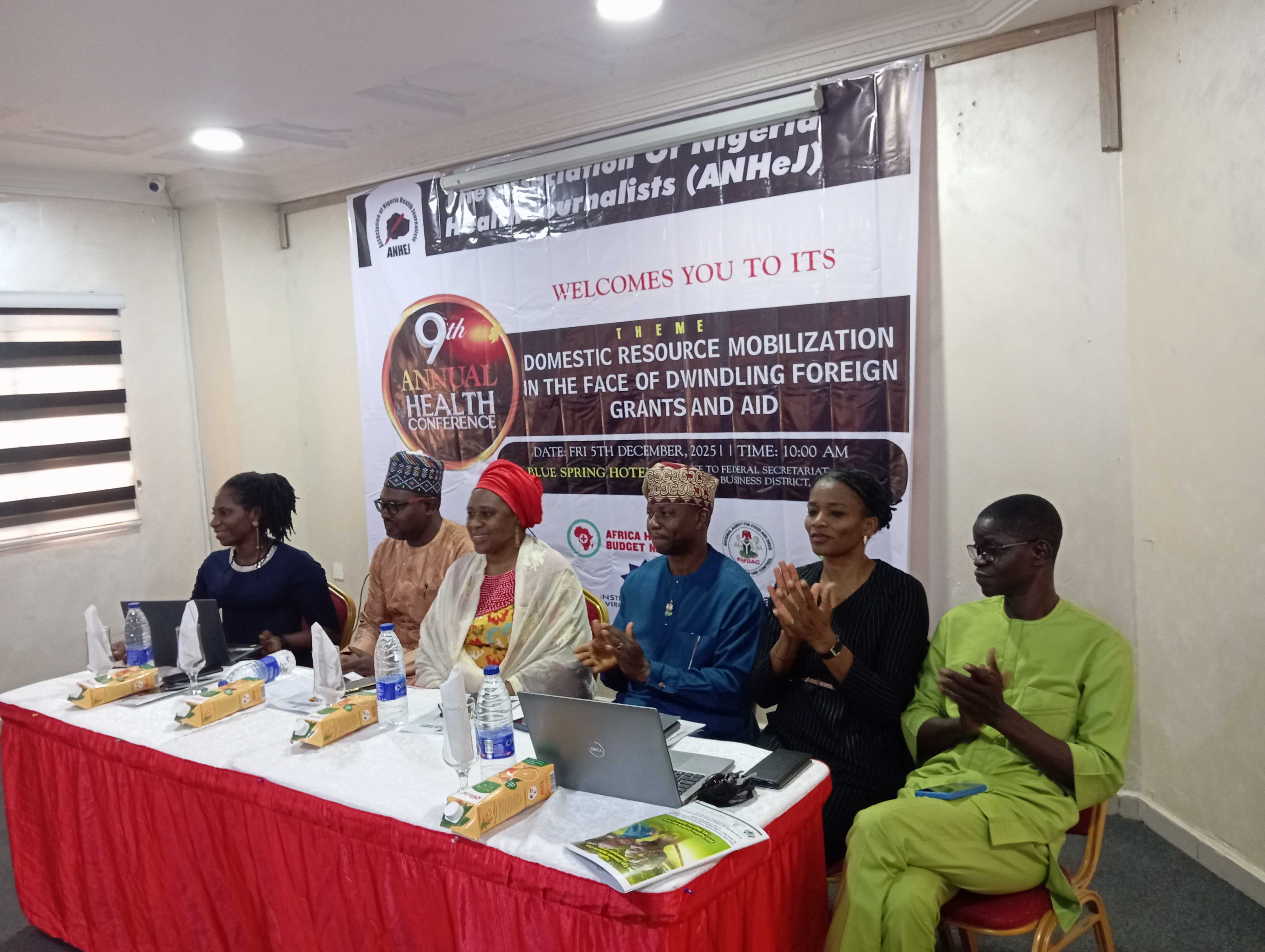
Nigeria’s health sector is at a critical crossroads as foreign aid declines by an estimated 15–20 per cent, prompting urgent calls for sustainable domestic financing to safeguard essential services.
The warning emerged at the 9th Annual Conference of the Association of Nigerian Health Journalists (ANHeJ) on Friday in Abuja.
Speaking at the event, Dr Salma Ibrahim Anas, Special Adviser to the President on Health, said the country could no longer rely on “external benevolence” to build its healthcare system. She stressed that domestic ownership and accountability were crucial to protecting the nation’s Universal Health Coverage goals.
“Donor fatigue is real, and Nigeria will inevitably graduate from multiple aid programmes. The health and prosperity of our nation must no longer depend on foreign grants,” she said.
Dr Anas highlighted that donor funds currently support HIV, tuberculosis, malaria, immunisation, and primary healthcare programmes.
She warned that declining support could lead to service disruptions, stock-outs, and adverse outcomes for the most vulnerable Nigerians. She praised President Bola Ahmed Tinubu’s Renewed Hope Agenda and the Nigeria Health Sector Renewal Investment Initiative (NHSRII) as frameworks for strengthening primary healthcare, boosting local production of medicines, and improving governance. Central to the plan is the expansion of the Basic Health Care Provision Fund (BHCPF) from 1% to 2% of the Consolidated Revenue Fund, effectively doubling funding for grassroots health facilities.
Dr Iziaq Salako, Minister of State for Health and Social Welfare, represented by Dr Babatunde Akinyemi, echoed the call for domestic financing, noting that reductions in donor funding, including from PEPFAR, Gavi, Global Fund, and the World Bank, were global and inevitable.
He cited government initiatives such as N260 billion disbursed through the BHCPF, expanded NHIA coverage, increased co-financing for global health programmes, and emergency funding of $200 million to address gaps.
State-level innovations were highlighted, including Lagos allocating 12 per cent of its budget to health, Kaduna’s contributory scheme covering 1.6 million residents, Delta’s use of 0.5 per cent of the derivation fund, and Abia’s diaspora health fund.
Private-sector contributions included N50 billion mobilised by the Private Sector Health Alliance and $200 million from the Nigeria Sovereign Investment Authority for tertiary hospitals.
Comrade Grace Ike, Chairman of the Nigeria Union of Journalists (NUJ), FCT Council represented by Mr Jide Oyekunle, Secretary of Council, emphasised the critical role of journalists in ensuring accountability.
She urged governments to increase and protect health budgets, strengthen health insurance penetration, and leverage public-private partnerships in infrastructure, technology, and pharmaceuticals.
Opening the conference, ANHeJ President Joseph Kadiri warned that the global decline in foreign aid exposed structural gaps in Nigeria’s health-financing architecture.
He encouraged health journalists to engage critically, report responsibly, and ensure reforms deliver measurable impact.
The three-day conference, attended by more than 65 journalists and policymakers, is expected to produce a roadmap for domestic resource mobilisation that could reshape Nigeria’s health-financing landscape for years to come.

