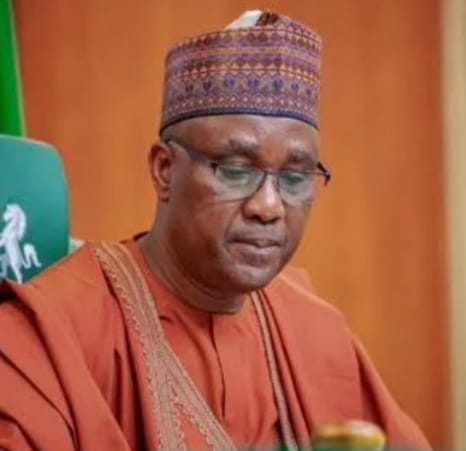


Speaker of the House of Representatives, Tajudeen Abbas, has urged Nigeria to quickly seize the economic opportunities emerging from the global shift to a low-carbon economy, warning that failure to act could cost the country billions of dollars.
Abbas made the call on Thursday at the opening of the National Decarbonisation Technical Roundtable in Abuja, organised by the House Committee on the Mandatory National Decarbonisation Programme. He was represented at the event by Muktar Shagaya.
According to him, climate change is no longer a distant environmental issue but a reality already affecting communities across the country.
“From drought in the North to flooding and erosion in the East, and abnormal rainfall patterns in the South, climate change has become a lived experience for Nigerians,” he said.
Abbas warned that climate inaction could deal a devastating blow to the economy.
“Climate inaction could cost Nigeria up to 30 per cent of its Gross Domestic Product by 2050, equivalent to about $460 billion. As one of Africa’s largest economies, we cannot afford to ignore these risks,” he stressed.
He however clarified that Nigeria’s decarbonisation drive is not intended to weaken the oil and gas sector, which remains a major pillar of the national economy.
Instead, he said the energy transition presents a strategic opportunity for Nigeria to diversify its economy, build competitive green industries and attract new investment aligned with global climate priorities.
Also speaking, Chairman of the House Committee on the Mandatory National Decarbonisation Programme, Sesi Whingan, said the legislative initiative aims to create a comprehensive framework to guide Nigeria’s transition to a low-carbon economy.
He explained that the roundtable marks the start of a structured national engagement designed to build consensus among policymakers, regulators, industry leaders, development partners and civil society organisations.
Whingan noted that the National Assembly of Nigeria has already enacted several laws to support climate and energy transition, including the Climate Change Act 2021, the Electricity Act 2023, the Petroleum Industry Act 2021, and the National Environmental Standards and Regulations Enforcement Agency Act.
He also disclosed that the Federal Government has approved a National Carbon Market Framework expected to generate between $2.5 billion and $3 billion annually over the next decade.
According to him, the framework will establish rules for carbon credit registration, issuance and verification, while encouraging emission-reduction projects in forestry, renewable energy, clean cooking technologies and climate-smart agriculture.
In her remarks, Wangari Muchiri, Director for Africa at the Global Wind Energy Council, said Nigeria’s decarbonisation commitment could unlock major economic benefits.
She noted that sectors such as oil and gas and agriculture in Nigeria are currently carbon-intensive but could become key players in the emerging global carbon economy.
“In today’s global economy, this presents a huge opportunity to capitalise on the carbon economy, create jobs and generate new revenue streams,” she said.
Muchiri added that international partners and private sector stakeholders are ready to support Nigeria’s clean energy transition through financing, knowledge transfer and technical support.
She described the ongoing consultations as crucial for strengthening national engagement on decarbonisation and coordinating action across sectors.
According to her, Nigeria’s push toward decarbonisation could help the country not only mitigate the impact of climate change but also unlock new economic opportunities in the rapidly expanding global carbon market.
Nigeria Must Tap Carbon Economy Now or Risk $460bn Climate Loss – Abbas