

Nigeria is positioning to unlock an estimated $104 billion in climate-smart investment opportunities by 2030, following backing from the House of Representatives for the proposed Green and Climate Finance Bank.
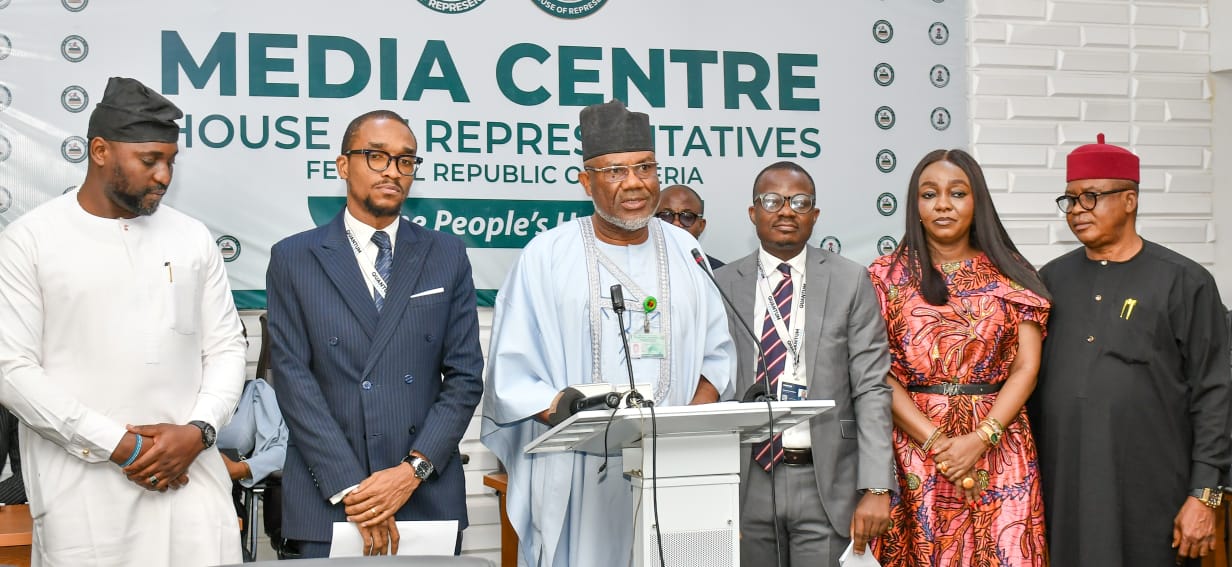
Chairman of the House Committee on Renewable Energy, Hon. Afam Ogene, disclosed this while briefing journalists at the Green and Climate Finance Bank briefing in Abuja on Wednesday alongside Quantum Partners and promoters of the initiative.
Ogene described the proposed bank as timely and strategic, noting that it would mobilise private capital and deploy innovative risk-sharing tools to provide long-term financing for renewable energy and other climate-aligned sectors.
“The proposal to establish a Green and Climate Finance Bank is both timely and strategic. The bank is designed to mobilise private capital, use innovative risk-sharing tools, and provide long-term financing specifically for renewable energy and climate-aligned sectors,” he said.
He explained that the institution would support Micro, Small and Medium Enterprises (MSMEs), women-led businesses, green innovators, and infrastructure developers driving the transition to a sustainable economy.
According to him, the initiative aligns with the Federal Government’s renewable energy policy aimed at boosting energy security.
“This initiative comes at a critical time in our nation’s history. It is in line with the Federal Government’s policy of renewable energy as a viable option to strengthen energy security,” Ogene stated.
He clarified that the bank would be a private sector-driven institution with strong governance standards aligned with global environmental, social and transparency benchmarks.
“This is not a government-owned bank. It is a private sector initiative with a strong governance framework designed to attract both domestic and international investors while ensuring measurable climate and development impact,” he added, assuring that the National Assembly would provide an enabling legislative environment for sustainable finance frameworks.
Speaking at the briefing, Dr. Oluwafemi Adedipe, founder of Quantum Partners and one of the promoters, said Nigeria remains both climate-vulnerable and a promising green investment frontier.
“Floods, drought, desertification and energy insecurity threaten livelihoods and economic stability. At the same time, renewable energy, climate-smart agriculture, green infrastructure and circular economy ventures represent transformative growth sectors,” he said.
He noted that Nigeria’s climate investment potential could reach about $104 billion by 2030 but warned that capital mobilisation and proper risk structuring are critical to unlocking the opportunity.
“Opportunity alone does not translate into progress. The capital must be mobilised, risks structured, and projects financed,” Adedipe said, adding that the proposed bank would bridge the gap between green projects and capital markets through flexible financing solutions.
Also speaking, co-founder of Quantum Partners, Dr. Samuel Ndubuisi-Brown, revealed that promoters aim to raise $100 million in founding capital to secure regulatory approvals, establish operational systems and commence lending, targeting operational take-off in 2026.
He described the initiative as offering investors both financial returns and measurable environmental and social impact.
“It is about building a home-grown platform that speaks the language of international investors and local entrepreneurs, while strengthening Nigeria’s resilience to climate risk,” Ndubuisi-Brown said.
Lawmakers reiterated their readiness to engage regulators, development finance institutions and private investors to ensure the bank aligns with national priorities and global best practices as Nigeria deepens its green transition strategy.
Nigeria Targets $104bn Climate Investment as Reps Back Green Finance Bank