



ABUJA — The Nigerian Army and the United Kingdom are deepening defence cooperation, with plans for expanded military training, intelligence capabilities and counter-drone support as Nigeria confronts evolving security threats in the country and wider region.
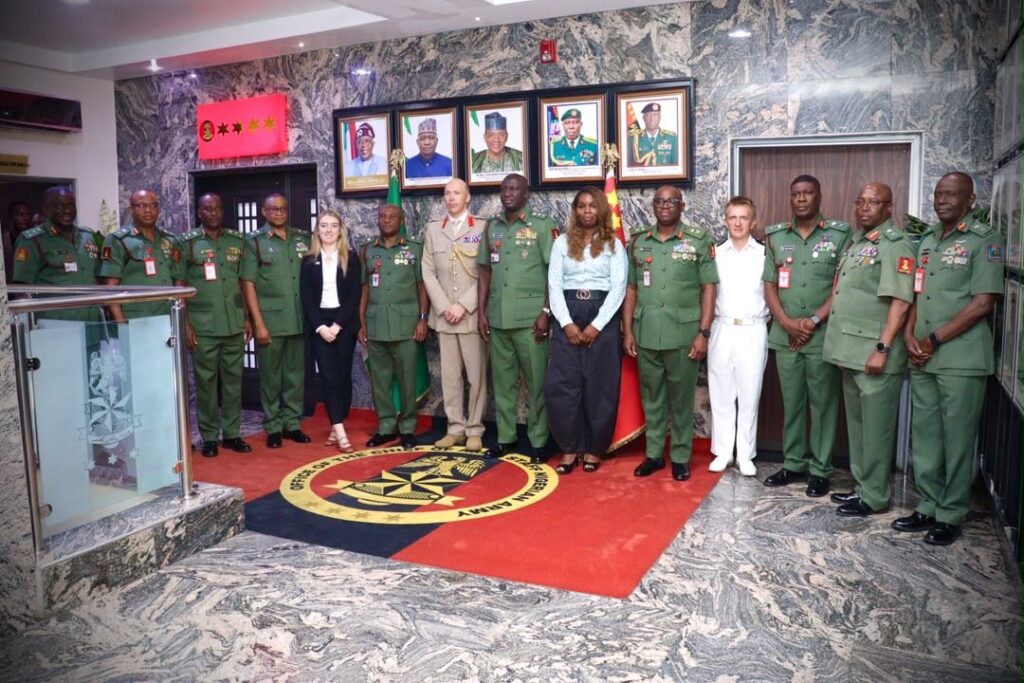
The Chief of Army Staff (COAS), Lieutenant General Waidi Shaibu, stated this on Tuesday when he received the British Defence Adviser to Nigeria, Brigadier Tom Harper, MBE, on a courtesy visit to Army Headquarters, Abuja.
The position was contained in a statement issued by the Acting Director, Army Public Relations, Colonel Appolonia Anele, on Tuesday.
Shaibu said sustained cooperation with trusted international partners remained critical to building a more adaptable, combat-ready and resilient Nigerian Army capable of responding to emerging national and regional security challenges.
He identified operational effectiveness, force protection, intelligence, specialised training and institutional capacity as key areas requiring deeper cooperation between Nigeria and the UK.
The Army chief said asymmetric warfare and operations in difficult terrain, particularly in the North-East, remained major operational challenges requiring stronger intelligence, surveillance and reconnaissance capabilities, technical intelligence, aviation support and continuous situational awareness down to battalion level.
He also highlighted the expansion of the Nigerian Army from eight to 12 divisions, saying the growth would require corresponding investment in advanced training, instructor development and Special Forces capabilities.
According to him, efforts are also being made to strengthen training at the Doma facility while institutionalising operational lessons and preserving military heritage through command curricula and the digitisation of military archives.
Responding, Brigadier Harper reaffirmed the United Kingdom’s commitment to supporting Nigeria under the Security and Defence Partnership (SDP).
He said the UK planned to expand regional train-the-trainer programmes covering combat tactical drills, casualty care and advanced patrolling.
Future Operation HADIN KAI training cohorts, he added, are expected to include personnel from Niger, Cameroon and Chad alongside Nigerian troops, a move aimed at improving interoperability and strengthening regional capacity against common security threats.
Harper also outlined proposed UK support for the establishment of a reference Forward Operating Base within a cantonment environment, as well as counter-unmanned aerial systems and expanded tactical Intelligence, Surveillance and Reconnaissance capabilities to brigade level.
The discussions also covered defence procurement and capability development, including air defence systems, potential transfers of protected mobility vehicles and specialised ammunition support.
The Nigerian Army said the engagements reflected a broader effort to strengthen its ability to anticipate, deter and respond effectively to emerging threats while improving operational and institutional capacity.
The latest discussions further underline Nigeria’s effort to strengthen international defence partnerships as it confronts terrorism, insurgency and other asymmetric security challenges across the country and the wider West African region.