


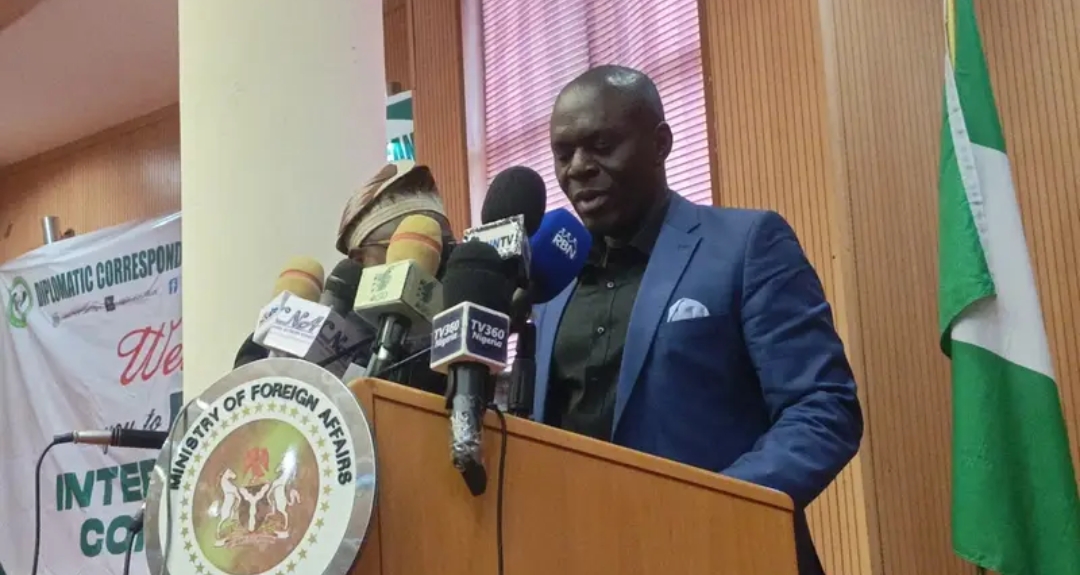
Nigeria’s rapidly growing population could become a national security challenge if the country fails to create enough jobs, schools, healthcare facilities and infrastructure for its expanding population, media scholar and public affairs analyst Dr Austin Maho has warned.
Maho said Nigeria recorded an estimated 7.64 million births in 2025, compared with about 7.9 million births in China, despite China having a population of about 1.4 billion.
He made the remarks in a paper presented at a Diplomatic Correspondents’ Association of Nigeria (DICAN) workshop on Nigeria’s poverty alleviation and China’s development model.
According to Dr. Maho, the figures demonstrated the scale of the demographic challenge facing Nigeria.
“We are growing faster than our infrastructure, our schools, and our jobs,” he said.
He warned that Nigeria’s growing population could either become a demographic dividend or a demographic burden, depending on the country’s ability to expand economic opportunities and invest in human capital.
“If we do not convert this youth bulge into a demographic dividend, it becomes a demographic burden: mass unemployment, pressure on schools and hospitals, rural-urban migration, and insecurity,” he said.
Maho described poverty reduction as more than a social policy issue, arguing that the country’s demographic trajectory gives it implications for national security.
“Our demographic trajectory makes poverty reduction/eradication not just a social policy, but a national security emergency,” he said.
He argued that Nigeria needed to mobilise leadership, data and resources around measurable development objectives.
According to Maho, the experience of China demonstrated the importance of linking poverty reduction to broader economic development rather than treating it solely as welfare intervention.
He said Nigeria must focus on agriculture, employment, education, infrastructure and other productive sectors capable of absorbing its growing population.
“Propaganda cannot fill empty stomachs. Slogans cannot reduce the cost of living,” he said.Maho said the media also had a responsibility to translate demographic statistics into stories that showed their practical consequences for Nigerians.