


The Federal Government has ruled out a return to petrol subsidy, insisting that President Bola Tinubu’s administration will sustain its economic reform programme despite mounting pressure over the rising cost of living.
The Minister of Budget and Economic Planning, Senator Abubakar Bagudu, declared that the government would not abandon the reforms, arguing that reversing the policies would undermine efforts to stabilise the economy and stimulate long-term growth.
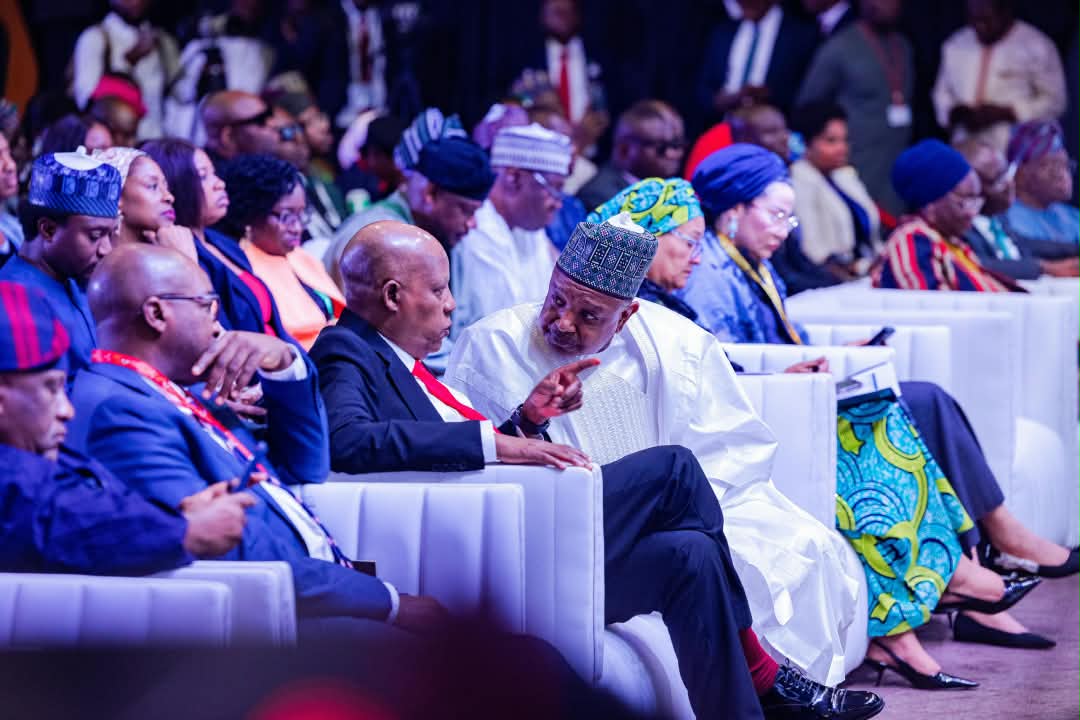
Bagudu spoke at the 32nd Nigerian Economic Summit (NES#32), which opened in Abuja on Monday under the theme, “Growth that Works: Delivering Jobs, Productivity and Shared Prosperity.”
He said the President had given clear instructions to members of his administration to maintain the reform trajectory while improving implementation and addressing the economic difficulties confronting households and businesses.
“For those of us serving under the President and Vice President, the instruction has been clear: we must stay the course,” the minister said.
His declaration comes amid opposition calls, including from African Democratic Congress presidential candidate Atiku Abubakar, for the restoration of petrol subsidy as a measure to ease the burden of rising living costs.
But Bagudu maintained that returning to the previous subsidy system would reverse the progress made under the current reforms.
“There will be no return to the fuel subsidy and the economic distortions associated with the previous system,” he declared.
He recalled that Tinubu had taken deliberate steps to ensure the continuity of the reforms, including presenting a memorandum on their sustainability at a National Economic Council meeting in October 2025.
According to him, discussions at the meeting recognised differing views on the reforms and the need for a framework to sustain them.
The minister, however, stressed that maintaining the reform programme did not mean the government would ignore changing economic realities.
He said policy adjustments would remain necessary to improve implementation, address hardship and ensure that the benefits of economic growth reached more Nigerians.
‘Hardship must be addressed’
Bagudu acknowledged the economic pressures confronting households and businesses, insisting that the success of the reforms would ultimately be measured by their impact on people’s lives.
He said the government’s immediate task was to consolidate the gains recorded, tackle implementation challenges and translate economic growth into jobs, higher productivity and shared prosperity.
The minister explained that the Renewed Hope Agenda was designed to address longstanding structural distortions, strengthen the foundations for investment and expand productive activities across the economy.
He listed agriculture, manufacturing, infrastructure, digital technology and human capital development among the sectors receiving government attention to promote inclusive and sustainable growth.
Bagudu also highlighted improvements in key macroeconomic indicators and increased revenue accruing to the federal, state and local governments.
He said the additional resources available to subnational governments offered opportunities to expand infrastructure, improve public services and address development priorities.
According to him, the distribution of increased revenue across the federation reflects the President’s commitment to fiscal federalism, adding that stronger coordination among the three tiers of government was necessary to turn available resources into measurable development outcomes.
FG targets $1trn economy
The minister said Nigeria must sustain its reforms, boost domestic production and attract greater investment to achieve its ambition of building a $1 trillion economy by 2030.
He noted that attaining the target would require improved productivity, stronger private-sector participation, expanded industrial capacity and a more competitive business environment.
Bagudu urged stakeholders to work together to mobilise domestic and international capital to bridge the country’s development financing gap.
He said credible public-private partnerships, stronger domestic capital markets and improved access to finance were critical to expanding productive capacity, attracting investment and accelerating economic transformation.
The minister also called for better access to financing for micro, small and medium-sized enterprises, noting that businesses needed affordable capital to invest, innovate, expand and create jobs.
He highlighted efforts to develop financing support mechanisms, including a proposed credit guarantee framework, to help viable enterprises overcome barriers to accessing credit.
8,809 wards to drive grassroots growth
In a major push for grassroots economic development, Bagudu highlighted the Renewed Hope Ward Development Plan, which seeks to identify and unlock productive opportunities across Nigeria’s 8,809 wards.
He explained that the initiative was designed to identify the economic strengths of individual communities and develop targeted interventions to stimulate local production, increase household incomes and generate employment.
According to him, communities with potential in agriculture, fishing, livestock, textiles and other productive activities require support tailored to their resources and economic opportunities.
He said unlocking the potential of local communities would strengthen grassroots economies and ensure that development opportunities extended beyond major urban centres.
Bagudu described agriculture as central to economic diversification, food security and job creation.
He emphasised the need to improve farmers’ access to inputs, financing, mechanisation and irrigation, while strengthening agricultural value chains through the National Agricultural Mechanisation Policy and the National Agricultural Mechanisation Investment Strategy.
He added that increasing production must go hand in hand with better processing, storage, transportation, distribution and market access.
Such interventions, he said, would help reduce post-harvest losses, improve food availability, raise farmers’ incomes and create opportunities for agribusinesses and rural communities.
Manufacturing, digital economy get attention
Bagudu also identified manufacturing as a key driver of local value addition, skilled employment and reduced dependence on imported goods.
He cited the Nigeria Industrial Policy 2025 and the Nigeria First Policy as part of the government’s efforts to strengthen domestic production, deepen local supply chains and improve the competitiveness of Nigerian businesses.
Beyond agriculture and manufacturing, he said digital technology, financial services and trade offered considerable opportunities to boost productivity, promote innovation and expand employment.
The minister disclosed that the Federal Government was collaborating with the European Union and the European Bank for Reconstruction and Development on a fibre-optic infrastructure initiative involving approximately 90,000 kilometres of network deployment.
The initiative, he said, was aimed at expanding broadband connectivity and supporting business growth.
FG invests in human capital
On human capital development, Bagudu said Nigeria’s long-term competitiveness depended on the knowledge, health, skills and productive capacity of its citizens.
He highlighted government interventions in education, healthcare, foundational learning, skills development and social protection, including the Human Capital Opportunities for Prosperity and Equity programmes and the Nigerian Education Loan Fund.
The minister also stressed the need to prepare young Nigerians for changing labour-market demands as artificial intelligence and other emerging technologies reshape industries and occupations.
He said equipping young people with relevant digital, technical and entrepreneurial skills would improve employability, encourage innovation and strengthen Nigeria’s position in the global economy.
Bagudu urged government institutions, private-sector operators and development partners to deepen collaboration in delivering reforms and mobilising the investment needed to expand economic opportunities.
He said the ultimate goal of the administration’s policies was to build a resilient economy capable of creating jobs, improving livelihoods and delivering tangible benefits to Nigerians.