


The Delta State Government has rolled out fresh measures to cushion the effects of economic hardship and put more money in the pockets of residents through infrastructure projects, workers’ welfare, empowerment schemes and strategic investments.
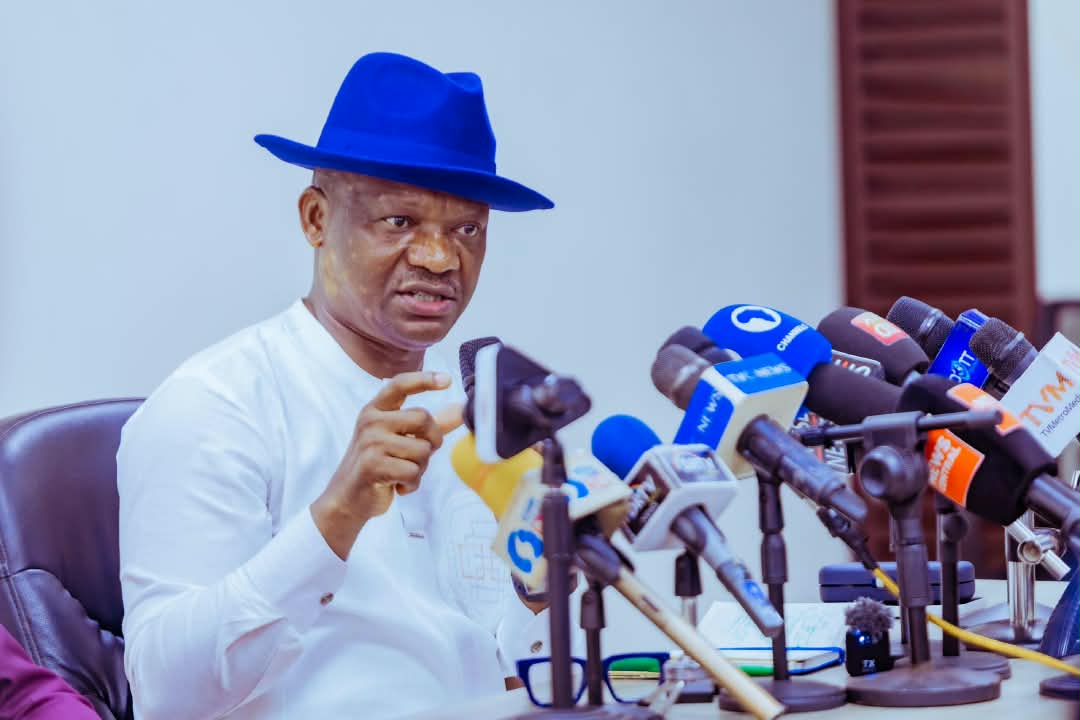
The Commissioner for Works (Rural Roads) and Public Information, Mr Charles Aniagwu, disclosed this on Thursday while addressing journalists at a press conference in Asaba.
Aniagwu said Governor Sheriff Oborevwori had directed the administration to intensify programmes capable of stimulating economic activities at the grassroots and ensuring that the benefits of ongoing economic reforms reached households.
The commissioner, who was accompanied by the Executive Assistant to the Governor on New Media, Mr Felix Ofou, said the state’s improved financial position had enabled the government to undertake major capital projects while deliberately deploying resources to stimulate the local economy.
“The governor has directed that we intensify efforts at rolling out programmes that will indeed improve the purchasing power of our people,” Aniagwu said.
He explained that the planned massive renovation of schools across the state was part of the strategy, noting that the projects would create jobs and business opportunities for contractors, artisans, suppliers and traders in local communities.
According to him, materials such as cement and roofing sheets would largely be sourced locally, ensuring that government spending circulates within the communities where the projects are being executed.
He said the approach would create a multiplier effect by increasing earnings and boosting household spending.
Aniagwu also disclosed that the state government was working to institutionalise the proposed payment of a 13th-month salary through legislation.
He said the initiative was not designed as indiscriminate distribution of funds but as a deliberate measure to increase the disposable income of civil servants and stimulate economic activity.
“Once this fund gets to the hands of the civil servants, that civil servant is also enabled to spend money in certain directions. That way, government would have been able to take the benefit of the reforms from the macro level to the micro level,” he said.
The commissioner further revealed that Governor Oborevwori had directed relevant government agencies to commence the identification of beneficiaries for various empowerment programmes.
The agencies include the Office of the Chief Job Creation Officer, Ministry of Women Affairs, Community and Social Development, Ministry of Youth Development and Ministry of Science and Technology.
He said the programmes would provide business support, new skills and other forms of empowerment to enable beneficiaries become economically productive.
Aniagwu also linked the administration’s massive investment in road construction to its economic stimulation strategy.
He said roads connecting communities and opening up economic corridors would reduce transportation difficulties, facilitate the movement of goods and services and provide a better environment for businesses to thrive.
The commissioner said the government was also pursuing investment opportunities arising from the state’s economic and investment summit.
He disclosed that efforts were being made to attract investment in poultry feed and other agricultural inputs, saying local production would reduce the amount of money leaving Delta to procure such materials from other parts of the country.
According to him, the initiative would also create jobs and new business opportunities for farmers and investors.
Aniagwu said the state’s improved revenue position and liquidity would not be deployed for indiscriminate spending but channelled into projects and programmes capable of generating sustainable economic growth.
He listed education, healthcare, roads, housing and empowerment among the sectors receiving attention from the administration, stressing that the ultimate objective was to make residents more financially resilient.
The commissioner also cited the construction of additional residential quarters for medical personnel, particularly doctors, as part of efforts to improve public services and tackle brain drain in the health sector.
He said providing decent accommodation for critical medical personnel would help retain them in the state and improve healthcare delivery.
Aniagwu acknowledged the economic difficulties caused by the removal of fuel subsidy and other reforms at the federal level, but said the Delta Government was determined to cushion their impact on residents.
He noted that while some of the reforms might have been necessary, their implementation could create unintended consequences and “grey areas” requiring intervention.
“We are convinced that efforts are also being made to address those grey areas, just as we are doing in Delta, so that the benefit of this removal can move beyond the macro level and come to the micro level,” he said.
He urged Deltans not to allow the present economic difficulties to determine their expectations of the future, stressing that the state government’s programmes were designed to create a path towards greater economic stability.
As the 2027 elections approach, Aniagwu said the Oborevwori administration would remain focused on governance and projects capable of delivering tangible benefits to residents rather than politically motivated cash distribution.
He urged Deltans to support the government’s programmes, saying the goal was to ensure that as the state’s economy grows, residents would also experience improvements in their purchasing power and standard of living.