


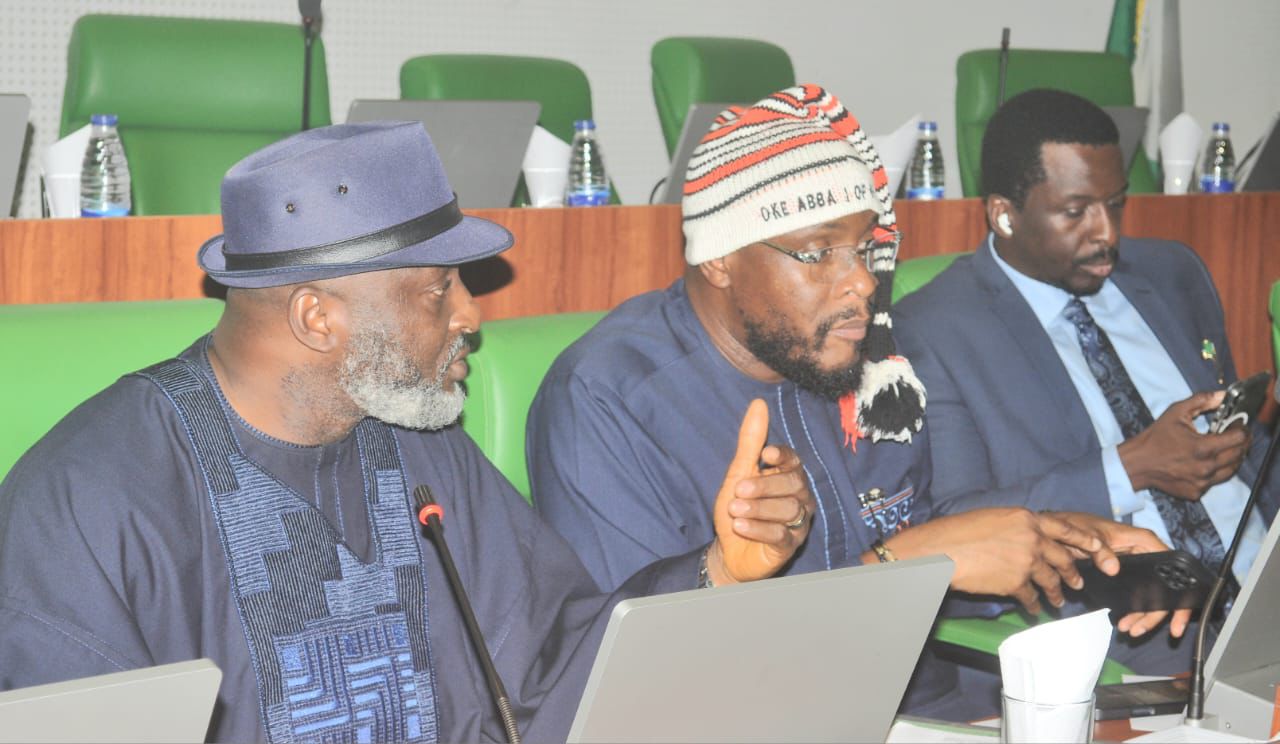
The House of Representatives Committee on Infectious Diseases has resumed its investigative hearing into the utilisation of over $4.6 billion in grants received by Nigeria from the Global Fund and the United States Agency for International Development (USAID) between 2021 and 2025.
The grants were intended for the fight against HIV/AIDS, tuberculosis, and malaria, as well as for strengthening the country’s health system.
The committee’s Chairman, Rt. Hon. Amobi Godwin Ogah, declared the hearing open on Wednesday at the National Assembly. He said the investigation was aimed at promoting transparency, accountability, and efficiency in the management of donor funds, and not targeted at any individual or organisation.
Ogah said the probe followed a resolution adopted by the House on October 21, 2025, mandating the committee to investigate the disbursement and utilisation of the grants. He noted that after two earlier sittings and a brief delay due to the Easter and Sallah holidays, the committee was reconvening to continue the exercise.
He stressed that the investigation was in the national interest and designed to ensure that resources meant for combating infectious diseases are properly utilised for the benefit of Nigerians.
“This exercise is not a witch-hunt or a vendetta against anyone. It is borne out of our desire to place Nigeria and Nigerians at the centre of all policy decisions, particularly on critical public health issues such as HIV/AIDS, tuberculosis and malaria,” he said.
According to Ogah, the investigation is also intended to reassure international development partners of Nigeria’s commitment to transparency and accountability in the use of donor resources.
He commended the Global Fund, USAID, and other international partners for their sustained support to Nigeria’s health sector, particularly in the response to HIV/AIDS, tuberculosis, malaria, and other infectious diseases. He also acknowledged the contributions of civil society organisations and non-state actors in advancing public health interventions.
The lawmaker disclosed that the National Assembly would henceforth require the submission of implementation plans for all Global Fund-supported programmes in Nigeria for parliamentary oversight and approval. He added that the committee would also expect quarterly reports from principal recipients, sub-recipients, and implementing partners on the execution of Global Fund grants.
“Going forward, the National Assembly will request the submission of all implementation plans by principal recipients and implementing partners of Global Fund grants in Nigeria for parliamentary review. We also expect quarterly reports on the activities of all recipients, sub-recipients and key implementing partners,” he said.
Ogah noted that with the 8th replenishment cycle of the Global Fund expected in the coming months, it had become imperative to establish stronger accountability mechanisms to guide the management of incoming resources.
He expressed concern that Nigeria may be falling behind in its target to eliminate major public health threats by 2030, but insisted that the country must intensify efforts to maximise available resources.
“We are at a critical juncture in our response to HIV/AIDS, tuberculosis, malaria and other infectious diseases. While the 2030 elimination target may appear increasingly challenging, we must remain resolute and ensure the efficient utilisation of every available resource,” he stated.
He called for deeper collaboration among government institutions, development partners, and non-state actors to eliminate duplication, improve coordination, and ensure that limited resources are directed to areas of greatest impact.
Ogah assured stakeholders of the committee’s continued legislative support in strengthening Nigeria’s response to infectious diseases and advancing sustainable health outcomes for all citizens.