


ABUJA — President Bola Ahmed Tinubu has pledged to intensify efforts to stem the migration of Nigerian health professionals, popularly known as japa, while encouraging skilled medical personnel abroad to return and serve the country and the West African sub-region.
The President also disclosed that more than 30,000 healthcare professionals had been recruited into federal health facilities in the past two and a half years as part of efforts to strengthen Nigeria’s health workforce.
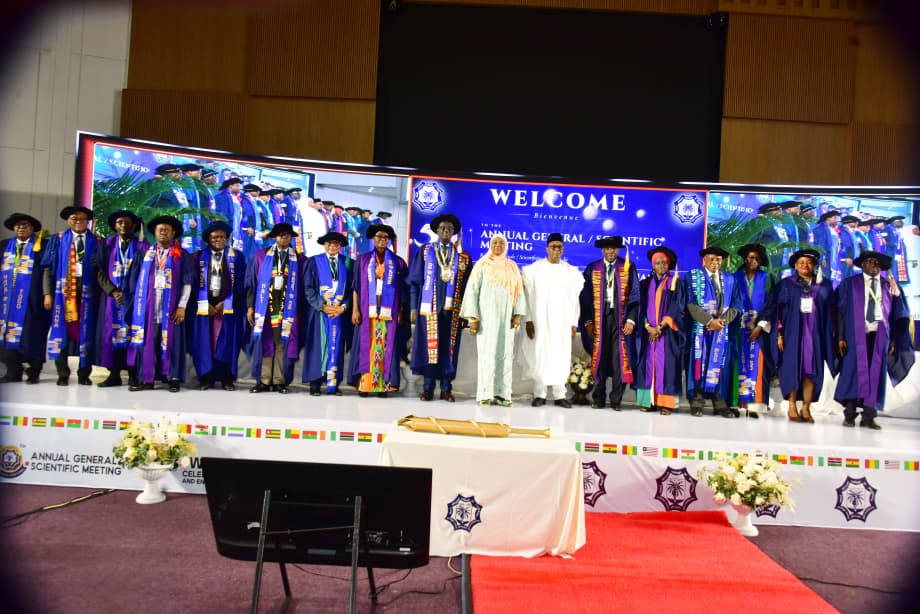
Tinubu, represented by the Coordinating Minister of Health and Social Welfare, Professor Muhammad Ali Pate, made the disclosure at the 50th anniversary general meeting, scientific conference and induction ceremony of the West African College of Physicians (WACP) in Abuja.
He said the Federal Government recognised that the strength of any healthcare system depended largely on the availability of competent and adequately trained personnel.
According to him, the administration is prioritising the recruitment, retention, welfare and professional development of healthcare workers to improve service delivery and expand access to quality medical care.
“We will work hard to stem the trend of japa so that we have people coming back to serve in our region,” the President said.
He reaffirmed the government’s commitment to strengthening specialist medical education, improving healthcare infrastructure and expanding health insurance coverage under the Renewed Hope Agenda.
Tinubu described the WACP’s golden jubilee as a significant milestone in the development of specialist medical education and healthcare delivery across West Africa.
Established in 1976, the college has contributed to postgraduate medical training, professional certification, scientific research and the development of specialist physicians throughout the sub-region.
He commended the institution for producing generations of medical specialists who have strengthened healthcare systems and contributed to advances in medical science.
FG intensifies healthcare reforms
The President said the Federal Government had undertaken far-reaching reforms to improve healthcare infrastructure, strengthen primary healthcare delivery and advance universal health coverage.
He disclosed that, in addition to recruiting more than 30,000 healthcare professionals into federal facilities, the administration had supported the training of thousands of frontline health workers and doubled medical education quotas.
Tinubu said the government was also investing in the construction, rehabilitation and equipping of health facilities, including specialist hospitals and primary healthcare centres.
He added that increased direct funding through the Basic Health Care Provision Fund was helping to improve the capacity of primary healthcare facilities to provide essential services.
On health insurance, the President said the administration was expanding coverage to protect more Nigerians against catastrophic medical expenses and reduce financial barriers to healthcare.
He also highlighted the adoption of digital technologies to improve patient records, disease surveillance, healthcare management and evidence-based decision-making.
Tinubu expressed optimism that the reforms would strengthen Nigeria’s health system and position the country as a regional destination for quality medical services.
Nigeria strengthens disease surveillance
The President also reaffirmed Nigeria’s commitment to regional health security, warning that infectious diseases and other public health emergencies required coordinated responses across national borders.
He said the government was strengthening disease surveillance, laboratory networks, emergency preparedness and cross-border collaboration to improve the country’s capacity to detect and contain outbreaks.
According to him, investments in the Nigeria Centre for Disease Control and Prevention and related health security institutions demonstrated the government’s determination to protect citizens and contribute to regional and global health security.
Tinubu called for sustained political commitment, adequate investment in public health preparedness and stronger cooperation among West African countries to achieve an Ebola-free region.
He pledged Nigeria’s continued collaboration with the WACP, the Economic Community of West African States (ECOWAS), the African Union, Africa Centres for Disease Control and Prevention and international development partners.
The President also urged medical institutions to embrace emerging technologies, including artificial intelligence, while ensuring appropriate safeguards.
He said the Federal Government would continue to work with relevant ministries, professional bodies and educational institutions to strengthen postgraduate medical education and develop the next generation of specialist physicians.
FCT commits N200m to WACP anniversary
Meanwhile, the Minister of State for the Federal Capital Territory, Dr Mariya Mahmoud, announced a N200 million financial commitment by the FCT Administration in support of the conference.
Mahmoud, who disclosed that she was also a member of the college, congratulated its leadership, fellows and members on the 50th anniversary.
She described the milestone as evidence of five decades of commitment to specialist medical education, professional development, research and healthcare advancement across West Africa.
The minister said the conference theme, WACP at 50: Celebrating a Legacy and Envisioning the Future, provided an opportunity to reflect on the college’s achievements and develop strategies for addressing emerging healthcare challenges.
She stressed the need for greater investment in medical education, specialist training, research, digital health technologies and the welfare of healthcare professionals.
Mahmoud also called for stronger partnerships among governments, professional associations, academic institutions, development partners and the private sector to improve healthcare delivery and retain skilled medical personnel.
She expressed the hope that the deliberations would produce practical recommendations to strengthen regional cooperation and improve health outcomes.
WACP president identifies healthcare challenges
In his address, the President of the WACP, Dr Mamadou Mourtalla Ka, said the golden jubilee offered an opportunity to celebrate the institution’s achievements and examine the challenges confronting healthcare systems across West Africa.
He paid tribute to the college’s founders, former presidents, senior fellows and teachers, whose contributions had sustained its growth and professional reputation over five decades.
Ka identified the growing burden of non-communicable diseases, persistent infectious diseases, inequalities in access to healthcare and increasing pressure on health systems as major concerns requiring sustained attention.
He called for stronger postgraduate medical education, relevant scientific research and closer collaboration among the college’s national chapters.
The WACP president also emphasised the importance of supporting younger physicians and trainees with the knowledge, skills and professional values required to address future healthcare demands.
He expressed appreciation to the Nigerian government, ECOWAS, the college’s Nigeria chapter, the local organising committee and other partners for their contributions to the anniversary celebration.
College records over 40,000 fellows
Earlier, the Vice-President of the WACP and National Chairman of its Nigeria Chapter disclosed that the college had produced more than 40,000 fellows and over 4,000 members as of April 2026.
He said the institution, established by five English-speaking West African countries, had expanded into a regional professional body bringing together English-, French- and Portuguese-speaking countries.
He noted that the college’s faculties and national chapters had contributed to specialist training, professional development and improved clinical practice across the sub-region.
The induction of new fellows and members, he said, would further strengthen the pool of specialist physicians available to serve Nigeria and other West African countries.
The anniversary conference brought together physicians, researchers, policymakers and other stakeholders to deliberate on the future of specialist medical education, research and healthcare delivery across West Africa.


