


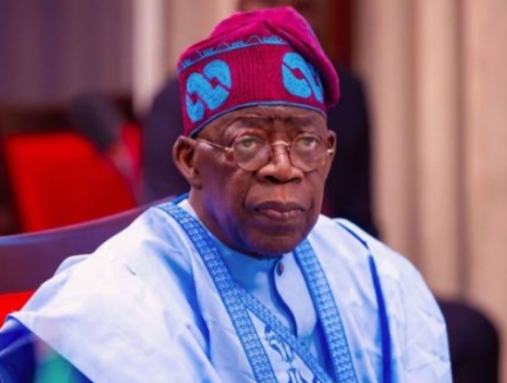
Support for President Bola Ahmed Tinubu’s re-election bid gathered momentum on Wednesday as the Tinubu Impact Movement (TIM) publicly endorsed his leadership ahead of the 2027 general elections, unveiling what it described as an evidence-based scorecard of the administration’s performance across key sectors.
At a well-attended press conference in Abuja, leaders of the movement presented a midterm assessment of the President’s Renewed Hope Agenda, arguing that the administration’s early and often difficult reforms are beginning to deliver measurable gains in governance, economic stability and social welfare.
Speaking at the event, TIM’s National Chairman, Chief Dr. Obinna Ebirim, said the group’s endorsement was anchored on verifiable data rather than partisan sentiment, stressing that the Tinubu administration had confronted deep-seated structural challenges inherited at inception.
According to him, reforms in public finance, energy pricing and foreign exchange management were deliberate corrective measures taken in the long-term national interest.
“Our assessment shows clearly that these were not arbitrary or reckless choices. They were necessary decisions whose positive cumulative effects are now evident across multiple sectors,” Ebirim said.
He added that TIM would continue to track policy outcomes, engage the administration constructively and bridge what he described as a “dangerous communication gap” that allows misinformation and negative narratives to dominate public discourse.
Highlighting achievements in the education sector, TIM National Secretary and educationist, Dr. Ajibola Meraiyebu, said President Tinubu inherited a system plagued by chronic underfunding, dilapidated infrastructure and a growing population of out-of-school children.
He noted that education funding has increased from about ₦1.54 trillion in 2023 to approximately ₦3.52 trillion by 2025, marking what he described as a significant policy shift.
Meraiyebu also cited the impact of the Nigerian Education Loan Fund (NELFUND), disclosing that ₦161.97 billion has been disbursed to 864,798 students across universities, polytechnics and colleges of education nationwide.
“This intervention alone has kept hundreds of thousands of Nigerian students in school who might otherwise have dropped out,” he said, describing the scheme as a landmark move toward equity and sustainability in tertiary education financing.
From a subnational perspective, TIM’s Borno State Coordinator, Muhammad Elzubairu, pointed to expanded TETFund interventions supporting the rehabilitation of lecture theatres, laboratories, hostels and research facilities, as well as improved UBEC matching grants, teacher training and curriculum reforms focused on digital literacy, technical skills and entrepreneurship.
On the economy, TIM Director of Finance, Mr. Omasirichi Nmecha, acknowledged the hardship associated with fuel subsidy removal and foreign exchange unification but argued that the reforms were unavoidable.
He said the elimination of unsustainable subsidy payments, combined with improved revenue mobilisation and forex reforms, has resulted in higher FAAC allocations to states, improved fiscal transparency, stronger external reserves and renewed investor confidence.
“These are the foundations for long-term economic stability, even as inflationary pressures from the transition are gradually easing,” Nmecha said.
Addressing security, Edward Ndahi, Director of TIM’s Security Committee, said Nigeria before May 29, 2023, was characterised by widespread abductions, terror attacks and unsafe highways. He attributed recent improvements to sustained security sector reforms, enhanced intelligence gathering, better inter-agency coordination and improved welfare for security personnel.
According to him, these efforts have led to reduced incidents of mass abductions, increased rescue operations, disruption of criminal networks and safer travel along major transport corridors.
On sports development, TIM Director of Social and Events, Okome Edrin, said the administration prioritised institutional stability over ad-hoc interventions, noting improved funding frameworks, better athlete welfare and stronger governance structures. He also commended the decision to place sports solely under the National Sports Commission, separate from youth development.
Presenting the youth development scorecard, Mr. Stanley Ochoma said the administration inherited weak coordination, skills mismatches and limited access to finance for young people. He highlighted expanded digital and vocational training programmes, youth-focused credit schemes and stronger public-private partnerships.
Similarly, a TIM member and former Anambra State governorship aspirant, High Chief Johnbosco Onunkwo, cited initiatives under the Federal Ministry of Youth Development, including the Nigeria Youth Academy (NiYA), Yo! Health, YouthCred and the Waste2Wealth circular economy programme. Both speakers praised President Tinubu’s decision to appoint a young minister, Comrade Ayodele Olawande, describing the ministry as one of the administration’s standout performers.
On reforms in the interior sector, Otunba Akinsanya Sunday, Director of Logistics and Transportation, said issues such as passport backlogs, overcrowded correctional facilities and weak emergency response systems were being addressed through automation, correctional decongestion, improved border management and faster fire service response times under the leadership of Dr. Olubunmi Tunji-Ojo.
Speaking on women, social protection and inclusion, TIM’s Jigawa-based Women Leader, Hajiya Amina Dogonyaro, said reforms have strengthened digital verification systems, improved cash transfer efficiency, expanded livelihood support and increased women’s participation in governance.
On healthcare, TIM member and APC chieftain in Enugu State, Basil Eze, noted expanded health insurance coverage, renewed investment in primary healthcare, incentives for local pharmaceutical production and a gradual reduction in medical tourism.
Addressing foreign affairs and investment, Arc. Stephen Otalike, Director of Recruitment and Mobilisation, said renewed diplomatic engagement, clearer policy direction and fiscal reforms have improved Nigeria’s global image and attracted fresh foreign direct investment commitments.
On ICT-driven governance, Hauwa Malami, Director of ICT and Public Communications, highlighted the rollout of the Enterprise Content Management System (ECMS), also known as the 1-Government (1-Gov) Cloud, noting its impact on passport processing, education financing, health insurance enrolment, social registers and revenue tracking.
In his closing remarks, Ebirim said the performance outlined by TIM reflects a coherent and long-term reform agenda, adding that significant progress had also been recorded in the solid minerals sector under the Minister of Solid Minerals Development, Dr. Dele Alake.

