


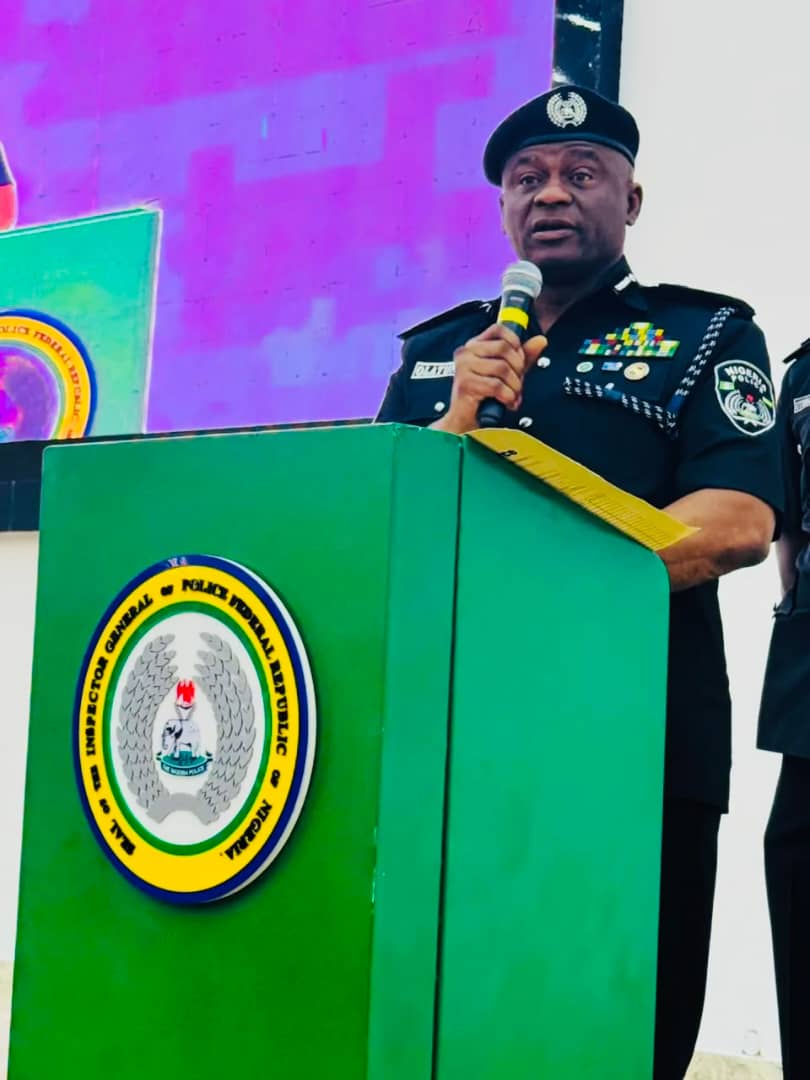
Disu Deploys Intelligence, Technology, Community Partnership
The Nigeria Police Force has unveiled a six-point security framework for the 2027 general elections, with emphasis on early intelligence, specialised training, inter-agency coordination, technology, community partnership and strict political neutrality.
Inspector-General of Police, IGP Olatunji Disu, unveiled the roadmap on Monday at the opening of the 2026 Conference and Retreat for Senior Police Officers (CARSPO 2026) in Owerri, Imo State.
The conference, themed “Developing a Nigeria Police Roadmap for Effective Management of Security During Elections,” is focused on developing practical strategies for securing the electoral process before, during and after the 2027 polls.
Disu said the Force would no longer treat election security as an operation restricted to polling day, insisting that preparations must begin early enough to identify threats and prevent violence.
“Our duty does not begin on election day. It covers the whole electoral cycle,” he said. “We must prepare before the crisis, not during it.”
Under the framework, police commands are expected to identify and map potential electoral flashpoints, criminal networks and emerging threats, while strengthening early-warning systems and ensuring that intelligence reaches commanders in time for preventive action.
The IGP also warned politicians and their supporters against political violence, vote-buying, movement of arms and intimidation of voters or electoral officials.
“To politicians and their supporters, my message is simple. Compete with ideas, not with thugs,” Disu said.
He added that preparations for the elections would not distract the Force from ongoing operations against kidnapping, banditry, terrorism and communal violence.
“Numbers do not console a grieving family. We will not slow down on these threats because an election is coming. We will fight them and secure the elections at the same time,” he said.
According to Disu, since he assumed office in February 2026, police operations had resulted in the arrest of 251 terrorists and suspected bandits, 343 murder suspects, 566 suspected armed robbery suspects and 483 suspected cultists.
He said 1,066 kidnapped persons had also been rescued, while 947 firearms and more than 22,000 rounds of ammunition were recovered during the period.
Training, Technology Take Centre Stage
Disu said police personnel deployed for election duties would undergo intensified training covering crowd management, protection of electoral personnel and materials, conflict prevention, rapid response and human-rights-compliant policing.
Particular attention, he said, would be given to ad-hoc personnel of the Independent National Electoral Commission (INEC), as well as voters who may require additional protection, including women, elderly citizens and persons with disabilities.
“A polling unit where these citizens feel unsafe is a polling unit where the election has already failed,” he said.
The IGP also identified technology and effective communication as key components of the new strategy, with real-time reporting expected to improve situational awareness and response to emerging threats.
He raised concern over election-related misinformation, including fake results, forged police statements and inflammatory online videos, warning that false information could quickly trigger tension and disorder.
“Falsehood now travels faster than any patrol,” Disu said.
Police, INEC to Strengthen Coordination
The IGP said closer coordination between the police, INEC and other security and law-enforcement agencies would be required to manage the scale and complexity of election security.
He said agencies would need to operate with clearly defined responsibilities, timely intelligence sharing and coordinated command structures.
The police have previously engaged INEC on the security architecture for the electoral cycle, including intelligence mapping, protection of electoral personnel and materials and coordination with sister security agencies.
Disu also called for stronger partnerships with traditional rulers, religious leaders, youths, civil society organisations, the media and members of the public to identify emerging tensions and improve communication with communities.
IGP Warns Police Against Partisanship
The police chief reiterated that personnel must remain neutral during political contests.
“We protect citizens and enforce the law. We do not decide political outcomes,” he said.
He warned that officers who harass voters, collude with political actors, abuse their powers or compromise their neutrality would face investigation and appropriate disciplinary action.
Disu directed Commissioners of Police to strengthen supervision in their respective commands and ensure that Force Headquarters’ directives were communicated effectively to officers through regular briefings.
He also directed commands to make official contact numbers available to members of the public.
“A Commissioner of Police the public cannot reach cannot understand the public’s fears,” he said.
The IGP further directed that election-duty allowances should be paid promptly and that duty schedules should provide officers with adequate rest.
He stressed that any use of force during election operations must be lawful, proportionate and limited to circumstances where it is necessary.
Police Trust Fund Pledges Support
Meanwhile, the Executive Secretary of the Nigeria Police Trust Fund (NPTF) assured that the Fund would continue supporting the Force in training, equipment and mobility as preparations for the elections intensify.
He said election security required officers to be adequately trained and equipped to manage large deployments and respond quickly to incidents.
“Election security places significant demands on the Nigeria Police Force. Meeting these responsibilities requires careful planning, but planning must also be supported by capacity,” he said.
According to him, training would focus on operational readiness, crowd management, rules of engagement, inter-agency coordination and professional conduct.
He said adequate protective, communication and crowd-management equipment would also be required, while mobility remained essential for rapid deployment and reinforcement.
“Our officers cannot be expected to perform effectively without the appropriate operational tools,” he said.
The NPTF boss, however, said equipment and funding alone would not determine election-security outcomes, stressing the importance of planning, coordination, leadership and accountability.
The Fund, he added, would continue working with the IGP and police leadership to align its interventions with operational requirements.
The CARSPO 2026, which runs from September 21 to 23 in Owerri, is expected to produce a practical framework covering police training, deployment, command structures and professional conduct before, during and after the 2027 general elections.
Closing the retreat, Disu charged senior officers to take the message of proactive policing and accountability back to their commands.
“Be proactive. Be present. Be accessible. Be accountable,” he said.
He summed up the expected conduct of police personnel during the electoral cycle in four words: “Neutral. Prepared. Present. Accountable.”