


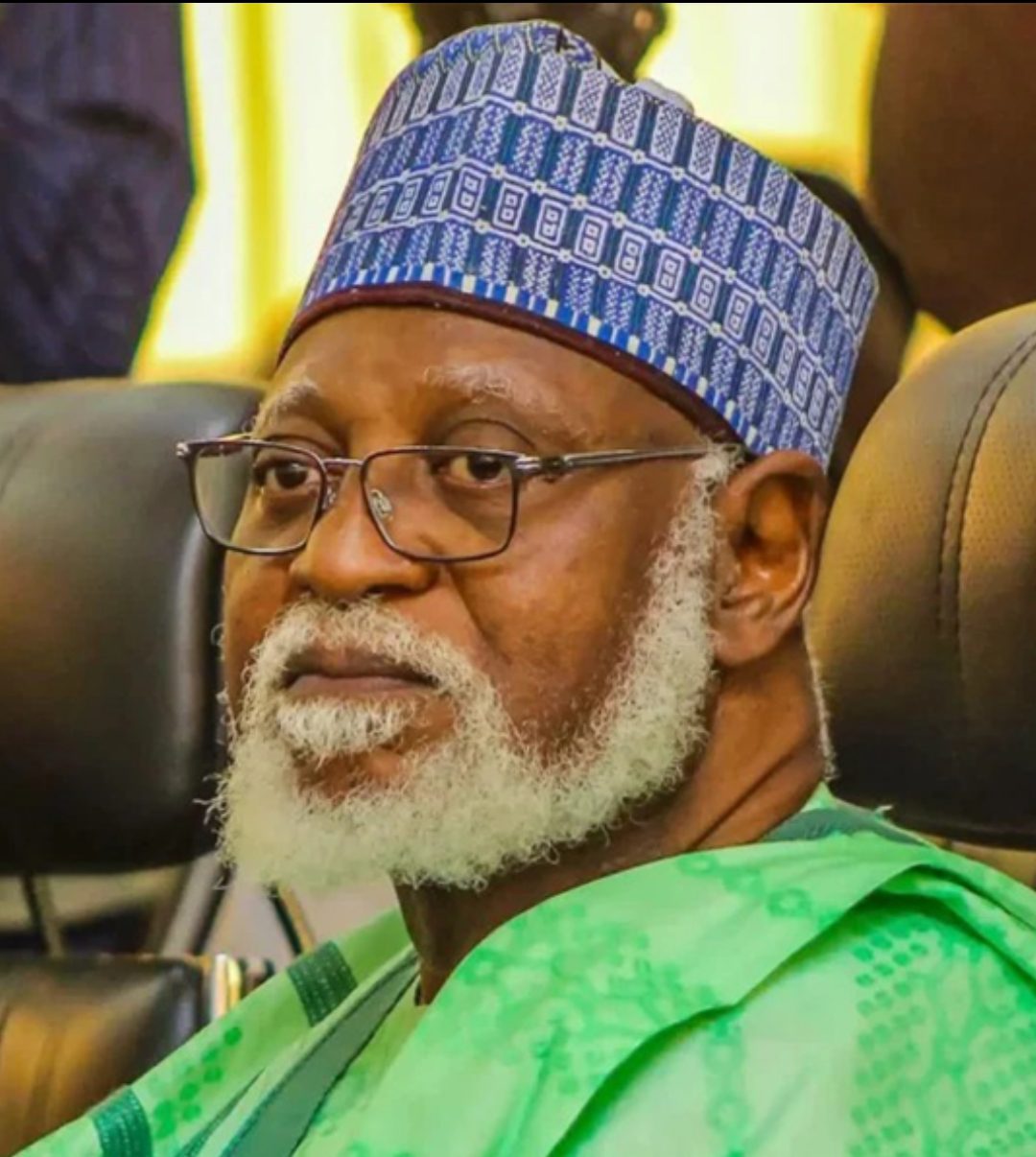
Former Nigerian Head of State Gen. Abdulsalami Abubakar (retd.) has called for the removal or amendment of military-era decrees incorporated into the 1999 Constitution to better align it with democratic principles and strengthen Nigeria’s democracy.
In his autobiography Call of Duty (launched on or around June 14, 2026, in Abuja to mark his 84th birthday), Abubakar acknowledged longstanding criticisms that certain provisions—often described as “smuggled” or embedded military decrees—remain in the document. He urged that any such changes be pursued through proper democratic processes in the National Assembly rather than used to delegitimize the entire Constitution.
Background on the 1999 Constitution
Abubakar served as Head of State from June 1998 to May 29, 1999, following the death of Gen. Sani Abacha. His short administration oversaw a rapid transition to civilian rule. On May 5, 1999, he signed Decree No. 24 of 1999, which promulgated the 1999 Constitution; it took effect on May 29, 1999, when power was handed over to elected President Olusegun Obasanjo.
The Constitution was not drafted from scratch by the military. According to Abubakar, it drew heavily (about 95%) from the 1979 Constitution, which was produced by a civilian Constitutional Drafting Committee (CDC) of 49 distinguished legal experts (chaired by Chief FRA Williams) under the Murtala-Obasanjo military regime, and further refined by a 230-member Constituent Assembly. A 25-member Constitution Debate Co-ordinating Committee (CDCC), chaired by Justice Niki Tobi, recommended adopting and amending the 1979 document after nationwide consultations rejected Abacha’s 1995 draft.
Abubakar has repeatedly emphasized that it is “false” to claim the military wrote the 1999 Constitution, noting that civilian experts and public input shaped its core, even though it was promulgated by military decree to facilitate the transition.
Controversial Provisions
Critics often point to provisions like:
– The Land Use Act (which vests control of land in state governors).
– The National Youth Service Corps (NYSC) Act (mandating one-year national service for eligible graduates).
These originated as military decrees but were incorporated into the Constitution. Abubakar argued that while amendments may be needed, these do not invalidate the rest of the document, and critics have not made a sufficiently convincing case against them. He rejected broader delegitimization efforts, such as claims about the lack of a referendum (noting no Nigerian constitution, including the praised 1979 version, underwent one).
Abubakar’s Position on Reforms
Abubakar stated: “Democracy is always in motion. Every day, new laws are made to reflect the needs of the people. If the argument is that it is a ‘military’ constitution because it was promulgated with military decrees, we are now in a democracy and whatever changes need to be made should be made democratically and in line with laid-down procedures. There’s no perfect constitution in the world.”
He acknowledged the need for updates: “I admit that there are adjustments to be made to the 1999 constitution to make it more up-to-date and reflective of the yearnings of Nigerians. A constitution is a living document. It is subject to amendments, alterations and updates.”
Since 1999, the National Assembly has amended the Constitution five times. It is currently undergoing another review, with a committee chaired by Deputy Senate President Barau Jibrin aiming to conclude before the end of 2026.
Abubakar’s Legacy
Abubakar is widely credited with steering Nigeria back to civilian rule after years of military dictatorship. Post-retirement, he has served as an elder statesman, diplomat, and current Chairman of the National Peace Committee, mediating political disputes and promoting stability.
His comments come amid ongoing debates about constitutional reform in Nigeria, reflecting broader discussions on federalism, governance, resource control, and adapting to contemporary challenges. The call reinforces that while the 1999 Constitution provided a foundation for over 25 years of uninterrupted democracy, periodic democratic amendments are essential for its evolution.