


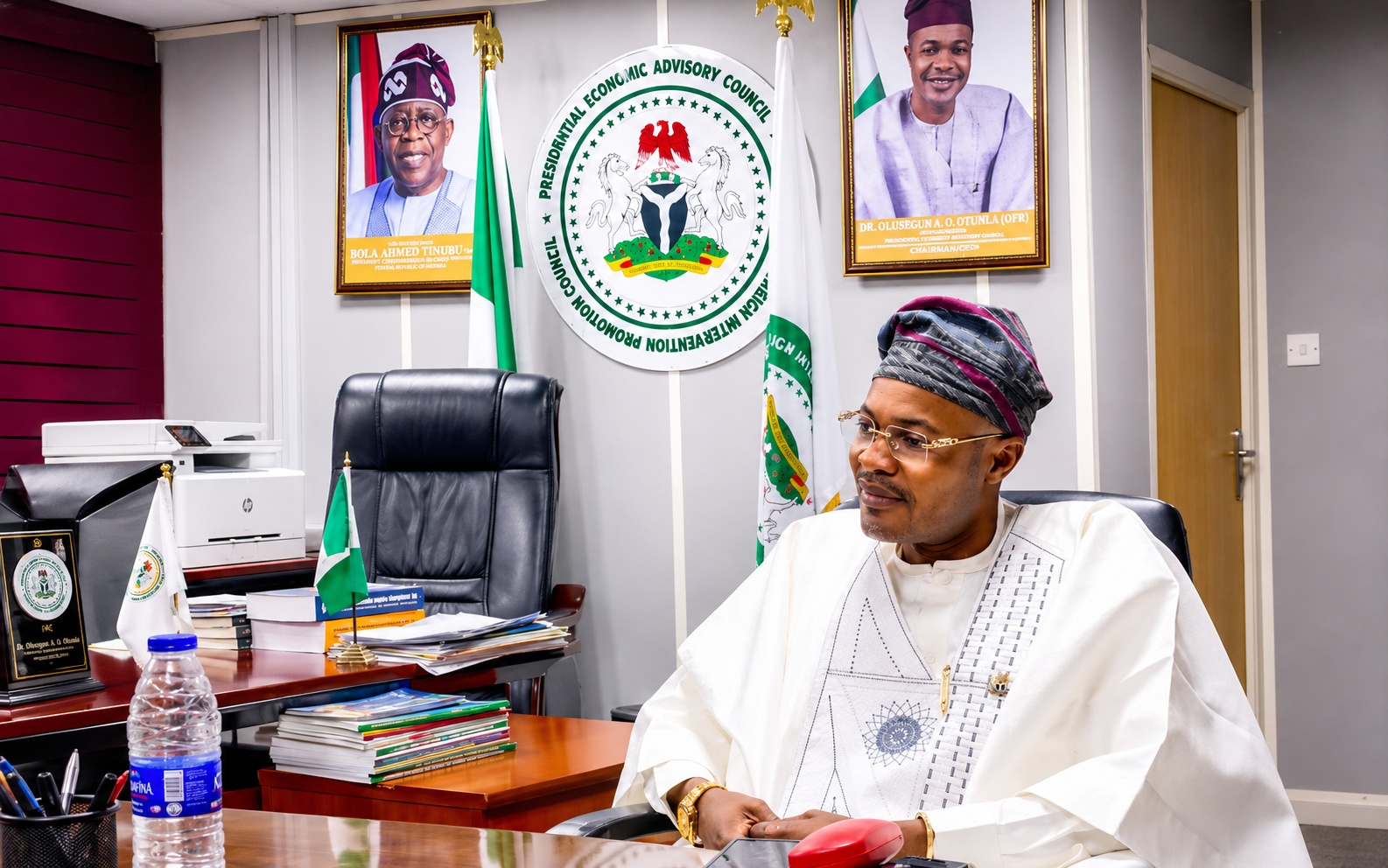
ABUJA — The Budget Office of the Federation has clarified that none of the ₦1.303 billion appropriated for the Presidential Economic Advisory Council/Presidential Foreign Intervention Promotion Council (PEAC/PFIPC) was released or spent, citing strict compliance with Nigeria’s public finance regulations.
In a statement issued Friday, Director-General Tanimu Yakubu said the controversy highlights a common misunderstanding between budget approval and actual government spending.
“The issue was never merely whether Parliament had appropriated funds. It was whether the law permitted those funds to become expenditure,” Yakubu said.
He stressed that although the National Assembly approved the funds, critical statutory requirements—such as Financial Clearance, lawful recruitment, payroll enrolment, Treasury warranting, and cash backing—were not fulfilled.
“The appropriation therefore remained an appropriation. It never became expenditure,” he added.
Yakubu explained that the Budget Office does not establish government bodies but only evaluates fiscal implications of proposals submitted by relevant agencies. He noted that the council initially proposed a personnel budget of about ₦3.85 billion, which the office reduced to ₦802.98 million based on approved public service standards.
The revised figure was included in the national budget and passed by the National Assembly, but could not be activated due to the absence of Financial Clearance from relevant authorities.
“There was no Financial Clearance. There was no lawful recruitment. There was no payroll enrolment. There was no salary payment,” Yakubu stated.
He further clarified that personnel funds are not disbursed as lump sums but paid monthly to verified employees on the federal payroll. Since no recruitment or payroll enrolment occurred, “not one kobo” of the allocation could be accessed.
On overhead costs, Yakubu said the ₦200 million provision was also not released. He disclosed that following concerns over the council’s legal status in June, the Budget Office directed the Ministry of Finance and the Office of the Accountant-General to suspend all payment processes.
Similarly, the ₦300 million capital allocation was never utilized, as it did not pass through procurement procedures required by law. No approvals, tenders, or certifications were issued, and no funds were authorized.
“The capital provision remained where Parliament had placed it… It never became capital expenditure,” he said.
Yakubu maintained that the case demonstrates the effectiveness of Nigeria’s public finance control system in safeguarding public funds.
“The law did not recover money after it had gone. It prevented the money from going,” he said.
He added that the Budget Office is ready to support any investigation by providing relevant documents and records to establish the facts.