


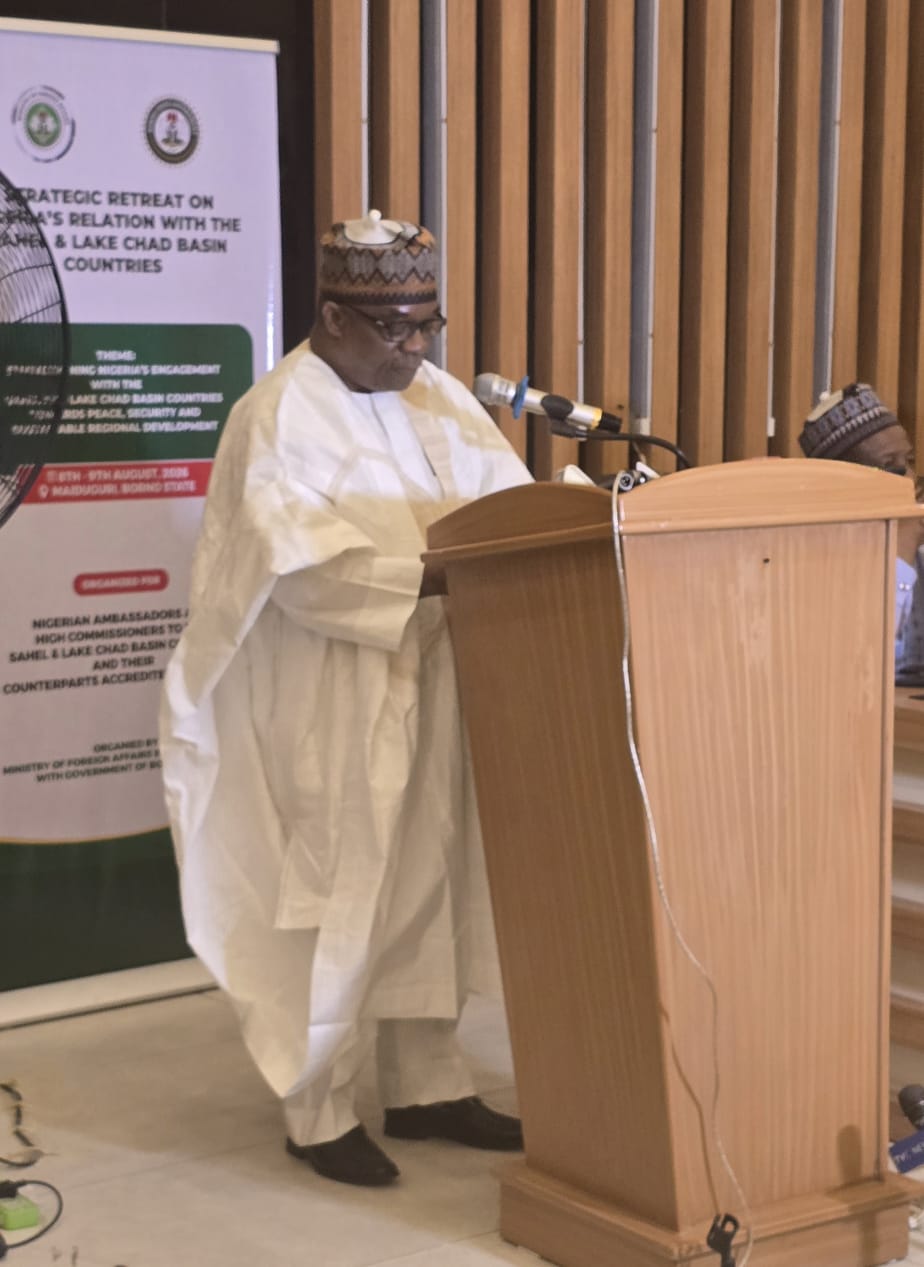
Nigeria has unveiled plans for a Sahel Development Compact, a regional framework aimed at addressing insecurity, economic fragility and humanitarian challenges across the Sahel and Lake Chad Basin.
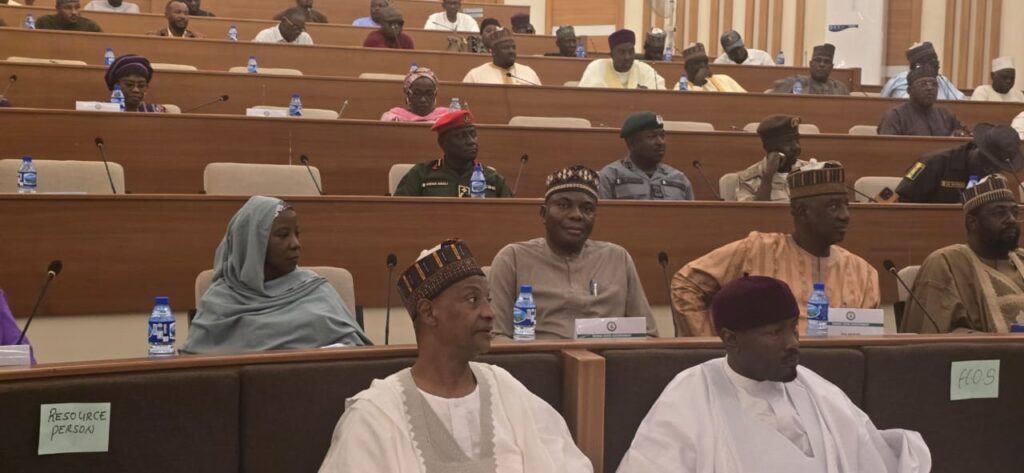
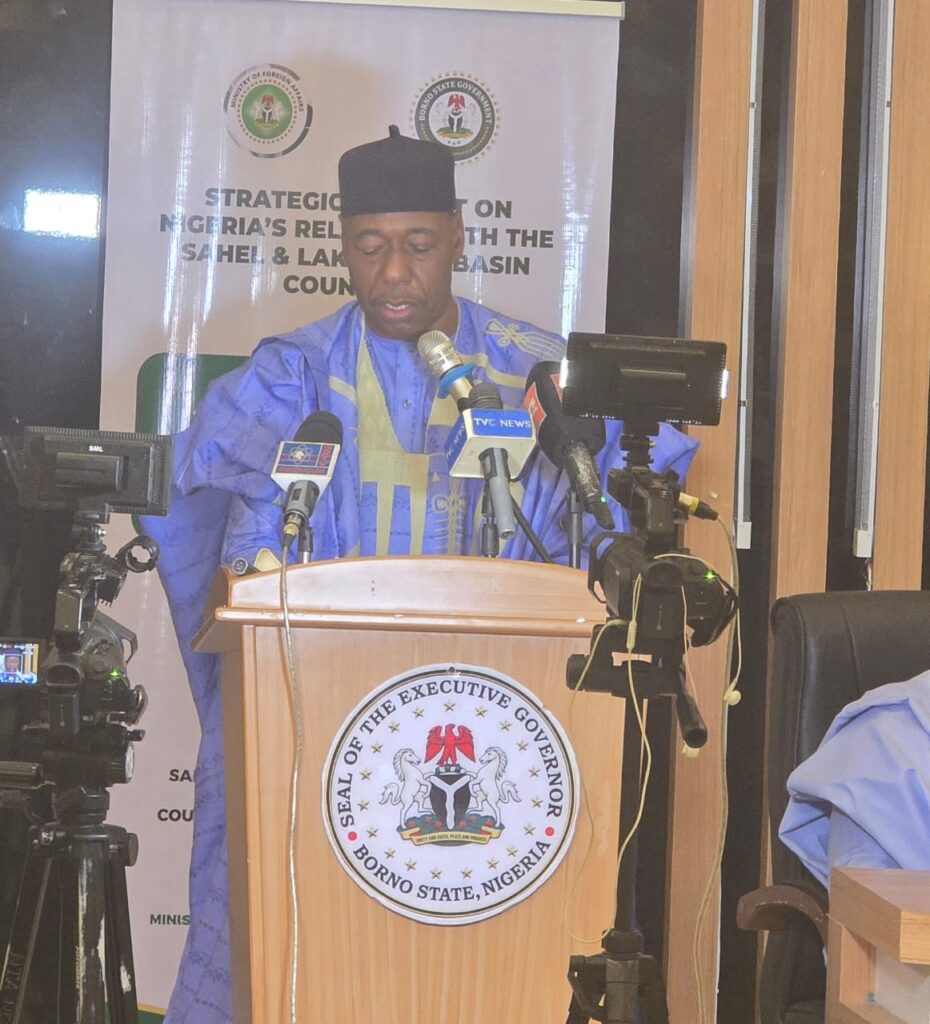
The initiative was announced on Saturday at the opening of a two-day high-level retreat in Maiduguri involving Nigerian ambassadors and diplomatic representatives from Sahel and Lake Chad countries.
Minister of State for Foreign Affairs, Ambassador Sola Enikanolaiye, said the Compact would shift regional engagement “from crisis management to sustainable development.”
“The Compact envisions deeper cooperation in infrastructure, agriculture, trade, transport connectivity, energy, education, climate resilience and human capital development,” he said.
He noted that Nigeria’s ties with countries in the region are rooted in “centuries of shared history, commerce, culture, religion and family ties,” stressing that developments in the Sahel directly affect Nigeria’s stability.
“What happens in Niamey affects Maiduguri. What happens in N’Djamena influences Borno,” Enikanolaiye said.
He added that economic cooperation would be central to the initiative, describing trade as a pathway to peace.
“Countries that trade with one another do not fight one another,” he said.
The minister also called for renewed diplomatic engagement with the Alliance of Sahel States (AES) — Mali, Burkina Faso and Niger — urging efforts to “mend fences at political and diplomatic levels.”
Also speaking, the Permanent Secretary of the Ministry of Foreign Affairs said the proposed framework would drive coordinated action across key sectors.
“Participants will examine practical strategies for advancing a proposed Sahel Development Compact… aimed at strengthening collaboration in critical areas,” he said.
According to him, the Compact will focus on security cooperation, trade and infrastructure, agriculture, climate resilience and humanitarian response, as well as youth empowerment and sustainable development.
He described the Sahel as strategically vital to Nigeria, noting that developments in the region have “profound implications for Nigeria’s national security, economic prosperity and foreign policy.”
He identified terrorism, transnational organised crime, climate change, irregular migration and food insecurity as major threats requiring urgent and coordinated responses.
The Permanent Secretary added that evolving geopolitical dynamics, including the emergence of the AES bloc, require renewed diplomatic engagement.
“These developments should not be considered solely as challenges, but as opportunities to review our engagement… through constructive dialogue, mutual respect and practical cooperation,” he said.
Enikanolaiye also highlighted the need to revive Lake Chad, revealing that more than $50 billion would be required to restore the shrinking water body.
“We must move beyond debate and take concrete steps to actualise this strategically important regional project,” he said.
He further called for stronger support for the Multinational Joint Task Force (MNJTF) to combat terrorism and transnational crime in the region.
The retreat, which includes representatives of ECOWAS, the Lake Chad Basin Commission and the MNJTF, is expected to produce a policy framework known as the Maiduguri Roadmap to guide Nigeria’s regional engagement.
Both officials described Maiduguri as a symbol of resilience and recovery.
“Today, Maiduguri presents a remarkably different narrative — one of resilience, courage, recovery and renewed hope,” Enikanolaiye said.
The Permanent Secretary added that the city now stands as “a compelling testament to resilience, determination, recovery and renewal.”
Participants at the retreat are expected to adopt the Maiduguri Roadmap, outlining mechanisms for sustained political dialogue, security cooperation, economic integration and humanitarian collaboration.
Enikanolaiye reaffirmed Nigeria’s commitment to regional peace, stating that diplomacy remains key to long-term stability.
“Enduring peace is sustained through dialogue, mutual trust, economic opportunity and respect for shared interests,” he said.