


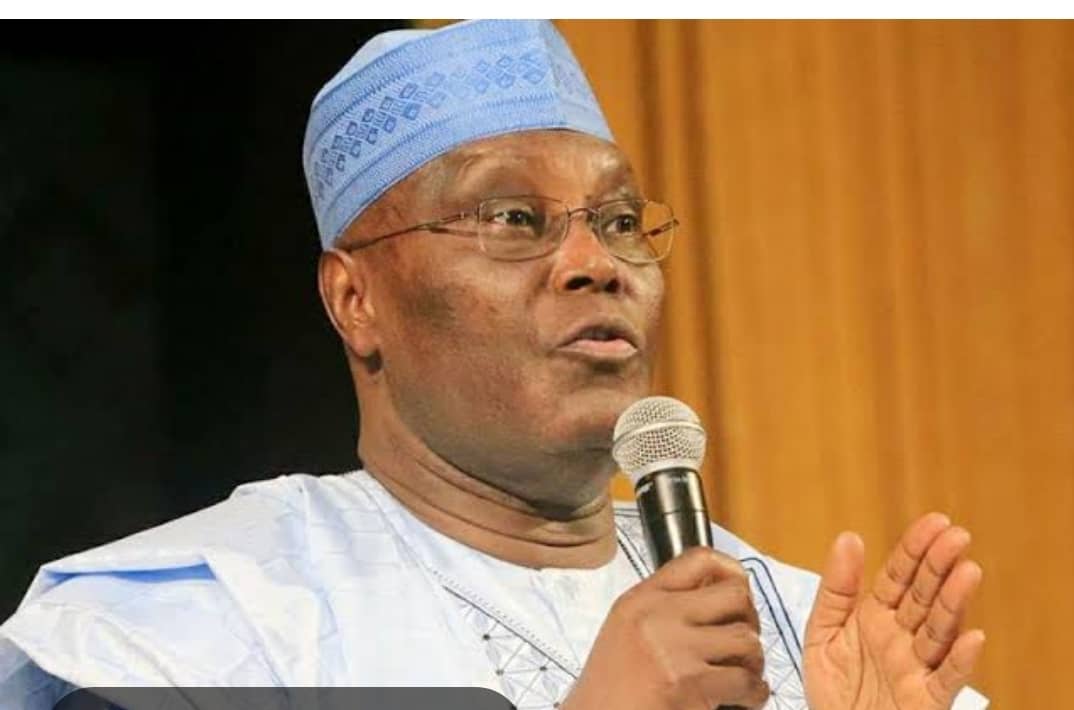
Former Vice President Atiku Abubakar has challenged the United States Federal Bureau of Investigation (FBI) over its reported concerns about releasing certain records relating to President Bola Ahmed Tinubu, insisting that claims of protecting lives must not be used to shield public officials from legitimate scrutiny.
Atiku, in a statement issued on Saturday in Abuja by his Senior Special Assistant on Public Communication, Phrank Shaibu, said Nigerians had a right to know information that could help them understand the background and character of those occupying positions of enormous political power.
Reacting to the reported FBI position that disclosure of some records could endanger lives, Atiku said: “The FBI says disclosure could endanger lives. Which lives? Nigerians are already dying.”
He alleged that Nigerians had continued to grapple with insecurity, hunger, rising living costs and difficulties accessing basic necessities since the Tinubu administration came into office.
According to him, terrorists and bandits have killed many Nigerians, while others have suffered the consequences of hunger, unaffordable healthcare and mounting economic hardship.
“Families that once managed three meals now struggle for one. Parents cannot afford medicines for sick children. Breadwinners are buckling under debt and unbearable economic pressure,” he said.
The former vice president also criticised the removal of fuel subsidy, arguing that the policy was implemented without sufficient measures to cushion its impact on vulnerable Nigerians.
He reiterated his commitment to restoring fuel subsidy if elected, saying his proposed system would be targeted, transparently funded, capped and independently audited to prevent corruption and abuse.
Atiku said the rising cost of transportation, food and energy had made the subsidy issue directly connected to the survival of ordinary Nigerians.
“When Tinubu boasts that subsidy is gone, Nigerians should ask him what exactly he is celebrating: the empty cooking pots, abandoned medical prescriptions, unaffordable transport fares or businesses struggling to survive?” he asked.
On the FBI records, Atiku clarified that he was not demanding the release of information that could compromise undercover agents, confidential sources or sensitive investigative methods.
“Protect your agents. Protect your sources. Protect legitimate investigative methods. Redact whatever American law genuinely requires you to redact,” he said.
However, he argued that information that can legally be disclosed in the public interest should not remain hidden under the cover of investigative secrecy.
“Our demand of American law enforcement is not a call to interfere in Nigeria’s politics. It is a humanitarian and democratic appeal rooted in the principle that people have a right to information legitimately available about those who exercise enormous power over their lives,” Atiku said.
He maintained that Nigerians have a legitimate democratic interest in understanding the history and character of the person occupying the country’s highest political office.
Atiku urged the FBI to strike a balance between protecting legitimate law-enforcement interests and respecting the public’s right to accountability.
“So, to the FBI, our message is simple: Protect your investigators. Protect your sources. Protect your methods. But do not protect the truth from Nigerians.
“Our people are already paying for bad governance with their lives,” he said.
L