


The Federal Government has set a target of providing steady electricity to at least 30 per cent of health facilities across the country by the end of 2027.
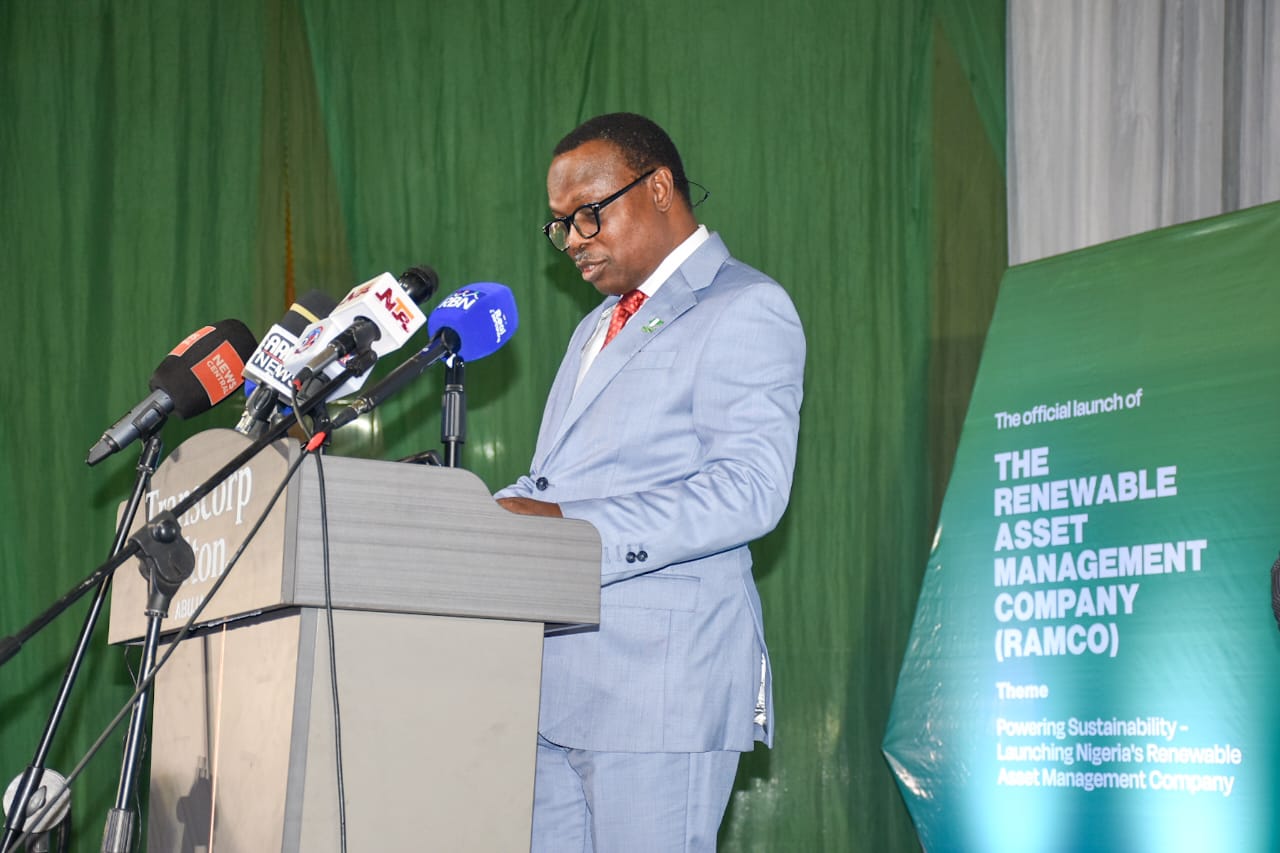
Minister of State for Health and Social Welfare, Dr Iziaq Adekunle Salako, disclosed this on Wednesday in Abuja at the official launch of the Rural Electrification Agency-Renewable Asset Management Company (REA-RAMCO).
The initiative, themed “Powering Sustainable Growth: Launching Nigeria’s Renewable Asset Management Company,” is aimed at ensuring the sustainability of renewable energy infrastructure across the country.
Salako, a physician, stressed that electricity was not a luxury in hospitals but a critical component of healthcare delivery.
According to him, power is needed to preserve vaccines, operate oxygen concentrators, power theatres and sustain incubators for premature babies.
“In a hospital, electricity is not an amenity; it is a clinical input,” he said.
The minister disclosed that between 60 and 70 per cent of primary and tertiary health facilities in Nigeria experience frequent power outages or have no electricity.
He added that about 40 per cent of functional Primary Health Care Centres (PHCs) have no access to electricity, while most of those connected to power receive only six to 10 hours of supply daily.
Salako further revealed that teaching hospitals require between three and eight megawatts to operate optimally but receive an average of only five hours of grid electricity daily.
As a result, he said, some teaching hospitals spend between 40 and 50 per cent of their operating expenditure on energy, much of it on diesel.
The minister, however, said the Federal Government had taken steps to address the problem through renewable energy projects.
He disclosed that teaching hospitals in Maiduguri and Calabar had benefited from the Energising Education Programme, while 100 health facilities had received 50-kilowatt containerised solar hybrid systems under the Nigeria Electrification Project.
He said the second phase of the programme would extend solar power systems to 400 PHCs.
Salako said President Bola Tinubu approved the Nigeria Power-for-Health Initiative following the first National Stakeholders’ Dialogue on Power in the Health Sector in September 2025.
According to him, the dialogue produced a Compact for the Sustainable Electrification of Public and Private Health Facilities involving relevant government institutions, state governments, medical directors, the private sector, development partners and civil society organisations.
He said the initiative had established the target of providing steady electricity to at least 30 per cent of health facilities by the end of 2027.
The minister identified the sustainability of renewable energy installations as another major challenge, noting that over 30 per cent of solar systems installed in Nigerian PHCs become non-functional within three years.
He attributed the failures to poor preventive maintenance, lack of spare parts, inadequate funding and the absence of clearly defined responsibility after projects are completed.
Salako described RAMCO as a major step towards addressing the problem by transforming renewable energy installations from one-off projects into professionally managed assets.
“RAMCO’s promise is that it converts an installation into a managed asset. Its model — build, operate, optimise, aggregate, refinance and reinvest,” he said.
He proposed closer collaboration between RAMCO and the Nigeria Power-for-Health Initiative, including making health facilities a distinct asset class within RAMCO’s portfolio.
He also called for the integration of RAMCO’s asset management system with Facility Energy Management Teams in hospitals and the harmonisation of renewable energy asset registers with health facility energy audits.
Salako further advocated allocating part of RAMCO’s recycled capital to PHCs, particularly those in communities where commercial returns may be limited but where reliable electricity could have significant impact on maternal and newborn healthcare.
He pledged that the Federal Ministry of Health and Social Welfare would support RAMCO by giving it representation on the Inter-Agency Technical Committee of the Power-for-Health Initiative.
The ministry, he said, would also work towards establishing electricity as a dedicated budget line across all levels of healthcare, updating energy audits, enforcing installation and certification standards, including NEMSA certification, and coordinating interventions by development partners and the private sector.
Salako called for increased mobilisation of private capital, development finance, climate finance and innovative financing mechanisms to accelerate healthcare electrification.
He said a credible asset-management framework would make renewable energy projects more attractive to long-term investors through transparent performance data, predictable maintenance and reliable payment structures.
“We will not reach it by procurement alone. We will reach it by building assets that last, and by managing them as the national infrastructure they are,” he said.
The minister congratulated the Rural Electrification Agency, Ministry of Finance Incorporated and InfraCorp on the launch of RAMCO, assuring them of the Federal Ministry of Health and Social Welfare’s full partnership.