


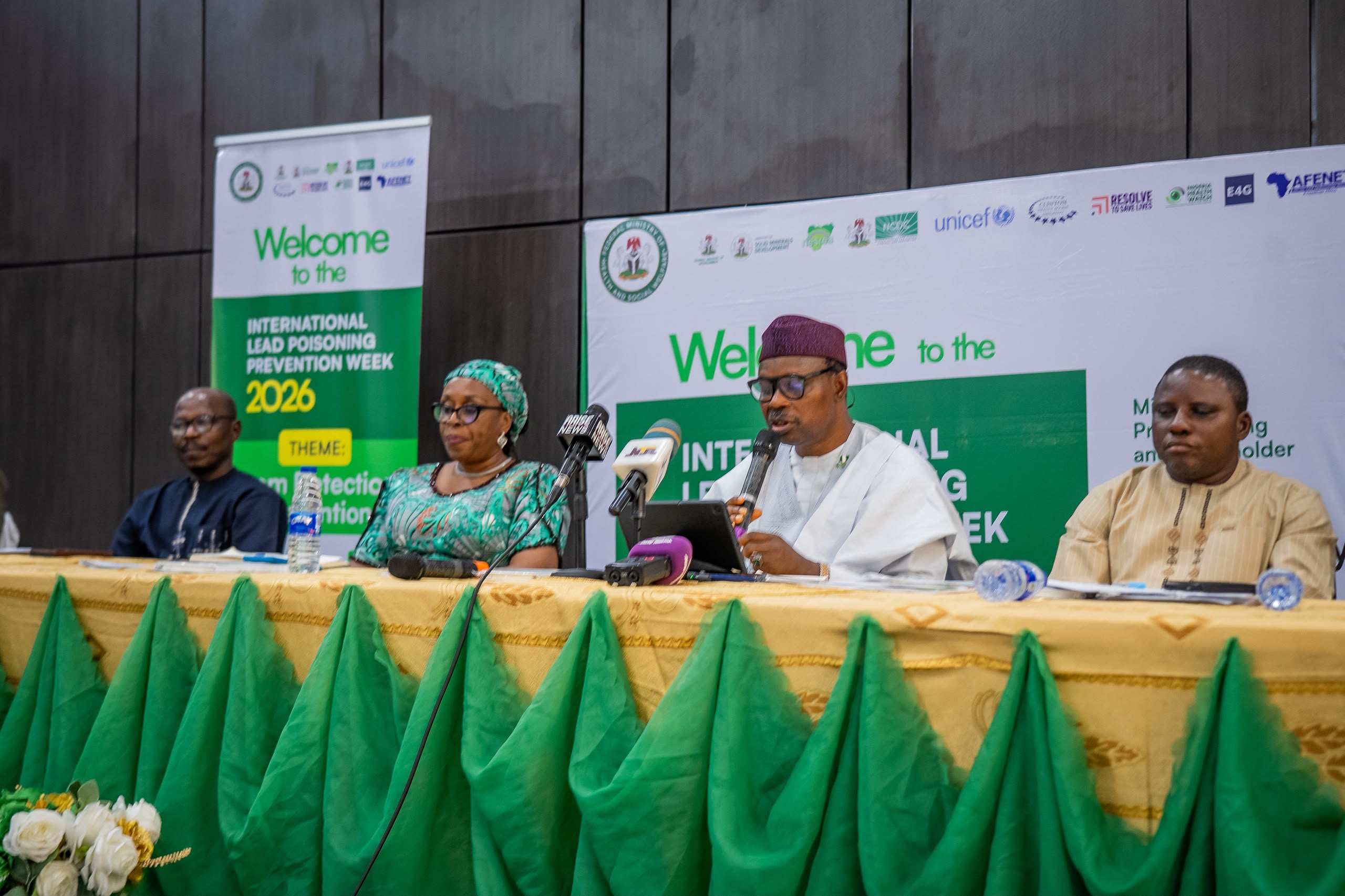
Salako unveils five-year elimination plan, warns against contaminated toys, cosmetics, water pipes
The Federal Government has raised the alarm over an estimated 80 million Nigerian children exposed to lead, warning that urgent action is needed to protect them and other vulnerable groups from the potentially devastating effects of the toxic metal.
The Minister of State for Health and Social Welfare, Dr Iziaq Adekunle Salako, disclosed this on Wednesday in Abuja, as he unveiled a Five-Year Strategic Plan on Lead Poisoning Elimination in Nigeria, aimed at tackling exposure at its source.
Salako, who spoke during the 2026 International Lead Poisoning Prevention Week, themed “From Detection to Prevention,” said the country must move beyond identifying cases of lead poisoning to preventing contamination in homes, workplaces and the wider environment.
He described lead poisoning as a serious public health and environmental challenge capable of causing lasting damage, particularly to children, pregnant women and women of childbearing age.
According to the minister, the absence of immediate symptoms in some exposed individuals makes the problem more dangerous, underscoring the need for early detection, sustained surveillance and preventive measures.
“We cannot treat our way out of lead poisoning; we must prevent exposure wherever possible,” Salako said.
He explained that the Federal Government was strengthening collaboration among relevant ministries, departments and agencies, development partners and other stakeholders to improve the national response.
A major step, he said, was the establishment of the Inter-Agency Working Group on Lead Poisoning Prevention and Elimination to coordinate interventions, review emerging evidence and strengthen policies for controlling exposure.
Salako noted that experiences in Lagos, Ogun, Sokoto and Zamfara states had revealed different sources and patterns of lead contamination, making state-specific interventions necessary.
In Lagos, environmental investigations and blood lead assessments are providing evidence for developing a state action plan, while findings from Ogijo in Ogun State have highlighted concerns surrounding battery recycling, occupational exposure and environmental pollution.
He called for stronger regulatory oversight, safer recycling practices and sustained monitoring of industries involved in activities that could release lead into the environment.
The minister stressed that identifying contaminated sites and controlling exposure must take centre stage, rather than relying mainly on treating people after they have been affected.
He called for improved surveillance of soil, dust, water and industrial emissions, alongside stricter monitoring of products and commodities that may contain the toxic substance.
He also advocated stronger occupational and industrial surveillance, improved laboratory capacity and the integration of relevant information into a national lead exposure surveillance system to support timely public health action.
Salako said regulatory agencies must strengthen enforcement of existing standards while addressing gaps in technical requirements and testing capacity, including at points of entry into the country.
He further emphasised that detecting elevated blood lead levels should trigger a coordinated response involving medical assessment, referral, environmental investigation, exposure reduction and follow-up care.
The minister described the newly launched five-year strategic plan as a framework for improving coordination, strengthening surveillance, controlling environmental and occupational exposure, and ensuring accountability.
He disclosed that a costed three-year national roadmap was being developed to translate the plan’s priorities into practical interventions with clear timelines.
Salako also identified the development of state-specific action plans for Lagos, Ogun, Zamfara and Sokoto as a priority, noting that prevention strategies must reflect the particular sources and pathways of exposure in each location.
He urged industries to adopt safer production methods, responsible waste disposal and improved recycling practices, warning that business operations must not put public health at risk.
The minister also called on traditional and religious leaders, researchers, professional bodies, civil society organisations and the media to intensify public education on the dangers of lead exposure.
How Nigerians Can Reduce Exposure
As part of efforts to protect households, Salako urged Nigerians to watch out for possible sources of lead, including dust from lead-based paint, contaminated soil, unsafe water pipes, lead-glazed pottery, certain toys, some cosmetics and traditional remedies that may contain the toxic metal.
He advised workers in construction, painting and recycling to use appropriate protective clothing and avoid bringing potentially contaminated work clothes and footwear into their homes.
Regular handwashing, washing children’s toys and wet-wiping floors and play areas were also recommended to reduce exposure to contaminated dust.
According to him, dry sweeping should be avoided in areas where lead-contaminated dust may be present because it can spread particles into the air.
Salako warned that children and pregnant women should be kept away from battery recycling facilities, repair workshops, painting areas and other locations where lead may be released into the environment.
He also encouraged the consumption of foods rich in calcium, iron and vitamin C, explaining that adequate intake of these nutrients can help reduce the body’s absorption of lead.
The minister reaffirmed the commitment of the Federal Ministry of Health and Social Welfare to working with stakeholders to move Nigeria from a largely reactive response to a comprehensive and sustainable prevention strategy.
He urged participants at the commemoration to translate the new strategic plan into measurable action, including stronger surveillance, improved laboratory services and effective interventions to protect children and communities from preventable exposure.
Tags: Lead poisoning, Nigerian children, Federal Government, Iziaq Salako, Ministry of Health, International Lead Poisoning Prevention Week 2026, environmental health, public health, lead exposure, Ogun State, Lagos State, child health
Meta Description: The Federal Government warns that an estimated 80 million Nigerian children are exposed to lead as Health Minister Iziaq Salako unveils a five-year plan to prevent lead poisoning and strengthen environmental surveillance.
Editorial note: The figure of 80 million children is attributed to the minister’s statement and should be independently verified before publication.


