


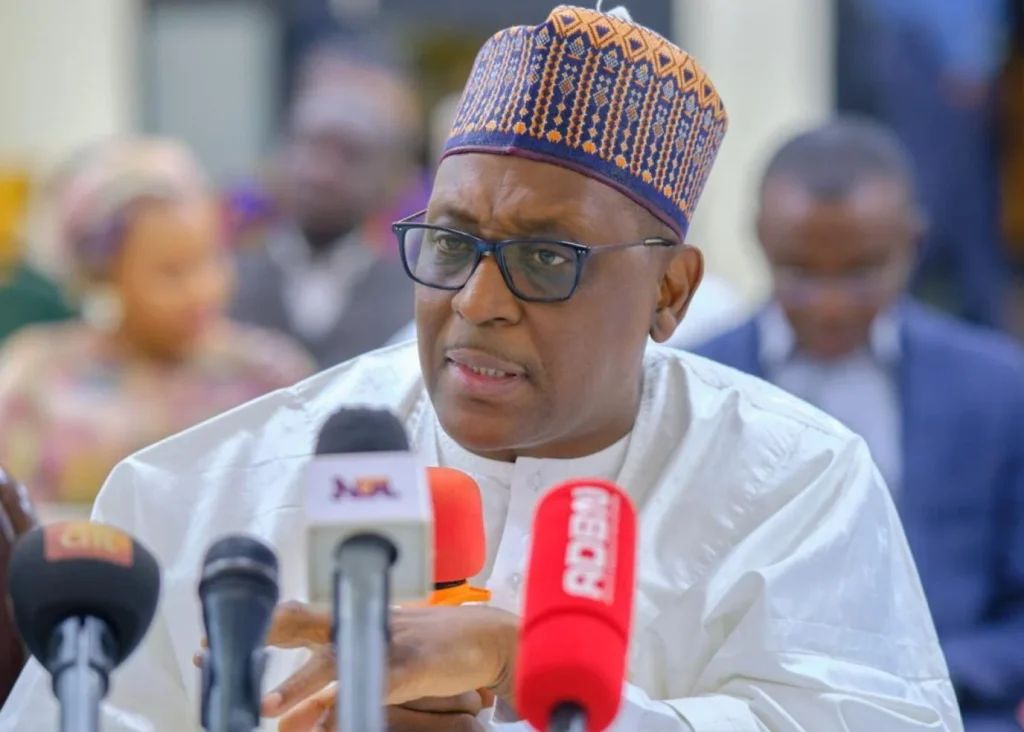
Nigeria has no licensed, specific treatment or vaccine for the Bundibugyo strain of Ebola detected in the country’s current outbreak, Coordinating Minister of Health and Social Welfare, Professor Ali Pate, has said.
Pate disclosed this during an interview with Arise Television on Wednesday, saying the infected patient was receiving supportive medical care while researchers explored potential vaccines and treatments for the strain.
“Specific treatment for this variant of Ebola virus, or a specific vaccine, is not yet licensed, approved to be used,” the minister said.
He added that scientists were investigating possible medical interventions but stressed that none had yet received approval for specific use against the variant.
“There are various efforts to try different types of vaccines or molecules to see whether they can bring relief,” he said.
The minister said the patient had received antibiotics and antiviral medication at different stages of her treatment because doctors initially suspected a viral illness before confirming the Ebola infection.
“But this particular patient received appropriate medical care, supportive medical care. She received antibiotics, she received an antiviral medication at different stages because the consideration was she had a viral illness, which in fact ended to be Ebola,” Pate said.
He said the patient was stable at the time of the interview but warned that her condition could change as the disease progressed.
“I think we’re very fortunate that she is stable at this moment. We hope she continues to remain stable, because things can change when you have an infectious disease that you don’t fully control the course of illness,” he said.
Pate explained that supportive care was being provided to manage the patient’s condition while her immune system responded to the infection.
Nigeria intensifies contact tracing
The minister credited Nigeria’s laboratory facilities, healthcare infrastructure and trained health professionals with helping to detect and manage the case.
He said public and private healthcare facilities, supported by laboratory services, had contributed to identifying the infection and ensuring that the patient received medical attention.
“We’ve got laboratory capacity that has all come together to allow the patient to walk through the Nigerian healthcare system, be detected, and be catered for,” he said.
Pate added that public health experts and epidemiologists were working to identify and monitor people who might have been exposed to the virus.
However, he warned that containing the outbreak would require cooperation from members of the public, particularly those identified as contacts of the infected patient.
“But it goes beyond the public health system; it also requires Nigerians themselves in how we behave, so that those who may have contact with her continue to comply,” he said.
The Federal Government confirmed the country’s first reported case in the current outbreak after a woman who had travelled from Uganda developed symptoms and was admitted to a private hospital in Abuja. She was subsequently diagnosed with the Bundibugyo strain of Ebola.
The Nigeria Centre for Disease Control and Prevention activated response measures, including contact tracing, enhanced surveillance and infection prevention measures, while urging healthcare facilities to remain vigilant and promptly report suspected cases.
According to reports, 44 contacts were initially identified for monitoring. In Anambra State, 40 persons of interest were followed up, with 33 completing their monitoring period and seven remaining under active follow-up as of October 20.
Ogun State was also tracing 111 persons of interest as part of efforts to assess potential exposure and prevent further transmission.
The United States Mission in Nigeria issued a health advisory to its citizens following the reported case, urging anyone who might have been exposed to seek medical guidance if symptoms developed.
How Ebola spreads
Ebola spreads primarily through direct contact with the blood or other body fluids of an infected person who has developed symptoms, or through contact with contaminated materials.
Symptoms can include fever, severe headache, weakness, muscle pain, vomiting and diarrhoea. Because these symptoms can resemble those of other illnesses, including malaria, health authorities have urged people to seek medical attention and report possible exposure rather than attempt self-diagnosis.
The absence of a licensed Bundibugyo-specific vaccine or treatment presents a challenge for outbreak management, placing added importance on early detection, supportive medical care, infection prevention and effective contact tracing.
Authorities continue to rely on surveillance and public cooperation to limit the risk of further transmission while research into potential vaccines and treatments progresses.


