


…Seek N70bn funding as minister reveals over 80% of Nigerians have never visited dentist
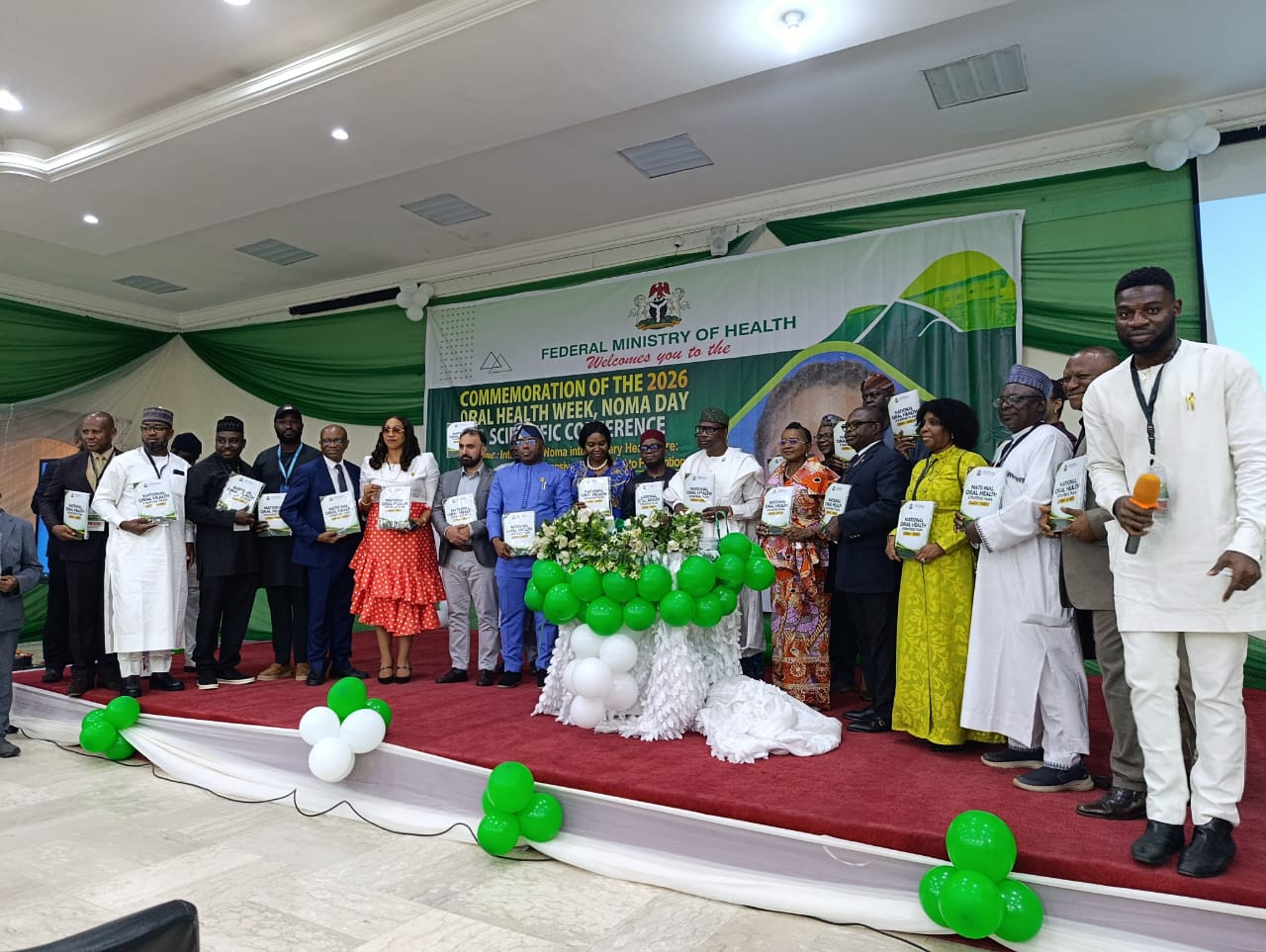
The Federal Government and the National Assembly have unveiled a five-year strategic plan to tackle noma and expand access to quality oral healthcare across the country, with a call for N70bn investment to drive implementation.
The National Oral Health Strategic Plan (2026–2030), launched by the Federal Ministry of Health and Social Welfare, is designed to strengthen prevention, early diagnosis and treatment of oral diseases, particularly noma, which mainly affects malnourished children in poor and underserved communities.
Minister of State for Health and Social Welfare, Dr Iziaq Salako, disclosed this on Monday in Abuja at the commemoration of the 2026 Oral Health Week, National Noma Day and Scientific Conference, themed, “Integrating Noma into Primary Healthcare: From Comprehensive Management to Prevention.”
Salako described the strategic framework as a major shift from conventional curative dentistry to preventive healthcare, saying it was developed in consultation with the Nigerian Dental Association and other stakeholders.
He explained that noma was a rapidly progressing and potentially fatal disease that destroys facial tissues, often beginning as a simple gum infection but capable of causing devastating damage within days if not detected and treated early.
According to him, children living in poverty, particularly those suffering from malnutrition and poor access to healthcare, are most vulnerable to the disease, with survivors often facing facial disfigurement, disability and social stigma.
The minister welcomed the World Health Organisation’s classification of noma as a Neglected Tropical Disease, describing it as a significant step towards drawing global attention to the condition.
He said the government was strengthening grassroots interventions through the training of frontline health workers, community volunteers and traditional birth attendants to identify early symptoms and ensure prompt referrals.
Salako also highlighted the contributions of the Noma Children’s Hospital in Sokoto and the national treatment facility in Abuja, which provide free reconstructive surgeries, rehabilitation and psychosocial support to affected children.
Expressing concern over access to dental services, he disclosed that more than 80 per cent of Nigerians had never visited a dentist, while the country’s dentist-to-population ratio stood at approximately one to 38,000.
He said the government was leveraging the Basic Health Care Provision Fund and other sector-wide initiatives to improve dental infrastructure, recruit more personnel and strengthen school-based oral health programmes.
He consequently appealed to state governments and development partners to mobilise about N70bn over the next five years to implement the strategic plan and extend services to underserved communities.
The Senate Committee on Health, chaired by Senator Ipalibo Harry-Banigo, pledged legislative and financial support for the campaign, stressing that noma was preventable and treatable when detected early.
The committee disclosed that funding for the Basic Health Care Provision Fund had been increased from one to two per cent to strengthen frontline health services and community-based interventions.
It identified the Noma Children’s Hospital in Sokoto, the Intercountry Centre in Jos and the ongoing retrofitting of dental centres across federal university teaching hospitals as critical components of the national response.
The lawmakers also said legislative measures were being pursued to institutionalise routine oral health screenings, early diagnosis of dental infections and specialised training in reconstructive surgery.
In a goodwill message, Country Representative of Médecins Sans Frontières (MSF), Dr Aldikhari Ahmed, called for stronger community surveillance and early detection, warning that delays in treating noma could result in severe facial disfigurement, disability and death.
He commended the Federal Government for integrating noma into primary healthcare guidelines and including the disease in the Surveillance Outbreak Response Management and Analysis System (SORMAS).
Highlighting MSF’s partnership with the Federal Ministry of Health and the Sokoto State Ministry of Health at the Noma Children’s Hospital, Ahmed disclosed that the organisation had supported treatment at the facility since 2014.
He said the collaboration had facilitated more than 1,759 major reconstructive surgeries for 1,174 patients through 35 surgical missions.
In 2026 alone, he disclosed that 114 surgeries had been performed on 96 patients, while 28 Nigerian surgeons and 14 anaesthetists had received specialist training.
Similarly, the World Health Organisation Country Representative in Nigeria, Dr Pavel Ursu, represented by Dr Victor, called for the integration of noma prevention and comprehensive treatment into routine primary healthcare services.
He noted that the disease predominantly affects malnourished children between the ages of two and six, particularly in impoverished communities, but stressed that early diagnosis and treatment could prevent its devastating consequences.
Earlier, the Permanent Secretary of the Federal Ministry of Health and Social Welfare, Daju Kachollom, represented by her Senior Technical Assistant, Dr Dogara Okara, said the strategic plan would reposition oral healthcare through prevention, early diagnosis, community capacity building and improved access to quality services.
In a keynote address, Dr Adebimpe Adebiyi paid tribute to the late founder of Hilfsaktion Noma, Mama Ute Winkler-Stumpf, for her contribution to the treatment and rehabilitation of children affected by the disease.
She recalled that the humanitarian organisation worked with the WHO and Nigerian authorities to establish essential treatment infrastructure, including the Noma Centre in Abuja, where numerous children benefited from free reconstructive surgeries.
Adebiyi urged stakeholders to sustain the late humanitarian’s legacy by prioritising prevention, early detection and community awareness, insisting that eliminating noma required a collective effort involving government, healthcare professionals, civil society and international partners.
The stakeholders agreed that sustained funding, stronger surveillance, effective coordination and community engagement would be critical to eliminating noma as a public health problem in Nigeria.