


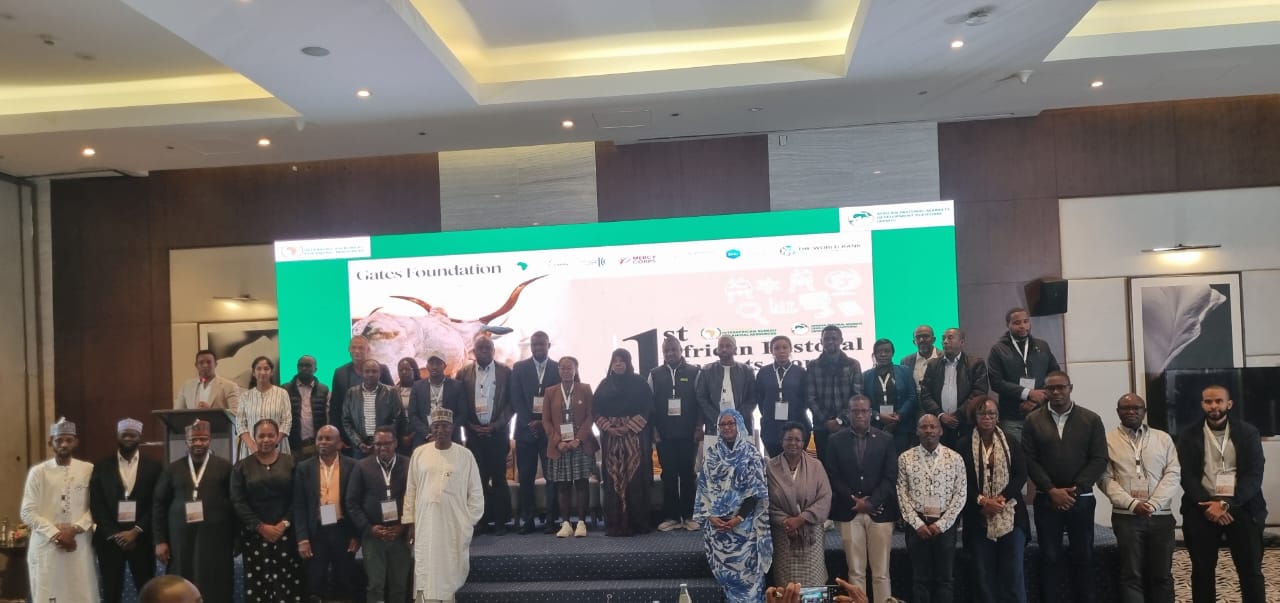
African leaders, investors and development partners have adopted a bold action plan to transform the continent’s pastoral livestock sector into a major driver of trade, investment, food security and industrialisation.
The landmark decision was reached at the close of the inaugural African Pastoral Markets Forum in Addis Ababa, Ethiopia, where governments, financiers and private sector stakeholders resolved to move beyond discussions and begin implementing reforms aimed at unlocking the huge economic potential of Africa’s livestock industry.
Director of the African Union Inter-African Bureau for Animal Resources (AU-IBAR), Dr. Huyam Salih, described the outcome as a historic breakthrough that has repositioned pastoral livestock as a strategic economic asset rather than a neglected sector.
“This Forum has positioned pastoral livestock as a strategic economic asset for food security, jobs, trade, resilience, value addition and regional integration,” Salih said.
She noted that the five-day gathering successfully united policymakers, pastoral producers, investors, financial institutions and development partners to tackle longstanding policy, financing and market challenges facing Africa’s livestock economy.
According to her, participants agreed on practical reforms to integrate pastoral producers into structured markets through improved processing, logistics, financing, aggregation and access to regional and international markets.
Salih said African ministers also committed to lowering barriers to formal livestock trade, expanding private sector investment and strengthening infrastructure critical to livestock commerce across the continent.
She identified the forum’s key achievements as commitments to policy reforms that promote livestock trade, the creation of innovative financing mechanisms for pastoral enterprises and coordinated investments in livestock corridors, water infrastructure, animal health systems, logistics, energy and market standards.
She announced that AU-IBAR, through its African Pastoral Markets Development (APMD) programme, would spearhead the implementation of the resolutions while preparing for the second edition of the forum scheduled for July 19-22, 2027.
Representing the Gates Foundation, Senior Officer for Livestock and Economic Opportunity, Dr. Tom Osebe, described the ministerial communiqué as a major milestone because it officially recognised pastoral livestock as a serious economic opportunity rather than merely a humanitarian concern.
“We leave with something rare: a communiqué, adopted by our ministers themselves, that speaks about pastoral livestock not as a humanitarian concern, but as an economic opportunity,” he said.
Osebe, however, warned that implementation—not declarations—would determine the forum’s success.
He called on African governments to tackle transboundary animal diseases such as Foot-and-Mouth Disease (FMD), Peste des Petits Ruminants (PPR), Rift Valley Fever and Lumpy Skin Disease, saying they remain major obstacles to attracting investment and expanding exports.
According to him, Africa currently imports livestock products worth over $10 billion annually while exporting less than $4 billion, resulting in the loss of jobs and industrial opportunities to other regions.
He stressed that stronger partnerships in vaccine production, veterinary services, disease surveillance and animal traceability would be critical to unlocking the sector’s full potential.
Nigeria’s Minister of Livestock Development, Idi Mukhtar Maiha, said the forum marked the beginning of a new chapter for Africa’s pastoral economy.
“For too long, pastoralism has been viewed through the lens of marginal traditional livelihoods. We must transform it into a modern, dynamic and commercially viable engine of growth,” Maiha said.
He urged African financial institutions to provide affordable, long-term financing for livestock businesses through single-digit interest loans and value-chain-specific financial products.
Maiha maintained that the success of the forum would ultimately depend on how quickly member states implement the commitments contained in the ministerial communiqué.
As delegates departed Addis Ababa, the consensus was that Africa’s pastoral livestock sector has the potential to become a key pillar of regional integration, investment, intra-African trade and economic growth under the African Continental Free Trade Area (AfCFTA).