


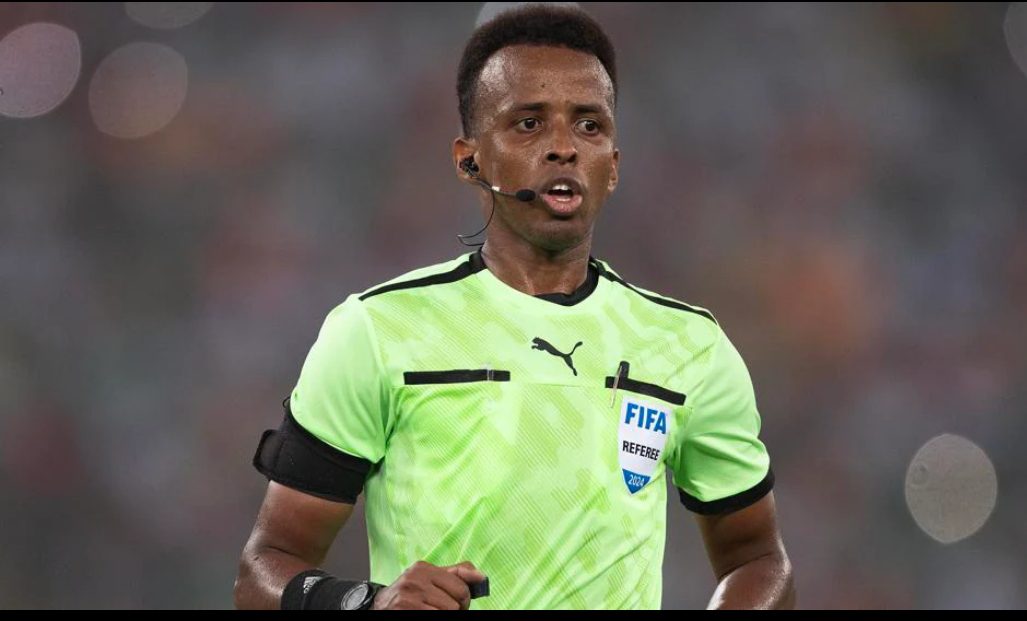
Salzburg — Somali referee and CAF Men’s Referee of the Year 2025, Omar Artan, has been appointed by UEFA to officiate the 2026 UEFA Super Cup, following his exclusion from the FIFA World Cup 2026 due to visa restrictions preventing entry into the United States.
UEFA confirmed the appointment on Thursday in collaboration with the Confederation of African Football (CAF), describing the decision as part of a strengthened cooperation framework between both football governing bodies aimed at promoting refereeing development and international unity in the sport.
The 34-year-old referee, who has been on the FIFA international list since 2018, will take charge of the Super Cup clash between UEFA Champions League winners Paris Saint-Germain and Europa League champions Aston Villa on 12 August in Salzburg, Austria.
Artan’s appointment is widely regarded as a major recognition of his rapid rise in global officiating. He previously handled high-profile fixtures, including the second leg of the 2025/26 CAF Champions League final, and was included in FIFA’s preliminary officiating list for the 2026 World Cup before travel restrictions ruled him out of participation.
UEFA President Aleksander Čeferin praised the decision, saying:
“Omar Artan is an excellent young but already experienced referee who has proven himself at the highest level in African football. Football is made to connect people, and UEFA wants to recognise his outstanding officiating skills.”
CAF President Dr Patrice Motsepe also described the appointment as historic, noting that Artan’s recognition reflects the growing global respect for African referees and the continent’s contribution to world football development.
The appointment is also linked to the UEFA–CAF Memorandum of Understanding aimed at deepening cooperation in refereeing, development, and football governance across continents.
Artan’s elevation to one of UEFA’s marquee fixtures marks a significant milestone for African officiating on the global stage, even as questions continue to linger over the impact of geopolitical and administrative barriers on sporting participation.