


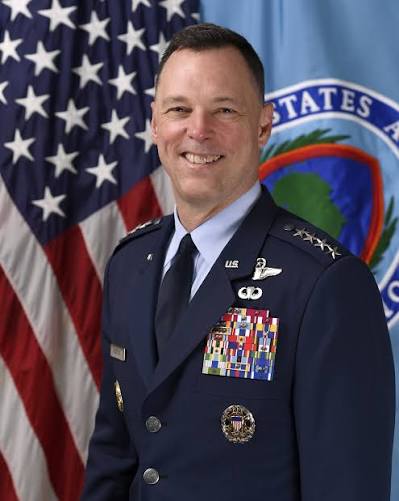
The commander of the United States Africa Command (AFRICOM), Gen. Dagvin R.M. Anderson, has said Africa has become the global epicentre of terrorism, warning that extremist networks previously concentrated in the Middle East have now shifted their operational base to the continent.
Speaking in recent congressional testimony in May 2026, Anderson said the evolution of jihadist groups represents a major global security realignment, with both ISIS and al-Qaeda affiliates now deeply entrenched across Africa.
“The terrorist threat has migrated from the Middle East into Africa, so Africa has become the epicenter of global terrorism. ISIS leadership is African. Al-Qaeda’s economic engine is in Africa,” Anderson said.
He added that the groups remain interconnected and continue to share the intent to strike targets beyond the continent, including the United States.
ISIS and al-Qaeda expansion in Africa
According to AFRICOM assessments, ISIS-linked factions have grown significantly across Somalia, Nigeria, Mali, and Niger, with African nationals increasingly occupying leadership positions within the network.
Anderson referenced recent joint operations in northeastern Nigeria involving U.S. and Nigerian forces, which reportedly resulted in the elimination of ISIS operatives, including Abu Bilal al-Minuki, alongside approximately 175 fighters in May 2026.
On al-Qaeda-linked activity, he identified the Sahel region as a key financial and operational hub, particularly through Jama’at Nusrat al-Islam wal-Muslimin (JNIM), which operates across Mali, Burkina Faso, and Niger.
Rising global terrorism impact
Security data cited by AFRICOM indicates that West Africa accounted for more than 50% of global terrorism-related deaths between 2024 and 2025.
The continent currently hosts at least 10 designated terrorist organisations, including six ISIS affiliates, making it one of the most active counterterrorism theatres globally.
Strategic concerns and geopolitical pressure
Anderson said Africa sits at a strategic crossroads involving global trade routes, mineral resources, and security interests, but warned that weak governance and ungoverned spaces in regions such as the Sahel and Lake Chad Basin continue to enable extremist expansion.
He also pointed to a significant reduction in U.S. military presence in Africa over the past decade, describing a 75% drawdown that has created intelligence gaps in counterterrorism operations.
The AFRICOM chief further noted the increasing influence of external powers, including Russia-linked Wagner forces (now restructured as Africa Corps), China, and Iran, all of which he said are shaping the continent’s security landscape.
Continued partnerships
Despite the risks, Anderson stressed the importance of continued cooperation with African governments, highlighting ongoing counterterrorism partnerships and intelligence-sharing efforts that have led to disruptions of extremist leadership structures, particularly in Somalia.
The remarks were delivered during AFRICOM’s 2026 posture hearings before the U.S. House and Senate Armed Services Committees, reflecting a broader shift in U.S. strategic focus toward Africa amid evolving global security threats.