


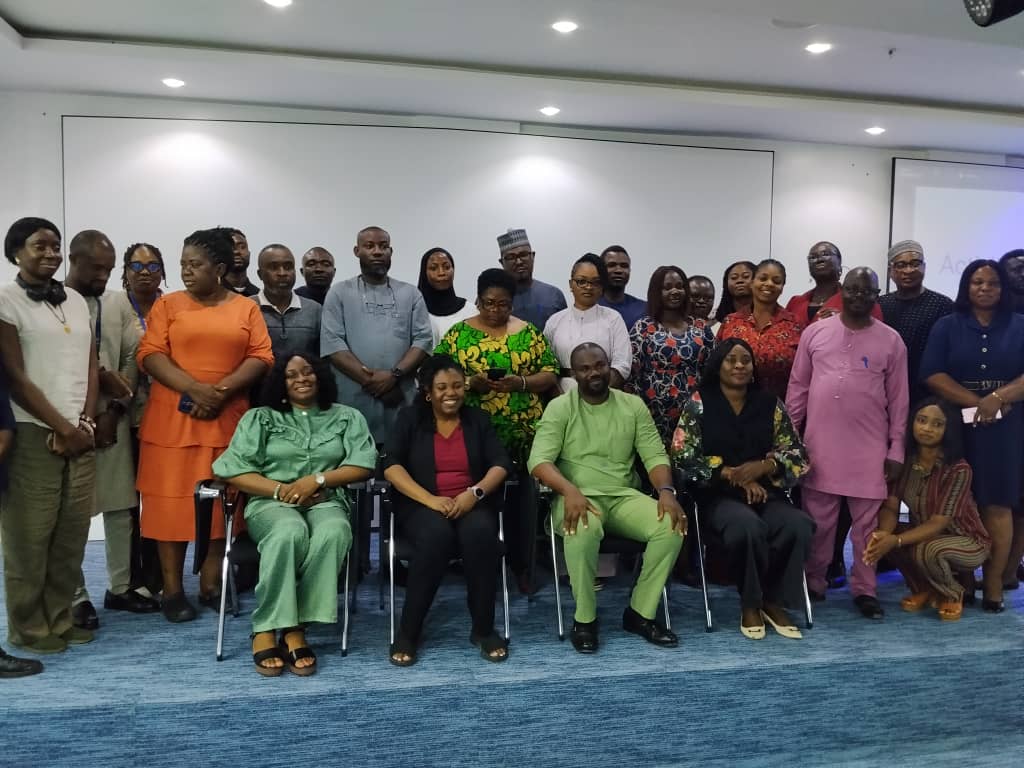
The Institute of Human Virology, Nigeria (IHVN), has raised the alarm over the growing threat of antimicrobial resistance (AMR), warning that the silent health crisis is rendering life-saving medicines ineffective and exposing millions of Nigerians to prolonged illness, avoidable deaths and huge economic losses.
The institute also called on journalists to lead the campaign against the menace by educating Nigerians on the dangers of self-medication and the misuse of antibiotics.
Speaking at the opening of a two-day media training on antimicrobial resistance reporting in Abuja, the Chief Executive Officer of IHVN, Dr. Patrick Dakum, represented by Dr. Eriobu Nnakelu, Principal Investigator of the International Research Centre, Excellence Centre of IHVN and Senior Manager, Research and Evaluation, said public awareness remains one of the strongest weapons in the fight against AMR.
The training, organised by IHVN in collaboration with the Nigeria AMR Media Alliance (NAMA) under the Antimicrobial Stewardship Education Program (A-STEP) project, is aimed at equipping journalists with the knowledge and skills to report accurately on antimicrobial resistance.
According to Nnakelu, scientific breakthroughs alone cannot defeat AMR if the public remains uninformed.
“We can have all the science, but if journalists do not carry the information to the people, then the science is useless. That is why we are supporting this training, so that Nigerians will understand that antimicrobial resistance is a real and growing problem,” he said.
Explaining AMR in simple terms, he said it occurs when medicines used to treat bacterial, viral and parasitic infections no longer work as expected.
“You are taking drugs but instead of getting better, you remain sick or even become worse. That is antimicrobial resistance. Unfortunately, many Nigerians do not even realise that this is what is happening because it is a silent problem,” he stated.
He warned that beyond the health implications, AMR also takes a heavy toll on families and the economy as patients spend money on ineffective treatment, remain unable to work and lose valuable income.
Nnakelu noted that tackling the challenge requires collective action from doctors, pharmacists, patent medicine vendors, traditional healthcare providers, livestock farmers, environmental experts, government agencies and the media.
“This is not just a pharmacy problem. It is a multifaceted issue. One of the biggest challenges is lack of knowledge, and that is why we are relying on journalists to simplify the science and take the message to ordinary Nigerians,” he added.
Also speaking, Dr. Charity Oga-Omenka, Assistant Professor and Global Health Researcher at the University of Waterloo, Canada, disclosed that available studies show that nearly 70 per cent of Nigerians obtain antibiotics without prescription, a practice she described as a major driver of antimicrobial resistance.
She urged Nigerians to avoid self-medication and always seek proper medical diagnosis before taking antibiotics.
“Many illnesses have similar symptoms. You cannot diagnose yourself with malaria or any infection simply because you have a fever. Proper laboratory tests help doctors determine the right medicine and avoid unnecessary use of antibiotics,” she said.
Oga-Omenka stressed that antimicrobial resistance is a collective problem because resistant organisms can spread from one person to another regardless of whether the second person has used antibiotics responsibly.
She also called for stricter enforcement of existing regulations prohibiting the over-the-counter sale of antibiotics, saying indiscriminate access to the drugs continues to fuel resistance.
On traditional medicine, she acknowledged that herbs may have medicinal benefits but warned that many herbal preparations are not standardised, with patients often unaware of their contents or dosage.
Earlier, Founder of the Nigeria AMR Media Alliance (NAMA), Ojoma Akor, urged journalists to use evidence-based reporting to drive behavioural change and hold stakeholders accountable in the fight against AMR.
She said the alliance was established to build a network of health reporters capable of covering antimicrobial resistance from a One Health perspective, recognising the links between human, animal and environmental health.
“We are educators, agenda setters, advocates for accountability and trusted sources of information. Together, we can ensure that antimicrobial resistance is no longer treated as a silent crisis but becomes a national priority that receives the urgent attention and action it deserves,” Akor said.