


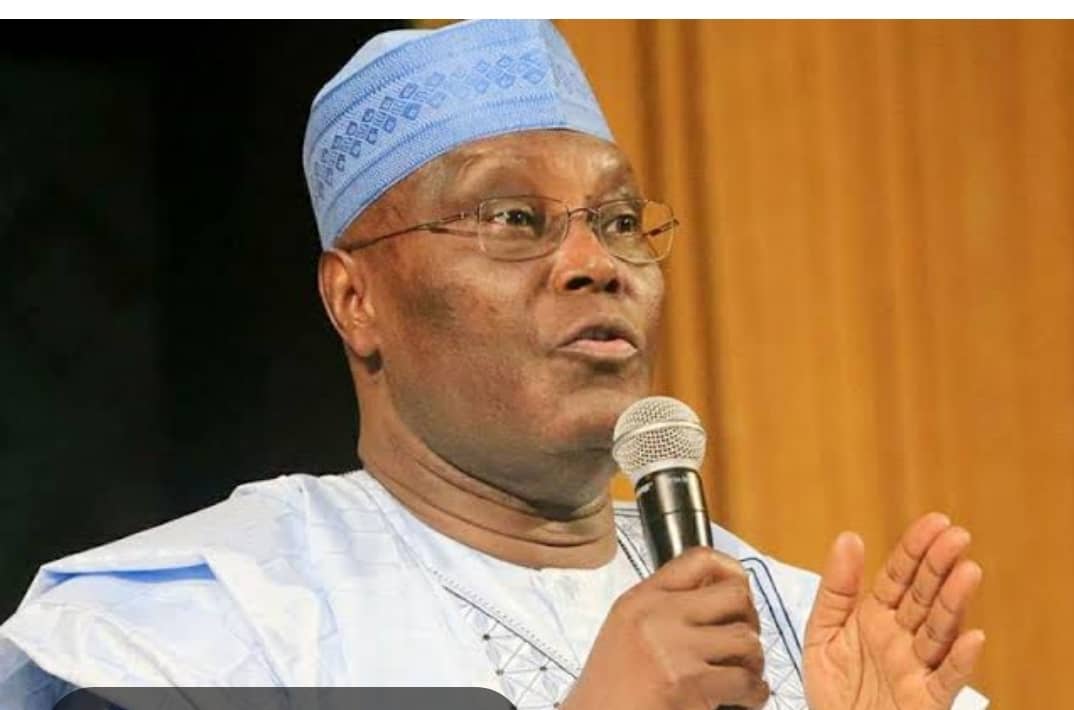
Former Vice-President Atiku Abubakar and the presidential campaign organisations of the African Democratic Congress (ADC) and Allied Peoples Movement (APM) have criticised President Bola Tinubu’s expanded Presidential Campaign Council, accusing the ruling All Progressives Congress (APC) of placing political calculations above the welfare of Nigerians.
While Atiku described the council as a “crowded confession of fear,” the ADC Presidential Campaign Council accused the ruling party of undermining multiparty democracy, while the Makinde/Daura Presidential Campaign Organisation (MDPCO) dismissed the expanded structure as a “Nebuchadnezzar Coalition” allegedly heading for political defeat.
The criticisms followed the inauguration of the APC Presidential Campaign Council in Abuja on Wednesday, with the opposition groups questioning its size, composition and inauguration at the Presidential Villa amid mounting economic and security challenges.
In a statement issued by Phrank Shaibu, Director of Strategic Communication of the ADC Presidential Campaign Council, Atiku argued that the president was attempting to shield his administration’s record behind an expanded list of political figures.
“Only a man afraid of his record would think he could bury it under hundreds of names,” the former vice-president said.
He maintained that the presence of governors, ministers and political defectors in the campaign structure would not address hunger, insecurity and the rising cost of living.
According to Atiku, Nigerians were more concerned about their daily struggles than the number of politicians recruited into the ruling party’s campaign machinery.
He accused the president of demanding sacrifices from citizens while expanding his political structure, insisting that the administration’s performance, rather than the size of its campaign council, would shape public assessment of its leadership.
The former vice-president also faulted the use of the Presidential Villa for the inauguration, describing it as a breach of public trust and an abuse of public office.
“The Presidential Villa belongs to the Nigerian people. It is not a campaign venue or the private property of any political party,” he said.
Atiku questioned why the ruling party chose the seat of presidential power for a partisan political event despite the availability of other venues in Abuja.
He further argued that the expansion of the campaign council following criticism of its initial composition suggested that the administration was more concerned with political endorsements than finding solutions to the country’s economic difficulties.
He listed poverty, rising food prices, transportation costs and insecurity among the pressing issues requiring urgent attention.
ADC Accuses APC of ‘Political Abduction’
The ADC Presidential Campaign Council also condemned the inauguration, with its Director of Media and Publicity, Kola Ologbondiyan, alleging that the APC was seeking to weaken opposition parties and consolidate political power.
Ologbondiyan accused the ruling party of attempting to incorporate opposition governors into its campaign structure without their formally defecting from their respective parties.
“What we are witnessing is not politics but political abduction,” he alleged.
He claimed that the APC was using its influence to undermine opposition forces and weaken Nigeria’s multiparty democratic system.
The ADC spokesman also alleged that the administration was deploying national institutions and security agencies against opposition figures, although the statement did not provide specific evidence to substantiate the claims.
He said economic hardship, hunger and insecurity had worsened the difficulties confronting ordinary Nigerians, accusing the ruling political establishment of prioritising its hold on power over citizens’ welfare.
Ologbondiyan called on Nigerians, media organisations, civil society groups and the international community to oppose what he described as the APC’s anti-democratic agenda.
He also expressed confidence in the ADC presidential ticket of Atiku Abubakar and former Rivers State Governor Rotimi Amaechi, describing the duo as capable of addressing the country’s challenges and rebuilding confidence in democratic institutions.
APM Campaign Group Mocks Expanded Council
Similarly, the Makinde/Daura Presidential Campaign Organisation described the APC campaign council as a “Nebuchadnezzar Coalition,” arguing that its composition reflected an excessive reliance on political influence rather than public trust.
In a statement signed by its Director of Strategic Communications, Richard Ihediwa, the organisation accused the ruling party of assembling political figures whose presence, it argued, would not erase concerns over economic hardship, unemployment and insecurity.
The MDPCO questioned what it described as the government’s failure to adequately address widespread poverty, educational deprivation and the difficulties confronting Nigerian families.
It cited figures on multidimensional poverty and children’s literacy to argue that the country’s socioeconomic challenges required practical policy solutions and measurable results rather than an expanded campaign structure.
The organisation also accused the APC of surrounding the president with political loyalists while Nigerians continued to grapple with the rising costs of food, education and other basic necessities.
According to the campaign organisation, the size of a presidential campaign council does not automatically translate into popular support, insisting that voters would ultimately judge the administration by their experiences.
The MDPCO expressed confidence in the presidential candidacy of Allied Peoples Movement flagbearer, Engr. Seyi Makinde, whose campaign is anchored on the “Reset Nigeria” agenda.
It said the agenda promised a new national direction centred on service, productivity, accountability, dignity and prosperity.
The three opposition campaign organisations maintained that expanding the APC’s campaign council would not, on its own, resolve the economic and security challenges they said were confronting Nigerians.