


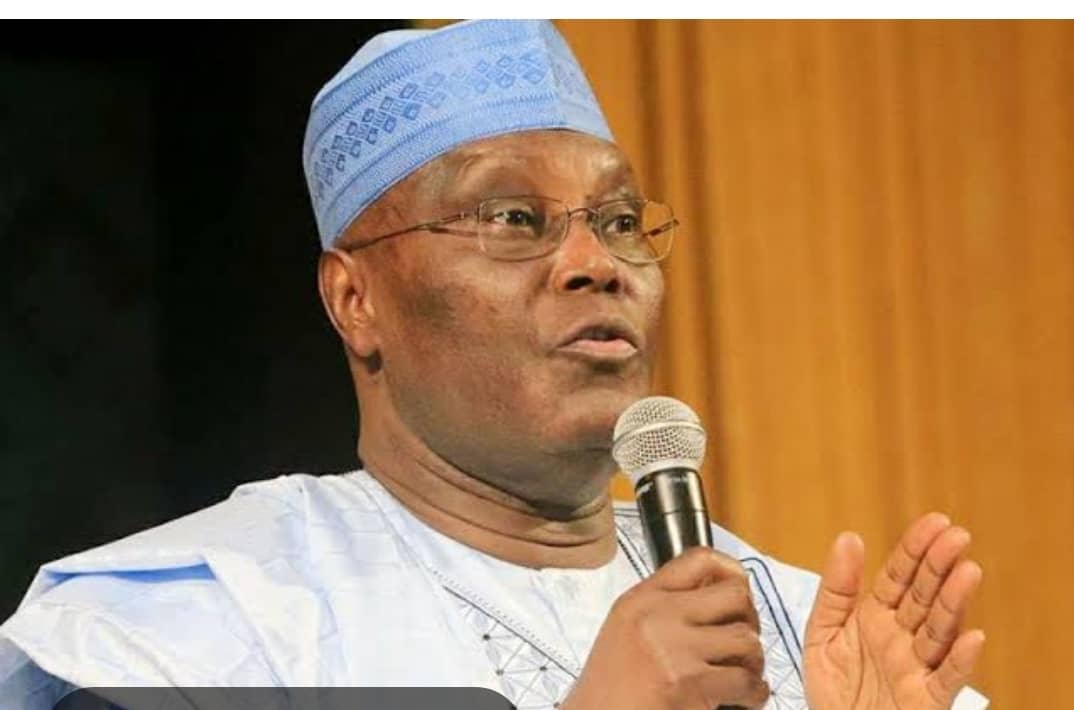
Ex-VP accuses Tinubu of emptying Nigerians’ pockets with fuel policy
Former Vice President and African Democratic Congress (ADC) presidential candidate, Atiku Abubakar, has urged President Bola Tinubu to support domestic production and refining as part of measures to reduce the rising cost of living in the country.
Atiku, in a statement issued yesterday in Abuja by his Senior Special Assistant on Public Communication, Phrank Shaibu, accused the Tinubu administration of worsening economic hardship through policies he said had eroded the purchasing power of households and increased operating costs for businesses.
He said Nigerians were facing escalating prices of petrol, food, transportation and other essential commodities despite government claims of improvement in key economic indicators.
The former vice president also criticised the Federal Government’s opposition to his proposed Production Subsidy, arguing that targeted intervention in domestic production and refining would increase supply, lower prices and put more money in Nigerians’ pockets.
Atiku said the position of the Crude Oil Refinery Owners Association of Nigeria (CORAN), which supports increased assistance for domestic refining, as well as the United States’ efforts to strengthen its petroleum production and refining capacity, showed that strategic government intervention could be used to protect consumers and stimulate production.
“Tinubu did not inherit this cost-of-living crisis from Nigerians. His policies created and deepened it. He took away relief from the people, made fuel, food, transport and basic survival more expensive, and now wants Nigerians to applaud statistics while their pockets are empty,” he said.
Atiku said the economic hardship was also taking a toll on businesses as consumers struggled to afford goods and services.
He cited reports indicating that significant portions of the short-term assets of some major Nigerian companies were tied up in unpaid customer bills, which he said reflected declining consumer purchasing power.
He illustrated the situation with the example of a frozen-food trader in Kubwa, Abuja, who, according to him, was contending with rising transportation, electricity and restocking costs while customers were buying less or requesting goods on credit.
Atiku warned that continued pressure on retailers could eventually affect suppliers and other segments of the supply chain.
He also pointed to rising prices of fertiliser, petrol and cement, alongside exchange-rate movements, as evidence of the growing economic burden on households.
“Nigerians know the prices they meet every day. Fertiliser has moved from about ₦9,000 to around ₦50,000; petrol from about ₦199 to around ₦1,400 per litre; cement from roughly ₦4,000 to around ₦13,500; and the dollar from around ₦450 to about ₦1,400,” he said.
The ADC presidential candidate questioned what he described as the limited benefits of government policies to ordinary Nigerians.
“No reliable electricity. Loan for a degree. No security. No N-Power. Food is expensive. Transport is expensive. Life itself has become expensive. What exactly are Tinubu’s defenders defending?” Atiku asked.
He explained that his Production Subsidy proposal was designed to boost local production, increase supply and ultimately reduce the prices of essential goods.
“This is why my Production Subsidy is about putting money back into people’s pockets. Support what we produce and refine here, increase supply, monitor the price and make sure Nigerians feel the benefit at the pump,” he said.
Atiku further accused the Federal Government of applying different standards to economic interventions, alleging that incentives, waivers and concessions were available to major businesses and multinational oil companies while similar support for ordinary Nigerians was criticised.
“CORAN is saying support domestic production. America understands the importance of supporting strategic energy production. Yet Tinubu attacks relief for ordinary Nigerians while his government understands perfectly well how to grant waivers, incentives and concessions to multinational oil companies and businesses close to his administration,” he said.
He questioned why government intervention should be considered bad economics when the intended beneficiaries were ordinary Nigerians.
“So why does intervention suddenly become bad economics when ordinary Nigerians are meant to benefit?” he asked.
Atiku maintained that Nigerians were more interested in the practical impact of government policies on their daily lives than official economic statistics.
He called for increased domestic production, stronger local refining capacity, job creation and measures capable of reducing the cost of essential goods and services.
“The choice before Nigeria is therefore clear: continue with an economy that takes more from the people, or build one that puts money back in their pockets. Support production. Refine in Nigeria. Create Nigerian jobs. Lower the cost of living,” he said.
The former vice president urged Nigerians to support economic policies that would make essential goods and services more affordable, stressing that household welfare should remain at the centre of economic planning.
“Nigeria must produce more, Nigerians must pay less, and families must have money left to live,” he said.
He concluded with a campaign pitch, saying: “Tinubu made life expensive. Atiku will make life affordable again.”