
Monday, February 9, 2026
Home Blog Page 186

Reps Propose 5% Revenue Allocation to Host Communities in Solid Minerals Sector

0

***Legislation Aims to Formalize Sector , Bridge Federal-State Coordination Gaps

Abuja, Nigeria – The House of Representatives Committee on Solid Minerals is advocating a 5% allocation of revenue from all mined minerals to host communities (Hostcom) as part of a legislative initiative to address challenges in the sector. Hon. Jonathan Gaza, Chairman of the House Committee on Solid Minerals, unveiled this proposal during a Public Policy Dialogue held in Abuja on Monday.

The proposed legislation, titled the “Nigerian Minerals and Mining Act (Amendment) Bill,” seeks to amend the principal Nigeria Minerals and Mining Act of 2007. Sponsored by Rep. Jonathan Gbefwi and Rep. Benjamin Kalu, the bill aims to formalize collaboration between state and federal governments to maximize sector benefits.

In his address, Chairman Gaza emphasized the importance of the bill in addressing key factors contributing to the stalemate in the Solid Minerals sector, including security challenges. He highlighted the establishment of the Mines Inspection and Environmental Agency, providing improved oversight of mining activities, with offices in every state for enhanced reporting and oversight.

The bill further proposes the creation of a Solid Minerals Development Company, with 75% ownership allocated to the private sector and 25% to the federation of Nigeria. Gaza highlighted the need to strengthen the bill and called for support in its solidification.

The Chairman stressed the significance of bridging coordination gaps between federal and state governments, empowering the Mineral Resources and Environmental Management Committee (MIREMCO) for effective joint oversight.

Gaza stated, “The bill further empowers the Mineral Resources and Environmental Management Committee (MIREMCO) to enable effective and joint oversight of the sector. It is clear that MIREMCO is poorly funded and lacks the resources it needs to support its activities. The Bill hopes to use MIREMCO as the facilitating tools for the government to work with State governments to secure their needs to ensure formalization of the sector.”

Highlighting the focus on community development and environmental protection, the bill proposes allocating 5% of the revenue from all mined minerals to host communities. Gaza emphasized the need for environmental remediation funding to ensure the proper restoration of sites after mining activities.

The Public Policy Dialogue served as a platform for stakeholders to actively participate in the legislative process and provide input for the bill’s adoption and implementation. Deputy Speaker Rep. Kalu, co-sponsor of the bill, underscored the potential of Nigeria’s mining sector for economic growth, job creation, and foreign exchange earnings. Despite challenges such as insecurity, inadequate infrastructure, and a shortage of skilled labor, the Deputy Speaker expressed confidence in the sector’s ability to contribute significantly to the nation’s GDP.
PDP Governors Warn of Nigeria’s Potential Descent into Venezuela-Like Hardship

0

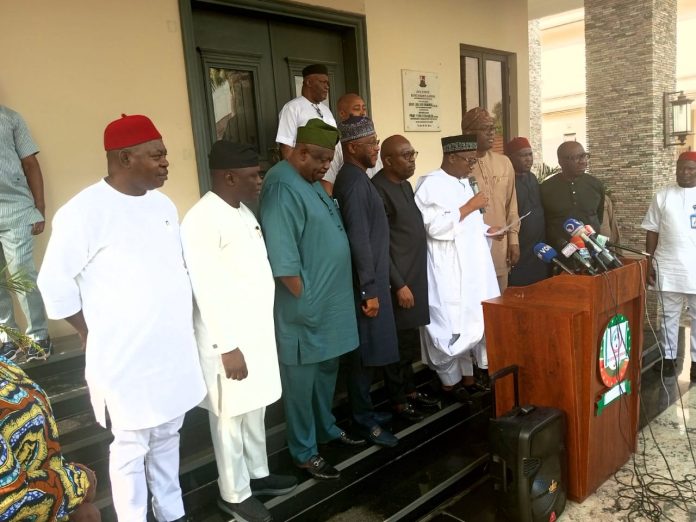
The Peoples Democratic Party (PDP) governors have raised alarm over the prevailing hardship in Nigeria, expressing fears that the nation is on a trajectory reminiscent of Venezuela’s struggles. The PDP Governors’ Forum, in a meeting lasting over three hours, attributed the hardship to the country’s economic and security challenges.

The dire situation in Venezuela, characterized by political corruption, food and medicine shortages, business closures, unemployment, and economic mismanagement, serves as a cautionary comparison for the PDP governors.

Chairman of the Forum and Bauchi State governor, Bala Mohammed, emphasized their collaborative efforts with the federal government to address rising living costs. Governor Mohammed acknowledged that economic and monetary policies primarily rest with the federal government but highlighted the governors’ commitment to mitigating the effects of such policies on the people.

Expressing concern over the free fall of the naira and the escalating cost of living, Governor Mohammed stated, “We are almost on the road to Venezuela. We are giving concrete opposition but not insulting anybody. Ultimately the decision squarely rests with Nigerians and other organs in the country to make sure that we do things that will bring succor to all of us.”

The PDP governors reiterated their call for state police, with safeguards in place to prevent abuse or overreach by any tier of government. Additionally, they addressed the crisis in Edo PDP, asserting the party’s commitment to democracy and constructive criticism of the federal government’s policies.

The governors expressed unity and support for Edo State, affirming their backing of the National Working Committee (NWC) led by Acting National Chairman Iliya Damagum. They called for the convening of a National Executive Council (NEC) meeting to address recent developments within the party.

In a vote of confidence for the NWC, the governors committed to revitalizing and repositioning the PDP as an effective opposition to the ruling party in Nigeria. The meeting included governors from various states, with a collective pledge to navigate challenges and work towards a brighter future for the party and the nation.

Speaker of Nigeria’s Federal House Raises Alarm on Safety Standards Neglect

0

Abuja, Nigeria – In a formal address during the inauguration of the 10th House Committee on Safety Standards and Regulations, Rt. Hon. Tajudeen Abbas, PhD, the Speaker of Nigeria’s Federal House of Representatives, expressed deep concerns regarding the widespread disregard and non-compliance with safety standards by various public and private institutions across the country.

Represented by Deputy Speaker Rt. Hon. Benjamin Okezie Kalu, Abbas underscored the fundamental right of citizens to a secure and hazard-free workplace, as globally acknowledged in declarations of human rights. However, he acknowledged the challenge of translating this right into reality, emphasizing the persistent difficulties in identifying, eliminating, and controlling hazards.

The Speaker lamented the recurring devastating effects of unsafe practices, citing instances such as fatal motor accidents, explosions, boat mishaps, accidental discharge, and market fires. These tragic events have resulted in the loss of innocent lives and properties.

Despite governmental efforts and initiatives by institutions, NGOs, and safety advocates, the Speaker noted that the nation continues to grapple with safety lapses due to the disregard for existing standards and regulations. Abbas urged both private and public institutions to assume responsibility for controlling the inherent risks in their operations.

The Speaker commended the newly inaugurated Committee on Safety Standards and Regulations, chaired by Hon (Dr.) Sulaiman Abubakar Gumi, FNSE, for their pragmatic strategic plan. Abbas expressed confidence that the committee’s legislative and oversight functions would address the challenges faced by Ministries, Departments, Agencies, and the Private Sector.

In his words, the Speaker stated, “I am confident that their legislative and oversight functions would resolve the challenges faced by Ministries, Departments and Agencies, and the Private Sector.” He further emphasized the importance of a systematic and holistic approach to safety, encouraging institutions to engage competent individuals in managing safety aspects.

Highlighting the commitment of the House of Representatives to safety, Abbas disclosed ongoing efforts to upgrade safety and security architecture within their complex, including a forthcoming fire risk assessment and drill.

The Speaker concluded the address by formally launching the Strategic Document of the House Committee on Safety Standards and Regulations, reaffirming the Leadership of the House’s support for the committee’s goals.

Nigeria’s Defence Minister Commends NAF’s Aircraft Acquisition

0

…Says it signifies a milestone in Nigeria’s Defence capabilities

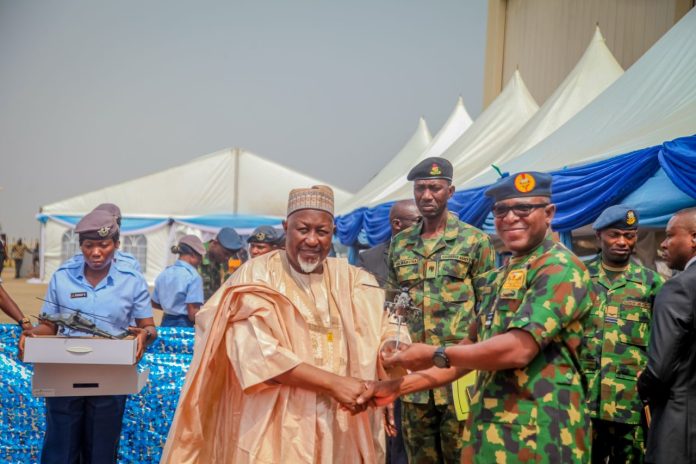
Honourable Minister of Defence, Mohammed Badaru Abubakar, has praised the Nigeria Air Force (NAF) for its recent acquisition of T-129 ATAK helicopters and King Air 360i aircraft.

At the induction ceremony in Markudi, Benue State, the Minister stated that these acquisitions mark a significant milestone in Nigeria’s defense capabilities.

He emphasized the platforms’ role in countering emerging security threats and safeguarding national sovereignty.

The ceremony, attended by Vice President Kashim Shettima on behalf of President Bola Ahmed Tinubu, highlighted Nigeria’s commitment to modernizing its armed forces for enhanced operational readiness.

The Minister stated this during the induction ceremony of the T-129 ATAK helicopters and King Air 360i aircraft at NAF Base in Markudi, Benue State.

This was made available to newsmen in a release signed by Henshaw Ogubike Director ( Information and Public Relations).

The ceremony which was presided over by Mr. President, His Excellency Bola Ahmed Tinubu GCFR who was ably represented by Vice President Kashim Shettima.

While commending the newly acquired platforms, Badaru stated that: “The acquisition and induction of these cutting-edge platforms signify a significant milestone in Nigeria’s defense capabilities.”

He added that the platforms would boost the nation’s ability to effectively counter emerging security threats and safeguard our nation’s sovereignty against threat’s.

The ceremony showcased Nigeria’s commitment to modernizing its armed forces and enhancing operational readiness.

Speaking on the strategic importance of the platforms, he said that they would enhance the nation’s airpower in maintaining national security.

“The induction of these state-of-the-art aircraft demonstrates our unwavering resolve to equip our military with the tools necessary to confront evolving security challenges,” he stated.

The Minister reiterated the Federal Government’s dedication to providing the Nigerian Armed Forces with the resources needed to uphold peace and stability across the nation.

“We remain steadfast in our support for the Nigeria Air Force, other Services and security Agencies, we will empower them to fulfill their mandate of protecting our citizens and defending our territorial integrity,” he said.

Th Minister also expressed confidence in the Nigeria Air Force’s ability to leverage on the new capabilities effectively. “I do not doubt that the professionalism and dedication of our air personnel, coupled with these advanced aircraft, will further enhance our national defense posture and contribute to the security and well-being of all Nigerians,” he said.

Nigeria’s Defence Minister Affirms Commitment to ECOWAS Security Cooperation

0

The Honourable Minister of Defence, Mohammed Badaru Abubakar, has said that Nigeria is committed to regional security cooperation with other members of ECOWAS countries.

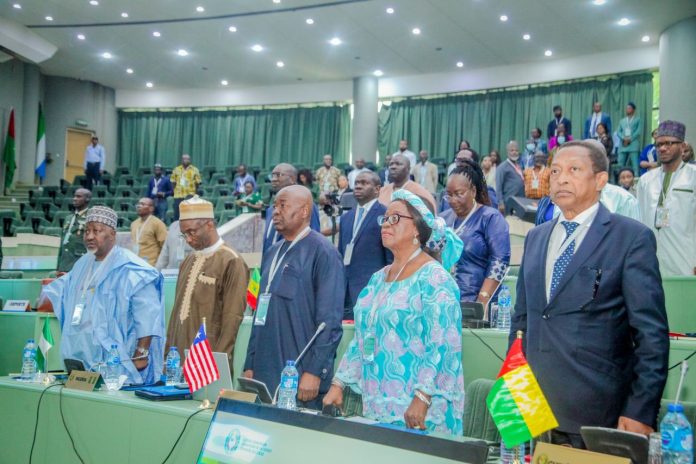
The Minister stated this during the Opening Ceremony of the Extraordinary Session of the Mediation and Security Council of the Economic Community of West African States (ECOWAS) at the Ministerial Level in Abuja.

This was contained in a statement signed by Henshaw Ogubike, Director ( Information & Public Relations), Ministry of Defence.

The Minister who attended the event along with his fellow ministers from across the ECOWAS community to deliberate on pressing security matters affecting the region.

The purpose of the meeting was on the withdrawal of three member states of the Economic Community of West African States (ECOWAS) namely; Niger, Mali and Burkina Faso which has generated concern across the region and posing security threats.

Representatives of member states under the leadership of the Commission’s Chairman and Minister of Foreign Affairs, Ambassador Yusuf Maitama Tuggar came up with possible solutions for the pressing challenges facing members states, such as: climate change, violent extremism, migration, organized crimes among others.

The President of ECOWAS, Dr. Omar Alieu Touray said that this was the right time to come together as members of ECOWAS and solve our common problem.

Furthermore,Badaru emphasized the importance of collective action in addressing regional security challenges, saying that: “Nigeria remains committed to working hand in hand with our ECOWAS counterparts to ensure the safety and well-being of our citizens.”

The Minister’s active involvement in the ECOWAS Ministerial Level Session reflects Nigeria’s leadership role in promoting peace and security throughout West Africa. His unwavering dedication to advancing the ECOWAS security agenda sets a commendable example for regional cooperation and solidarity.

FG Reiterates Commitment to Labour Agreements amid Strike Threats

0

Minister of State for Labour and Employment, Nkeiruka Onyejeocha, has assured the public that the Nigerian government remains committed to implementing the sixteen-point agreement made with organized labor to address challenges arising from the removal of fuel subsidy. The Nigeria Labour Congress and Trade Union Congress had issued a 14-day ultimatum to the government to meet their demands.

Onyejeocha emphasized the government’s dedication to honoring its obligations to workers and the less privileged, stating that the implementation of the Memorandum of Understanding (MoU) with organized labor is underway. She expressed confidence in President Bola Ahmed Tinubu’s administration, assuring that the government is actively working to address the nation’s needs and concerns.

While acknowledging the challenges faced by Nigerian workers, Onyejeocha highlighted the gradual nature of negotiations and resolutions, emphasizing the government’s commitment to ongoing discussions with trade unions. She assured organized labor of the administration’s dedication to open and constructive communication for positive labor relations.

Addressing concerns about the implementation of the N35,000 minimum wage, the minister stated that the award is being carried out, and any reported non-implementation issues are actively being addressed. She cited recent mediation efforts, such as resolving disputes between the National Union of Civil Engineering Construction, Furniture and Wood Workers and related associations, as part of the ongoing commitment to labor-related matters.

Prophet Isa El-Buba Urges President Tinubu to Address Hunger Crisis in Nigeria

0

Prophet Isa El-Buba, the Global Convener of Initiative for Better and Brighter Nigeria (IBBN), has called on President Bola Ahmed Tinubu to urgently address the devastating hunger crisis in Nigeria. El-Buba expressed concern that the increasing hunger and poverty levels might lead to a full-blown revolt by the suffering masses if not addressed promptly.

He highlighted the challenges contributing to the hunger crisis, including the rapid depreciation of the naira, pervasive inflation, attacks on farmers by terrorists, and the displacement of people from farming zones. El-Buba emphasized that the situation is not limited to specific regions, affecting the entire country due to the high cost of energy and transportation, leading to a surge in food prices.

El-Buba urged the federal government to release grains from its strategic reserve depots and ensure their distribution to hungry Nigerians at affordable prices. He acknowledged the need for both short-term and long-term measures, suggesting collaboration between the government and private sectors, technology deployment, and access to low-interest credit to support smallholder farmers.

He commended Governor Kefas Agbu of Taraba State for initiatives such as the establishment of a palliative market, where food and non-food items are sold at cheaper rates. El-Buba encouraged other state governors to develop local initiatives aligned with their realities to bring relief to their people.

Additionally, he stressed the importance of addressing insecurity and called for leadership in containing the security challenges to prevent a ripple effect on the economy. El-Buba proposed the resettlement and restoration of farming villages in Plateau and Benue States, providing a N20 billion grant to enable affected communities to resume farming activities.

Finally, El-Buba called on Nigerians to return to farming to collectively contribute to food production and self-sustenance.

CBN Links Hunger, Shortage of Food to Insecurity, Climate Change, and Others

0

The Central Bank of Nigeria (CBN) has attributed the rising hunger and shortage of food in the country to factors such as insecurity, climate change, inefficient farming practices, and bottlenecks in the importation of food items.

CBN Governor, Olayemi Michael Cardoso, made these statements during a joint Senate committee meeting on Finance, Banking and other Financial Institutions, and National Planning.

Cardoso explained that the pressure on the nation’s foreign exchange market is contributing to the continuous decline in the value of the naira. He noted that supply shocks caused by insecurity, climate-induced factors like floods and rainfall shortage, inefficient farming practices, and importation bottlenecks have impacted the prices of imported food items, leading to increased food inflation.

Addressing the senators, Cardoso highlighted that the foreign exchange market is facing increased demand pressures, resulting in a continuous decline in the naira’s value. He mentioned speculative forex demand, inadequate forex supply, increased capital outflows, and excess liquidity as contributing factors to the situation.

The CBN Governor emphasized the urgency of addressing these issues, acknowledging the public’s concerns about the rising cost of living and food scarcity. He mentioned the efforts of the emergency committee on food security and the CBN’s monetary policy tightening to curb inflationary pressure.

Cardoso also provided insight into the inflation rates, stating that the economic landscape in December 2023 revealed significant shifts. He acknowledged the challenges in the country’s foreign exchange market and the impact on inflation, particularly in the food sector.

The CBN Governor assured that collaborative efforts with the Fiscal Authorities, such as discontinuing ways and means advances and halting quasi-fiscal measures, have been initiated to address the situation. He expressed optimism that inflationary pressures would decline in 2024, supported by the CBN’s inflation-targeting policy and improved agricultural productivity.

On exchange rate management, Cardoso discussed measures to enhance liquidity in the FX markets, unifying FX market segments, clearing outstanding FX obligations, and introducing operational mechanisms. He stressed the importance of moderating the demand for foreign exchange and emphasized ongoing collaboration between fiscal and monetary authorities.

In conclusion, Cardoso highlighted the importance of actions by corporates and individuals in reducing frequent demand for the dollar for business and personal needs to stabilize the exchange rate. He acknowledged progress in collaboration with the Minister of Finance, Minister of Budget and National Planning, and the Minister of Agriculture to tackle economic challenges.

Senators Express Anger Over Attempts to Undermine Senate by Finance Minister, CBN Governor, Others

0

Tension flared in the Senate during a stormy session as senators expressed anger over the continued efforts of the Central Bank of Nigeria (CBN) Governor, Mr. Cardoso, Finance Minister, Mr. Wale Edu, and other government appointees to deliberately undermine the Senate and their refusal to submit to the oversight responsibilities of lawmakers.

During a meeting organized by the Senate Committee on Banking and Finance to engage the finance minister, CBN governor, and other heads of government agencies on the nation’s dwindling economy, senators lamented the refusal of some ministers and heads of government agencies to obey Senate resolutions and their flagrant breach of laws, including extra-budgetary expenditures.

Senators cited instances of neglecting Senate resolutions and invitations, with some appointees refusing to open their financial books for Senate committees responsible for oversight or disregarding Senate approvals to spend taxpayers’ money.

The stormy session occurred just 48 hours after the Senate Committee on Gas raised concerns about the lack of transparency in handling the Presidential CNG Funds, with officials refusing to submit to Senate oversight.

Senator Tokunbo Abiru, Chairman of the Senate Committee on Banking & Currency, accused the CBN of undermining the committee by refusing to provide requested documents, including Audited Reports and the CBN Budget.

Senator Sani Musa questioned the Finance Minister about the $3.3 billion loan intended to cushion the effect of the rise in the value of the dollar against the naira. He emphasized the need for transparency in managing the country’s financial resources.

Senator Orji Uzor Kalu expressed the Senate’s displeasure over attempts by government functionaries to undermine the Senate and directed the CBN Governor to submit to the oversight function of the Senate Committee on Banking and Currency.

FCCPC Collaborates with Stakeholders to Tackle Excessive Prices of Commodities

0

The Federal Competition and Consumer Protection Commission (FCCPC) is actively collaborating with the Federal Ministry of Industry, Trade and Investment, other government agencies, consultants, and Civil Society Organizations (CSOs) to develop measures aimed at curbing the excessive prices of commodities in the markets.

In a statement issued by the Acting Executive Vice Chairman/Chief Executive Officer of FCCPC, Dr. Adamu Abdullahi, it was highlighted that a Fair Food Pricing Multi-stakeholders workshop was co-hosted by the Commission and Consumers International on July 18, 2023. The workshop aimed to gather information and evidence on anti-competitive activities such as price gouging, price fixing, and other cartel conduct leading to unfair food pricing.

Dr. Abdullahi emphasized the importance of empirical data as the basis for any enforcement exercise to address unfair prices in the food sector. The Commission is encouraging the public and anyone with useful information in the food chain industry to report possible illegal, exclusionary, or restrictive practices contributing to unfair food prices through its designated portal.

The FCCPC’s priority remains addressing key consumer protection and competition issues in the food chain sector. Dr. Abdullahi noted that participants in the food chain and distribution sector, including at the retail level, have been engaging in conspiracy, price gouging, hoarding, and other unfair tactics to restrict the supply of food and manipulate and inflate prices. Such conduct violates both moral and legal codes.

The statement warned businesses engaging in activities contributing to price gouging in the food chain sector to desist or face the full force of the law. The Commission will not tolerate actions compromising the integrity of the food chain sector, and legal consequences will be swift and severe.

Dr. Abdullahi clarified that while the FCCPC is not mandated to regulate prices, it may, in rare situations and based on empirical evidence, advise the President to fix the prices of certain goods and services. The Commission is committed to engaging with stakeholders and taking progressive measures to contain price gouging throughout the food distribution chain.