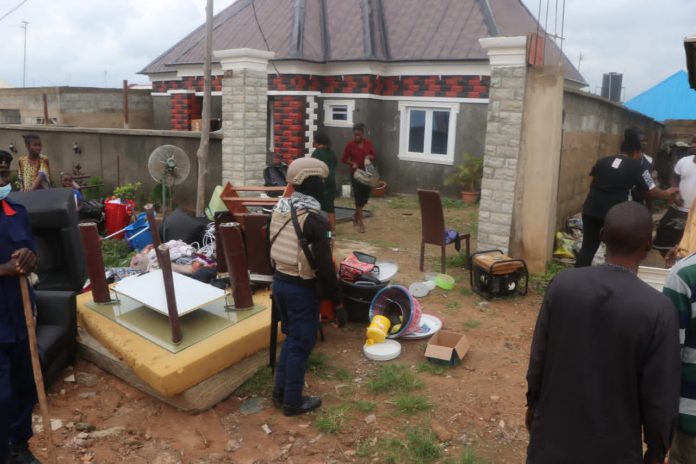
According to Kuje Area Council residents, people who bought and erected homes along the neighborhood’s railway corridors did so at great risk despite being informed that the government had set aside the area for a specified use.
This occurs while the Federal Capital Territory Administration (FCTA) keeps up its onslaught against the neighborhood’s unlawful constructions.
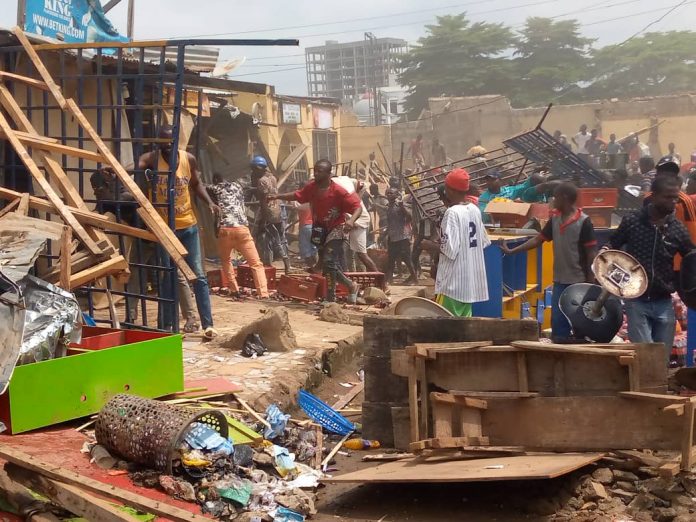
The FCT Administration destroyed a number of buildings on Tuesday in order to reclaim the railway lines, including churches, small towns, eateries, and businesses.
Some of the locals reported that despite many of the buyers supposedly receiving cautions to stay away from the property, they disregarded the sage counsel.
One of the residents, Lukman Abduralman, revealed that the sellers also wooed by the sellers to buy land there, but refused to take such risk.
According to Abduralman: “they know that this is government land, because they were told by those who know. I have been here since 2015. They were told that railway passed through here, but they claimed that the railway has been diverted.
” They even told me to come and buy a portion for N200, 000, but I refused to buy. The buyers said they are aware that the place is temporary and that anytime that government comes, they will leave”.
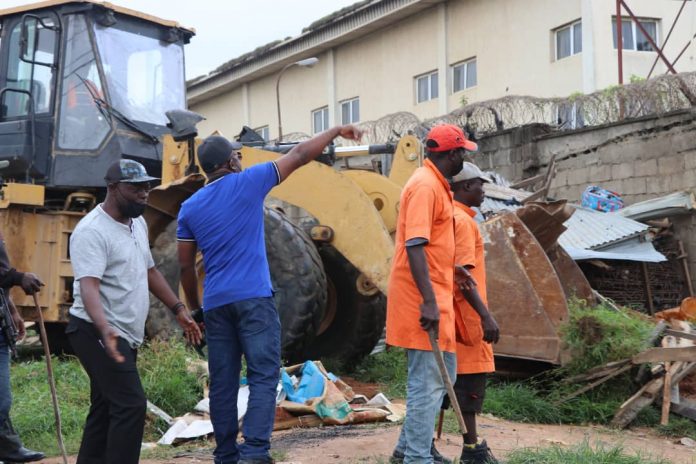
Meanwhile, the Senior Special Assistant on Monitoring, Inspection and Enforcement to FCT Minister, Comrade Ikharo Attah said the demolition along the Kuje railway corridors would be sustained for days, until the illegally acquired lands were reclaimed.
He, however, noted that the FCT Minister, won’t relent until the railway corridors were reclaimed.
His words: ” The Kuje railway corridors clean up is one of the touchy exercises we are carrying out . It is quite pathetic situation, because when the team from the Department Development Control came to mark this buildings, but they never believed them.
“Our officers are badly touched doing this demolition, some were almost shading tears, that people who really ought to know and parking out from their illegal structures didn’t park.
“The sellers of the illegal land gave the people hope that government was not serious and won’t come to demolish, and on this the Minister has proved them wrong “, he further stated.
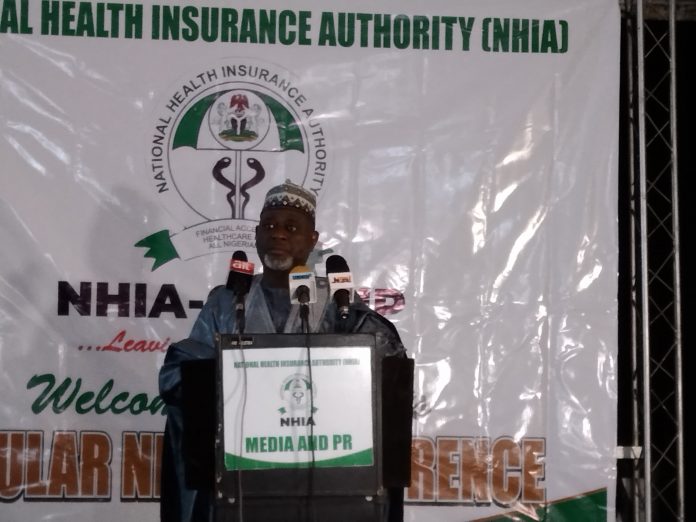
The Compulsory Social Health Insurance will provide coverage for 83 million underprivileged Nigerians, according to Prof. Mohammed Nasir Sambo, Director General of the National Health Insurance Authority (NHIA).
Furthermore, the agency is prepared to implement the Act and help people internalize it, indicating that the path toward achieving Universal Health Coverage (UHC) is on track.
Sambo stated this on Tuesday in Abuja during a one-day workshop/news conference for health correspondents on the NHIA Act.
This development makes it more feasible than ever before to combat the high prevalence of poverty brought on by out-of-pocket medical expenses by providing health insurance to all categories of Nigerians by 2030.
According to him: “The moment President Muhammadu Buhari signed the Act , the NHIA Act empowers the Authority to see to it that all Nigerians and legal residents have health insurance. This is a complete departure from the previous law that made health insurance optional.
“The NHIA Act brings renewed prospects for the delivery of effective health insurance in Nigeria, fundamentally resets the ecosystem.
“The Act establishes and empowers the NHIA to ensure provision of health insurance for all Nigerians through a mandatory mechanism, in collaboration with state health insurance agencies.
“Specifically, Sections 25 and 26 of the Act establish the Vulnerable Group Fund (VGF), indicating the various sources from which funding would be drawn.
“Furthermore, the legislation strengthens the NHIA to discharge a wide range of regulatory and promotion functions to ultimately ensure that every Nigerian receives access to quality and affordable health care”, Sambo stressed.
Fielding questions from newsmen on the inclusion of cancer treatment in NHIA programme, the Director General said the agency is in partnership with Roche Products Nigeria Limited on Cancer Care Reimbursement initiative. While adding that Roche will pay 50% of the amount, NHIA will pay 30% of the money and the patient pay 20% of the amount.
Responding to a question on integration of informal sectors into the NHIA programme, Sambo said health is compulsory for people in the informal sectors, the new law has made health compulsory for everyone. ” The public sector is already in, organized private sectors will be compelled and persuaded to join.
” There are numerous benefits in health insurance which is to protect them. Government will also come up with policies that of you have to enroll your children in schools, you have to present an evidence of health insurance. Even when you don’t go to school, you will go to the hospital, you must produce the your health insurance evidence. Almost 70% of out of pocket expenditure. We want to ensure that out of pocket expenditure is reduced to below 50%”, he said.
Malam Muhammad Musa Bello, the Minister of the Federal Capital Territory (FCT) has said that about 95% of Abuja’s parks have completely departed from the FCTA park policy.
This comes as he directed the popular Millennium Park to reopen following it two years of closure due to the COVID-19 outbreak.
The park, which was constructed and given to the citizens of the FCT a number of years ago, was shut down in 2020at at the height of the COVID-19 outbreak.
Bello hinted that the event was more than just reopening of the park, but also appreciating the Almighty Allah for having taken us safely throughout the pandemic period.
He , however, appealed to the media and the public to support the FCTA’s efforts towards rediscovering Abuja from what it was meant to be by the founding fathers.
The minister urges those opposing the FCTA park policy to have a rethink and support the administration in the journey to transform all parks to what it was meant to be.
According to him: “Today signifies a very important milestone for the city. A day when officially our own Millennium Park in Abuja will be open after over two years as a result of the COVID-19 pandemic.
” For us in the city this occasion today is more than just the reopening of the park but appreciating God Almighty for having taken us safely through all this difficult times.
” More importantly it is a day when we are going to say thank you Salini Nigeria L.td., for being a very reliable partner and cooperate citizen in Abuja, who have singlehandedly constructed this park over 22 years ago.
” And more importantly continue to maintain it to this international standard that you all see today without charging a kobo. What we have seen today is what truly a park support to be in Abuja.”
” Very unfortunately, almost 95 per cent of the parks in Abuja have totally derailed from our park policy. What you see here is what we call the FCT Park Policy in action.
” They have an opening time, they have a closing time, they have perimeter fence, lights, security and toilet.”
Meanwhile, the Managing Director of Salina Nigeria Ltd Dr Piero Capitano, thanked the administration for all the support to the company.
Represented by the Project Manager of the company, Mr Gennaro D’ltria, Capitano, said that the park was a century of relaxation which provides freedom and peace.
The nation’s capital city’s Kuje town is currently undergoing a large clean-up and demolition of illegal structures by the Federal Capital Territory Administration (FCTA).
After months of public education campaigns, abatement notices from the relevant authorities, and support from Kuje stakeholders, the exercise which was a part of ongoing efforts to reduce the growth of illegal structures that are allegedly obstructing the movement of vehicles and pedestrians in the area took place.
Around 10 AM, FCTA leaders rushed the area backed by a sizable security team made up of members of the military, police, and paramilitary organizations to clear roadside encroachments from the famed tipper garage to the Kuje main market.
During the clean-up exercise, which lasted for about seven hours, hundreds of structures ranging from kiosks, containers, attachments to stores and worship centres, shanties and sign posts encroaching on the road corridors.
It was however observed that some encroached areas were cleared by the owners and occupants before the enforcement team arrived for the actual removal.
Speaking with newsmen, Senior Special Assistant to FCT Minister on Monitoring, Inspection and Enforcement, Comrade Ikharo Attah hinted the exercise is under the Minister’s directive and under the guidance of police Commissioner, Sunday Babaji and other security heads in the Territory
According to Attah, the Minister has not been comfortable with the nature of Kuje, as the extreme contraventions in multiple places in Kuje, makes the area very unsafe, illegal settlements, due to the extreme road encroachment, road side trading, encroachment of rail corridors, and other contraventions in Kuje.
“The clean-up would be a week long exercise, as Kuje has been very worrisome in some areas of insecurity.
“Today, we have been able to address the issue of road side encroachment from tipper garage to the main market, we couldn’t enter the forest, but we told them to park that forest is not supposed to be a market while we also touched the fruit market.
” Tomorrow we will be claiming the rail corridor, the entire rail corridor, and keep it safe and children can use it for recreation.
“We marked Kuje about four months ago. And we have been waiting for long, so the word of caution is what they have seen today”.
Speaking on the encroachment of the railway, the SSA explains: “Kuje chiefs and indigenes have denied selling the rail corridor to anyone and we have asked them who sold to them, they can’t say. So we have been directed by the Minister to reclaim the rail corridor.
“The Tipper garage, being a notorious place, we will keep coming, and Kuje is now like Gwarinpa”
Charity Onu, one of the traders, who owns a shop in Kuje market said often than they are forced to bring goods to roadside, patronage is low, due to the obstructions on the road leading to the market.
According her: “Clearing of the road is very good as it will pave a way for people to come inside, but I will like to appeal to the government to give the dislodged roadside traders new place, where they can do their business”.
Dr. Shafiu Isah devotes his days to caring for children who have a neglected illness that few people have even heard of in his capacity as Chief Medical Director at the Sokoto Noma Children’s Hospital in the northwest of Nigeria.
A gangrenous condition called noma affects the bone and soft tissues of the face. Without treatment, it kills over 90% of its victims the majority of whom reside in remote, difficult-to-reach areas within a matter of weeks.
“Due to extreme poverty and lack of awareness, unfortunately, a lot of these children die at home without even making it to the hospital,” Dr Isah says, which in turn exacerbates the substantial knowledge gaps regarding this preventable and treatable disease.
In the absence of reliable epidemiological data, a 1998 World Health Organization (WHO) global estimation of 140,000 new cases yearly remains the most widely cited source on noma. The majority of these cases are found in sub-Saharan Africa in children between the ages of two and six.
Even for those who ultimately survive the disease, if not treated immediately, it takes mere days for them to be left with severe facial disfigurements that make it hard to eat, speak, see or breathe. In turn, this often leads to severe stigmatization within their communities and a range of accompanying human rights violations.
“We’ve had cases where when the patient presents to the hospital, the whole of the lower jaw is already gone, or the whole of their nostril pathway is gone,” says Dr Abubakar Abdullahi Bello, Chairman of the Medical Advisory Committee at Sokoto Noma Children’s Hospital.Nigeria seeks to eliminate severe and often lethal mouth disease 28 July 2022
As Chief Medical Director at the Sokoto Noma Children’s Hospital in the northwest corner of Nigeria, Dr Shafiu Isah dedicates his days to treating children suffering from a neglected disease that few people have even heard of.
Noma is a gangrenous disease that attacks facial tissue and bone. Without treatment, it kills around 90% of its victims, most of whom live in hard-to-reach rural areas, within just a few weeks. “Due to extreme poverty and lack of awareness, unfortunately, a lot of these children die at home without even making it to the hospital,” Dr Isah says, which in turn exacerbates the substantial knowledge gaps regarding this preventable and treatable disease.
In the absence of reliable epidemiological data, a 1998 World Health Organization (WHO) global estimation of 140,000 new cases yearly remains the most widely cited source on noma. The majority of these cases are found in sub-Saharan Africa in children between the ages of two and six.
Even for those who ultimately survive the disease, if not treated immediately, it takes mere days for them to be left with severe facial disfigurements that make it hard to eat, speak, see or breathe. In turn, this often leads to severe stigmatization within their communities and a range of accompanying human rights violations.
“We’ve had cases where when the patient presents to the hospital, the whole of the lower jaw is already gone, or the whole of their nostril pathway is gone,” says Dr Abubakar Abdullahi Bello, Chairman of the Medical Advisory Committee at Sokoto Noma Children’s Hospital. “But if the cases present to the hospital early, then they don’t have such issues. That’s what we are advocating for. With early admission, we can also reduce the duration of the stay in the hospital and these patients will not require surgical intervention.”
Noma can be prevented by basic public health interventions such as improving nutrition and oral hygiene; controlling comorbidities such as measles, malaria and HIV infection; and improving access to routine vaccinations.
In recent years, Nigeria has sought to increase awareness of noma and scale up its response activities as part of a commitment to eliminate the debilitating disease. Since 2016, it has been among 10 priority countries to form part of the World Health Organization’s (WHO) African Regional Noma Control Programme.
Nigeria has developed and implemented the programme’s national action plan for noma prevention and control in collaboration with WHO and other partners.
The Nigerian Ministry of Health has integrated noma into its existing surveillance system and incorporated it into the curricula of all national and district health professional schools, while the country now commemorates an annual National Noma Day in November each year. Funding from WHO, as well as Médecins Sans Frontières (MSF), has also helped the Ministry to scale up training of primary care workers, with 741 having received training on noma in 2021 and the first half of 2022.
On 28 July 2022, WHO launched a new free and interactive online noma course through OpenWHO, the first WHO platform to host unlimited users during health emergencies.
“This course will be a useful self-learning tool for health workers to increase their capacity to prevent, identify, treat and refer noma considering both public health and human-rights aspects. Officers in charge of noma at the national and district level can also utilize the course material to train primary care workers,” says Yuka Makino, a technical officer for oral health at the WHO Regional Office for Africa.
Back at Sokoto Noma Children’s Hospital, Dr Isah is encouraged by his country’s increased focus on noma after so many years of neglect. “This disease is still not very well known in our communities, including among health care workers, who often mistake it for cancer or other illnesses. But I am optimistic that this is beginning to change,” he says. “With the help of other stakeholders, I think we are getting there.”
Isah’s optimism is not ill-founded. Since the hospital opened its doors in 1999, it has been the only specialized noma facility anywhere in Nigeria. But in May this year, Nigeria Aid Noma Initiative (NANI) began construction of a new 100-bed national noma treatment centre, funded by German non-profit Hilfsaktion Noma e.V, within the National Hospital grounds in the country’s capital, Abuja. For now, noma patients continue to come to Sokoto from all over the country in search of treatment, often after having been identified by the hospital’s outreach teams. Mulikat Okanlawan was one of the first such patients. More than 20 years ago, and after many years of referrals and failed operations at other facilities, she travelled all the way to Sokoto from Lagos, some 1000kms away, to seek specialized care and finally find hope.
“I used to cry every day. I didn’t associate with anyone due to the stigma. I was alone. But after I was treated here, everything changed. I began to admire myself. I began to relate to other people. I continued my schooling. I began to do everything that I couldn’t do before,” she says.
Having subsequently completed her tertiary education at the local Gwadabawa School of Health Technology, Mulikat now works as a hygiene officer at Sokoto Noma Children’s Hospital, where she also provides psychosocial support to noma patients.
“These patients that come to the hospital, they can see that I was like them but now I am better and I am working,” she says. “It helps to give them courage.”
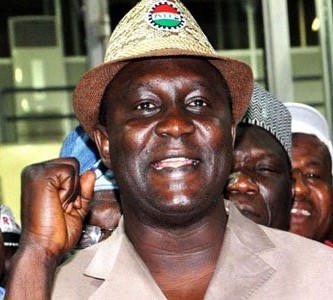
In solidarity with the Academic Staff Union of Universities, and a bid to address the deplorable state of the education sector in the country, the Nigeria Labour Congress has staged a nation wide protest over the continuous shutting down of the federal universities by the Academic Staff Union of universities due to the non implementation of the 2009 agreement between the federal government and the Academic Staff Union of universities. The rally started at unity fountain and terminated at the National Assembly with workers carrying play cards of various inscriptions that based described their grievances.
Speaking in Abuja at the rally, the President Nigeria labor Congress Comrade Ayubba wabba said that the future is doomed for any country who does not priortise its education section.
Ayubba further attributed the security challenges bedeviling the country, to the high level of illiteracy and poverty.
Noting that most of those at the helm of affairs currently were beneficiaries of a thriving education sector in the past as they enjoyed free and quality education
Wabba also wrote off insinuations by the Federal Government that their rally will lead to civil disturbances, saying on the contrary the actions of the government are fueling social disturbances.
He said nowhere in the world that protesters denied their right to protest except in Nigeria.
He also criticised the no work no pay policy of the government with respect to the ongoing strike in the universities, describing such actions as draconian laws.
Ayubba added that if the mega protest does not yield positive result, NLC would not hesitate to embark on a nation wide strike.
The NLC President later presented to the Green and Red Chambers a document containing their demands on how to bring to an end, the ongoing strike in Nigerian universities.
In their responses, Hon. Ali Wudil and Senator Ajayi Borofice who represented the Speaker House of Representatives and Senator President respectively, promised a timely and prompt intervention on the matter.
They stated that since the beginning of the strike action, the National Assembly has been consulting relevant stakeholders with a view to ending the crises.
The lawmakers assured the protesting unions that the National Assembly would invite all the stakeholders to sit down and see how the crises could be resolved.
Among the unions which had downed tools for over 170 days is the Academic Staff Union of Universities, ASUU, the Non Academic Staff Union of University and Allied Institutions, NASU, the Senior Staff Association of Nigerian Universities, SSANU, and the National Association of Academic Technologists, NAAT.
The protest attracted civil society groups, Past Students Union leaders, NANS and prominent Nigerians including Senator Shehu Sani.
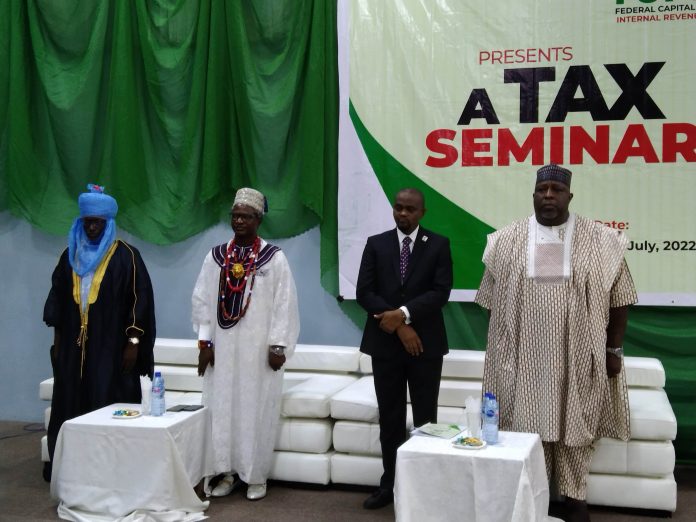
Malam Muhammad Bello, Minister of the Federal Capital Territory, has cautioned high-income individuals who offer misleading information about their income to stop.
On Tuesday in Abuja, Bello issued the warning at a one-day tax seminar titled “Reviving the Tax Culture of Filing Tax Returns,” which was organized by the FCT Internal Revenue Service (FCT-IRS).
Alhaji Lukman Agboola, the Mandate Secretary of FCT Economic Planning, Revenue Generation, and Public-Private Partnership, represented the minister.
He said it was worrisome that only 10 per cent of registered residents of the FCT are contributing to the maintenance and development of the territory by paying their taxes.
” As you are all aware, one of the canons of taxation is fairness, such that payment of tax is proportional to the income of the person.
” Therefore, tax should be equitable in a way that amount of tax payable should be proportionate to income.
” It is however worrisome that, according to reports reaching me, only 10 per cent of registered residents of the FCT are contributing to the maintenance and development of the Territory by paying their taxes.
” This needs to change, both for fairness and entrenchment of the rule of law. We must begin to treat tax evasion as the crime that it is, ” he said.
Bello encouraged all residents of the FCT to take filing of returns as an obligatory and necessary step towards Supporting the socio-infrastructural development of FCT.
” We must understand that taxation is not just a means of providing funds for services and infrastructure, it is also a means for the high earners to contribute for the upliftment of the quality of life of the low earners.”
The minister commended the FCT-IRS for its foresight in holding the seminar aimed at enlightening taxpayers of their very important civic responsibility of filing tax returns.
” It is my hope that this seminar will chart a way for the FCT Internal Revenue Service to improve compliance to tax payment and the proper declaration of all income by all residents.”
In his keynote address, the Managing Director, JK Consulting, Dr James Naiveju, urged legislature, the judicial, public servants and professional to ensure timely and complete filing of their tax returns.
Naiveju said if all FCT residents agree to file their tax returns effectively and it would enhance the economy and reduce the rate of poverty.
He, however, urged the FCT-IRS to simplify the process of tax returns by making it electronically that could be accessible by with smart phones and other devices.
” A proud residents of the Federal Capital Territory has a moral and civil responsibility to file their tax returns with utmost patriotism to the fatherland.
” There must also be patriotism, determination, political will on the part of the authority to ensure that citizens file their tax returns as at when due.”
More illegal structures in Abuja’s ever busy Jabi Motor Park were destroyed on Tuesday by the Federal Capital Territory Administration (FCTA).
This is part of a larger demolition effort to reinstate the Abuja master plan, which some property owners have violated.
The Scavengers were thoroughly enjoying the scrap during the final phase of the park’s deconstruction in the Lagos Line location, despite the significant presence of combined security personnel.
The primary goal of the clean-up, according to Comrade Ikharo Attah, Senior Special Assistant on Monitoring, Inspection, and Enforcement to the Minister of FCT, was to dismantle any unauthorized buildings and return the original master plan.
He also explained that most of the buildings failed integrity test while others and cannot be allowed to stand because of contravention
Attah stated that the minister of the Federal Capital Territory, malam Muhammad Bello has given the demolition team the mandate to bring about sanity by removing all illegal structures to pave way for the new approved Jabi motor Park plan.
According to Attah: ” Yesterday, we removed the illegal structures and today we are removing those structures that are death traps and have failed integrity tests as well, the exercise is not limited to insecurity.
“The Scavengers are not stopping us from doing our work, but we are disturbed because they have taken over the whole place” Attah said.
However, one of the traders at the scene, Joy Johnson decried the demolition and described it as frustrating of common people.
“I didn’t feel good, other traders were not happy. It is frustrating. We are very angry because we don’t know what the country is turning into, does it mean the government wants us to be roaming the street?
“We deserve to be given two to three years demolition notice, how can people be treated this way?.
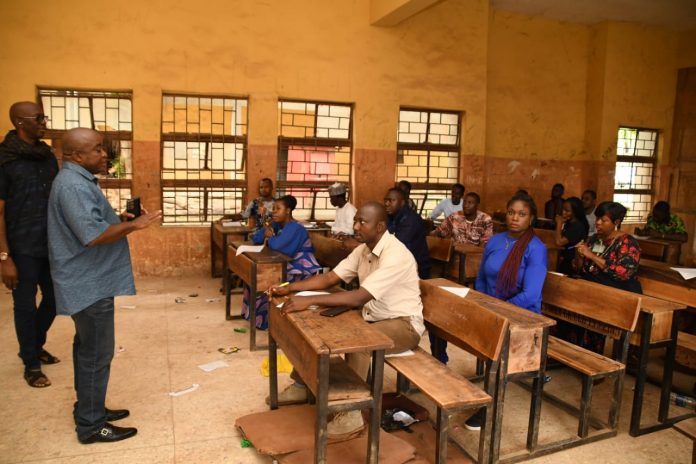
The Permanent Secretary of the Federal Capital Territory Administration (FCTA), Mr Olusade Adesola, began a monitoring exercise for the Confirmation Examination scheduled for 6,500 FCTA’s employees who had completed the statutory two years in the Public Service yesterday.
The activity was highlighted as a critical criterion for the progression of public servants’ careers.
The Permanent Secretary, who was represented by the Director in his Office, Mr. Udo Samuel Atang, urged participants to regard the exercise as critical to their public service careers.
This was contained in a statement provided to journalists in Abuja and signed by Tony Odey, the Permanent Secretary of the FCT on Tuesday in Abuja.
He however, affirmed the commitment of the FCT Administration to continue to apply the provision of the Public Service Rules in the day to day running of the Territory, Adesola tasked Officers to see Public Service as a call to contribute their quota to the development of their fatherland.
The Permanent Secretary who said the examination questions have been structured to reflect what the Officers are already used to, stressed the need for all Public Officers to be deep rooted in the provision of Public Service Rules to be able to stand out.
He further hinted that the present leadership of the FCT Administration has invested avalanche of resources in the development of the City’s infrastructure at all levels, even as he enjoined participants to play their civic obligations by reporting to security agencies anyone seen to be vandalizing public facilities.
The five Centres monitored include; Government Technical School, Garki, GSS Maitama, GSS Area 1O, GSS Wuse Zone 3 and GSS Wuse Zone 4.
The World Health Organization (WHO) activated its highest alert level on Saturday due to the spreading monkeypox outbreak, classifying the virus as a public health emergency of global significance.
The head of the WHO, Dr. Tedros Adhanom Grebreyesus, at a press conference in Geneva, Switzerland, stated that the committee tasked with advising him on public health emergencies was unable to come to a decision, but he has chosen to make the decision to bring the disease under control.
This pronouncement, which comes after a meeting of a committee of experts, was made for the eighth time since 2009, the most recent being for Covid-19, which received the same classification from the WHO in 2020, and follows a meeting of a committee of experts on Thursday.
In a statement made public by WHO, it stated that :”A public health emergency of international concern @ or PHEIC is defined by the WHO’s international health regulations as “an extraordinary event which is determined to constitute a public health risk to other states through the international spread of disease and to potentially require a coordinated international response.”
“The UN health agency said the term implies the situation is serious, sudden, unusual or unexpected, that it carries implications for public health beyond national borders, and that it may require immediate international attention.
” Ghebreyesus, further said that the failure of the committee who reviewed the latest data on Thursday, in reaching a consensus. made him decide to break the deadlock by declaring a PHEIC.
“Nine members of the committee voted against the declaration, while six voted for the declaration in what Dr. Ghebreyesus said was not a formal vote.
“In short, we have an outbreak that has spread around the world rapidly through new modes of transmission about which we understand too little and which meets the criteria in the international health regulations,” he said.
“For all of these reasons I have decided that the global monkeypox outbreak represents a global health emergency of international concern.
“While he said the risk of monkeypox was “moderate” globally, it was “high” in Europe and there was “a clear risk of further international spread”.
“Globally, there have so far been 16,016 monkeypox cases 4,132 of which were in the past week, according to WHO data. It is now in 75 countries and territories and there have been five deaths.
“The European region has the highest number of total cases, at 11,865, and the highest increase in the last seven days, with 2,705”.
Dr Rosamund Lewis, the technical lead for monkeypox at the WHO health emergencies programme, said: “There’s a lot of work to be done.”
She said action must be taken to establish what causes risk and to reduce situations that could put people at risk so they can protect themselves. “This is how we will get to the end of this outbreak,” she said.
Monkeypox is a viral infection typically found in animals in central and western Africa, although it can cause outbreaks in humans. Cases are occasionally identified in countries where the virus is not endemic, but the latest outbreak has been unprecedented.
While countries in Europe have been hardest hit, cases have also been reported in the US, Canada, Australia, Nigeria, Israel, Brazil and Mexico among others.
The WHO said the outbreak was largely among men who have sex with men who had reported having sex recently with new or multiple partners. However, experts have stressed that anyone can get monkeypox as it is spread by close or intimate contact, with the UN having warned that some media portrayals of Africans and LGBTQ+ people “reinforce homophobic and racist stereotypes and exacerbate stigma.”
Dr Michael Ryan, the executive director of the WHO emergencies programme, said: “We all know how difficult it has been historically to deal with issues like this because of stigma.”
“If nothing else this is about enlightened self-interest,” he added, as well as “solidarity” with those affected.