…as FCTA holds stakeholders Engagement, Gives One week Ultimatum
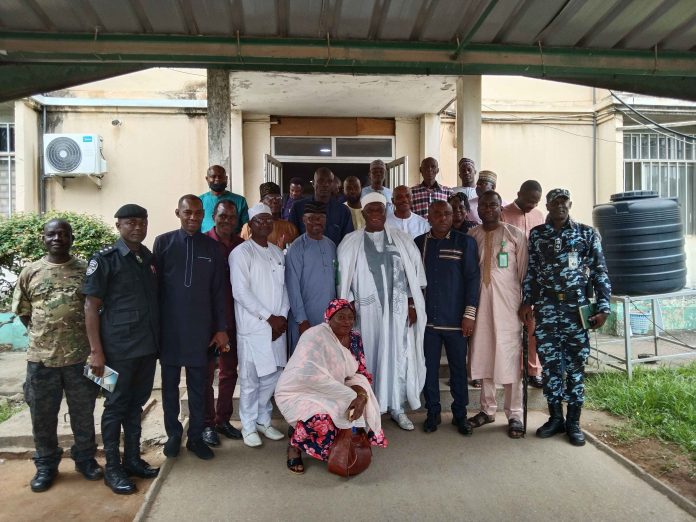
The Kuje Area Council and its Traditional Ruler approved on Friday the Federal Capital Territory Administration’s (FCTA) proposed removal of unlawful constructions and extensive cleanup in Kuje town.
The important stakeholders approved the intended activity during a Stakeholder Engagement and Sensitization Meeting to herald the planned massive demolition in Kuje..
The proposed clean-up operation has received the approval and blessing of HRH Alhaji Haruna Jibrin, the Gomo of Kuje, who stated that he thinks and hopes it will bring back sanity and, most crucially, security to the town.
In order to maintain peace and order in Kuje, he remarked that he has always communicated with various facets of the community, and that he had anticipated a more collaborative efforts from all government agencies.
Also, the Council’s Chairman, Abdullahi Sulaiman Sabo who was represented by the Principal Secretary to Kuje Area Council, Abdullahi Sabo hinted that the Council Officials have endorsed the coming of the bulldozers, but pleaded that more time should be given to allow residents salvage their properties.
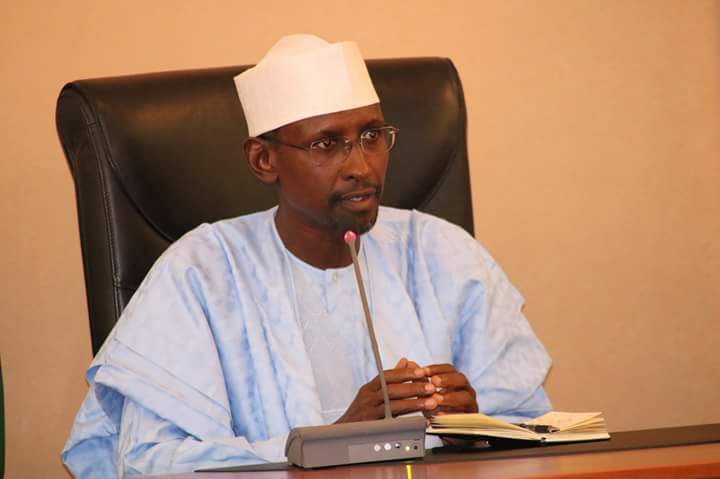
Meanwhile, the Senior Special Assistant to FCT Minister on Monitoring, Inspection and Enforcement, Comrade Ikharo Attah who convened the meeting, warned that after one week ultimatum the steaming bulldozers may not be restrained.
He hinted that FCT Minister, Malam Muhammad Musa Bello who visited the Kuje town recently had expressed angast over the deterioration of both environmental infrastructures and security in the area.
He further added that the Minister authorised the massive clean up to restore order and sanity and as well remove all illegal shelters that provide criminal elements covers.
Attah also urged all the stakeholders, to maximally use the one week to move out from all the illegal places to avoid unnecessary losses, as nothing would stop the clean up exercise.
According to him: “Everyone, the Royal Father, Area Council, and traders have all agreed that all contraventions to the Urban and Regional Acts, AEPB Acts must be cleared.
” The overflow from Kuje market must be taken to the two new markets close by. Those selling perishables will be taken to farmers market, we are saying it in strong terms .
” Based on the urgency of the matter the Area Council will engage the stakeholders and tell everyone to clear in one week. So that we have a better Kuje and everyone will be happy.kuje will be completely cleared”, he stated.
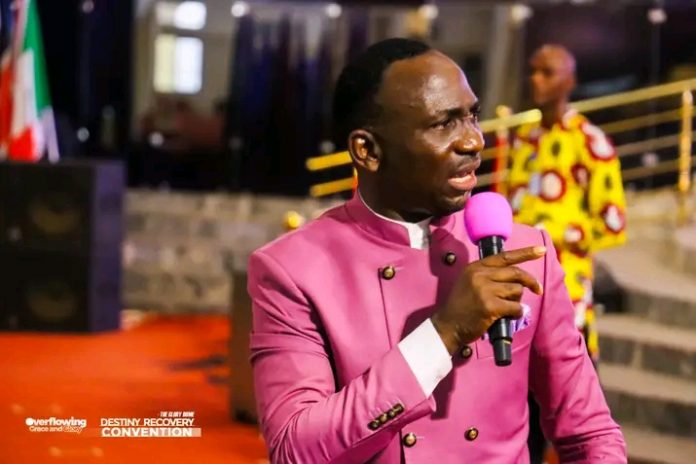
Politicians have been forewarned against rigging the general elections of 2023 in favour of any political party or individual Dr. Paul Enenche, Senior Pastor of Dunamis International Gospel Centre, Worldwide has hinted.
According to a video seen by our Kaduna-based journalist, Pastor Enenche issued the warning at a sermon at the church’s headquarters in Abuja, Glory Dome, where he said that any attempt to force a failure against the majority’s decision would be disastrous.
Enenche bemoaned what he termed as the country’s insecurity issues, saying that people had remained silent for too long while also complaining that there is too much suffering in the country.
According to him, “If a nation like our nation is headed towards disaster, the God who answers by fire, when he answers us, there is instant alterations.
“You know about seven years ago, some persons arrived and said they want to give change. I am sure you remember; you have seen the change. Loss of lives, blood flowing like water and all manner of banditry, terrorism, kidnappings, unbelievable insecurity, poverty, scarcity, shortage, and all manner of terrible things that continue till this day.
“Nobody should be afraid of the mess and rubbish that is happening today in the political cycle. We have a God in heaven that will answer us by fire. Anything they want, let them do now, but when Jehovah steps down,” he said.
The cleric, further urged that nobody should worry about who is the flag bearer of a political party nor their running mates, noting that such agitations do not matter as the will of God remains the ultimate.
He also stressed that the Nigeria political cycle, has taken God, the church and Christianity for granted for too long, disclosing that no amount of money will be able to suppress the choice of the masses during the 2023 general elections.
“Do not worry yourself about who somebody picks as president or vice president. It does not matter. That is what man has decided.
“It means there are a people that do not matter. They took the church and Christianity for granted in this country for too long, but the God we serve is about to answer by fire and he is going to show them who owns the land.
“Anybody who wants can spend quadrillion Naira to rig election, the will of God will be done in Nigeria this season. Any amount of money they want, there will not be enough to rig the election in favour of evil, killings, destruction and corruption.
“The people of this country have been too docile for long as if they have been charmed. But you know that goat does not bite but when you push him to the wall, he will show you his teeth. This season, any attempt to rig election, People will be shocked at the response. Evil is in the land, yet they want everybody to go quiet as if everything is normal, to hell with that devil.
“If you are silent with evil, it means you are in agreement with that evil. Whenever the occasion demands, you speak with audacity and authority; evil shall not rule our land.
“The same set of people who ruled the land and destroyed it are presenting themselves for leadership. That Devil is a bastard liar. Something must give way and it is evil that must give way.
“Is it not a shame, people said they do not want you to be their leader, yet you spend money to impose yourself on them. Somebody should lead because people want him or her; they should be happy because you want to lead. They said they do not want you but yet you want to bribe people, compromise election to be in power, you do not need to kill anybody to come into power, if they do not like you, clear out, do not contest,” he stressed.
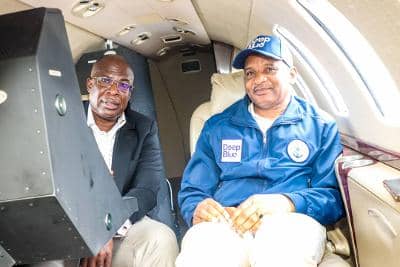
The deep blue project fleet of the Nigerian Maritime Administration and Safety Agency (NIMASA), according to Director General Bashir Jamoh, would deploy two special mission aircraft to combat oil theft and safeguard the country’s economy.
Speaking at the 16th Maritime Seminar for Judges, which was recently held and was put on by the Nigerian Shippers’ Council, Jamoh referred to oil theft, pipeline damage, and illegal refining as illegal acts that could endanger the nation’s economic and environmental well-being.
He stated that the aircrafts from the deep blue project’s mobile assets will assist the current platforms being used by other security agencies, for which NIMASA has an ongoing Memorandum of Understanding.
The NIMASA DG explained that the aircrafts would assist in patrolling oil facilities, installations and other assets to observe suspicious human and vessel movements in and around the facilities
Jamoh, while restating the agency’s commitment to a crime free and secure maritime domain, reminded participants at the seminar of President Muhammadu Buhari’s interest in rebuilding stakeholders and investors’ confidence in the country’s maritime sector.
He said the approval of the President for procurement of the assets, his coming to commission them in Lagos and their deployment for security duties have contributed immensely to the fight against maritime crimes.
According to him, “We shall be deploying our 2 special mission aircrafts for aerial surveillance to prevent and fight oil theft in the country. With this, we aim at using the aircrafts to patrol sensitive areas, record suspicious human and vessel movements to process intelligence for timely action by our security agencies.
“The oil industry is critical to our national economy and no space of the sector should be left for criminals to occupy or operate. We have recorded gains in our maritime security efforts and more needs to be done to sustain and consolidate on these gains.
“Our collaborations with security agencies which we have MoUs with is, among other reasons, to collaborate and work ahead of criminal elements. I am happy to state that our synergies have been beneficial to the country in many ways,” Jamoh said.
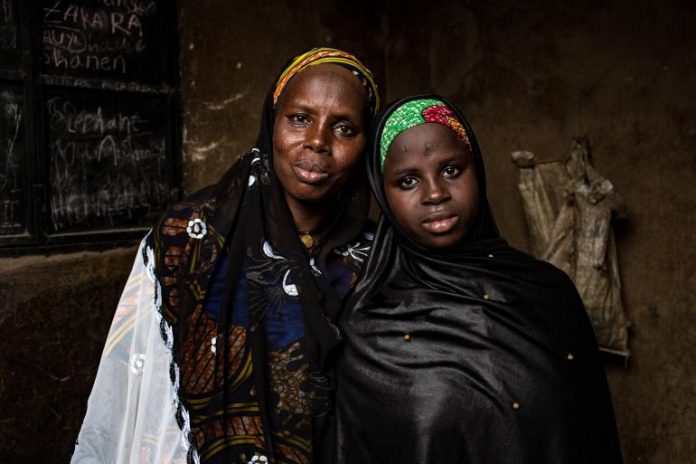
Over 500,000 people who have been impacted by conflict will gain from a new humanitarian and development initiative that aims to promote peace, increase opportunities for livelihood, and provide assistance for education, health, nutrition, child protection, and sanitation to build the resilience of vulnerable populations in Borno and Yobe States.
Children 0–23 months, expectant mothers, school-age children, adolescent girls, female-headed families, and individuals with disabilities will be targeted under the Resilience and Social Cohesion initiative, which will be carried out by the World Food Programme (WFP) and UNICEF for three years. The German Ministry of Economic Cooperation and Development has supported the initiative through KfW, the German Development Bank.
The multi-year project will leverage ongoing humanitarian support in Bade Local Government Area (LGA) of Yobe State and Shani LGA of Borno State, while also providing multisectoral interventions to address drivers of conflict and fragility. The project will support the strengthening of local governance structures to promote social cohesion through community-based processes and the capacity building of Government partners.
Now in its thirteenth year, armed conflict in north-east Nigeria has levelled communities, destroyed livelihoods, and disrupted essential services for children and adults. Protracted insecurity, high food prices and COVID-19 lockdowns have put more than 4 million people in need of food assistance. The situation is further exacerbated by a severe impact of violence and unrest on family income, mental health, nutrition, education and other child protection concerns. Across the region, 1.14 million children are acutely malnourished at a scale not seen since 2018.
Peter Hawkins, UNICEF Representative in Nigeria said, “This is a pathway to peace and sustainable development.
“Children and other vulnerable groups will have a lifeline, and an opportunity to survive and thrive in communities where livelihood and peace building activities are present’’.
“Conflict in any region is potential instability in the rest of the world. UNICEF is grateful to the German Government for supporting pathways to child survival and peace in north-east Nigeria,’’ said Peter Hawkins.
The Resilience and Social Cohesion programme will contribute to seven Sustainable Development Goals (SDGs) of poverty eradication, zero hunger, access to quality education, gender equality, good health and wellbeing, climate action, peace, justice and strong institutions as well as partnership for goals.
The new programme which will focus on peace building, governance capacity strengthening, sustainable livelihood creation, restoration of infrastructures, and provision of life-saving services to 156,888 direct beneficiaries and 362,307 indirect beneficiaries in both LGAs.
“WFP welcomes this timely and generous support from the Government and people of Germany. This project will support people and communities facing the peril of conflict and hunger in northeast Nigeria, especially in Borno and Yobe states,” said Ms. Simone Parchment, Deputy Country Director and Officer in Charge, the World Food Programme Country Office, Nigeria.
“In these affected states, persistent conflict, climate shocks, high food prices and reduced household purchasing power undermine people’s ability to feed themselves and sustain their livelihoods. This contribution from the Government of Germany will go a long way in building resilience, social cohesion and peace in the affected communities”.
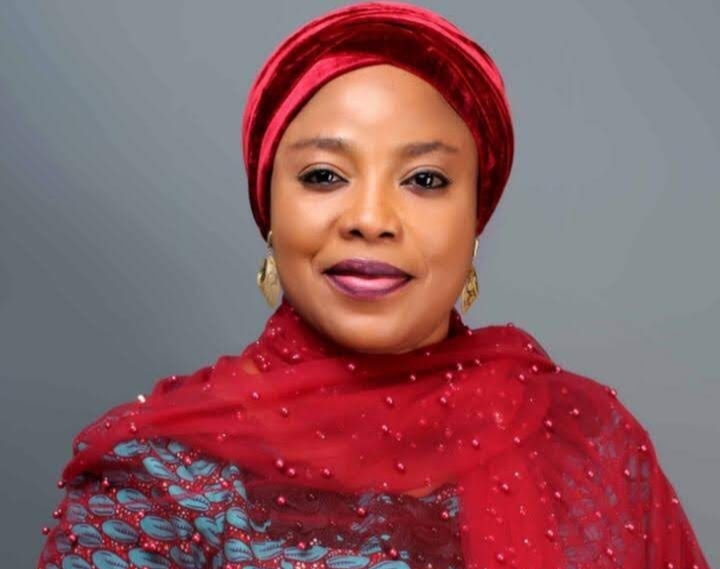
Dr Ramatu Tijjani Aliyu. Minister of State, Federal Capital Territory Abuja, Nigeria.
The Federal Capital Territory Administration (FCTA) through the Hon. Minister of State, FCT, Dr. Ramatu Tijjani Aliyu has resolved to support the indigent, vulnerable and willing families resident in the FCT to acquire and gain basic, secondary and tertiary Education in it’s Social Welfare Tuition Scholarship Scheme.
The goal of the program, which is being promoted by the Social Welfare Department of the Social Development Secretariat, is to make sure that citizens who want to progress their educational goals are able to do so without being prevented by lack of funding.
Modalities employed to achieve above OBJECTIVES include, (I) cushioning & mitigating the impact of the Covid-19 Pandemic on parents through free enrollment, tuition fees payment and organizing free Lectures for both the NECO, WAEC, NABTEB and IJMB candidates.
The Administration has engaged the services of over 50 Lecturers from the University of Nigeria, Abuja Alumni Chapter to take the various classes accordingly.
For IJMB students, the FCT Administration is waiving off a huge sum of N250k from the Tuition fees that’s about N300k across other centres where IJMB is being conducted. So all IJMB students are expected to pay just N60,000 fees for both the (internal & External) Exams as against the over N300k obtained elsewhere.
Lectures for all the above mentioned Exams commences on the 1st of August, 2022. The lectures is to hold every Saturday & Sunday at designated centers across the Six Area Councils with AMAC having three centres in Lugbe, Karu and JABI.
Interested candidates are advised to visit the Social Welfare Department of the SOCIAL DEVELOPMENT SECRETARIAT, located at the Arts & Culture Building, by Old Post Office, Area 10 Garki Abuja,to pick up their forms according to the category of their choice or eligibility.
The National Assembly’s upper house has expressed concern about allegations that Ministry of Health employees mishandled nearly N5.7 billion in donations from a foreign organization.
Due to unsatisfactory reports coming from the organizations under the Ministry of Health, the Senate, which first brought attention to this alleged mismanagement, said that this development led several funders to halt their support.
Senator Matthew Urhogbide, the chairman of the Senate Public Account Committee, has voiced his displeasure with the Permanent Secretary of the Ministry of Health and other Ministry employees for failing to account for the fund.
Four invitations, it was discovered, have been sent to the Ministry, which were not honored.
The first letter dated February 1, in a meeting was scheduled for February 8, and another meeting was scheduled for March 16, and this months.
One of the donor agency is Global Alliance for Vaccines and Immunisation (GAVI), an international NGO specializes in bringing together public and private sectors with the objective of creating equal access to new and under-used vaccine for children living in the world’s poorest countries.
The revelation was sequel to the 2016 Auditor General’s Report, which is under consideration.
Reacting to the failure of the Ministry to give account of the money spent, the Chairman said that the Committee is left with no other option than to issue Warrant of Arrest on the Ministry officials to come and give explanation.
He said: “The Ministry of Health has consistently refused to come and give account before this Committee.
“We have sent invitations to them to appear with no response from the Ministry, this is very unfortunate.”
The query reads: “First in 2015, by a donor named Global Alliance for Vaccines and Immunisation (GAVI), an international NGO specialising in bringing together public and private sectors with the objective of creating equal access to new and under-used vaccine for children living in the world’s poorest countries.
“The NGO, with headquarters in Geneva, Switzerland, accused NPHCDA of mis-management of funds released by the organisation and invited my Office to observe the appointment of an audit firm to carry out extended cash programme audit of GAVI funds released to NPHCDA from 2010 to 2015.
Non-adherence to laid down procedures stipulated in Public Procurement Act, 2007, in the procurement of goods, services and works valued at N4,987,958,621.00 (Four billion, nine hundred and eighty-seven million, nine hundred and fifty-eight thousands)
“Expenditures made by the NPHCDA between 1st January, 2010 and 31st March, 2015 amounted to N8,599,291,949.00 (Eight billion, five hundred and ninety-nine million, two hundred and ninety-one thousand, nine hundred and forty-nine naira), out of which N187,725,160.00 was not supported with relevant statutory and third party documents, such as payment vouchers, receipts, invoices, delivery notes, store receipt vouchers, contract completion certificates, etc.
“The sum of N18,804,865.00 was also reported to be ineligible expenditures as it comprised payments to suppliers, who did not deliver the procured goods or services as per contract.
“Inadequately supported expenditure amounted to N619,999,383.00. This was mostly attributed to photocopied documents, inconsistencies in supporting documents, lack of contracts with suppliers and lack of evidence of delivery for procured goods.”
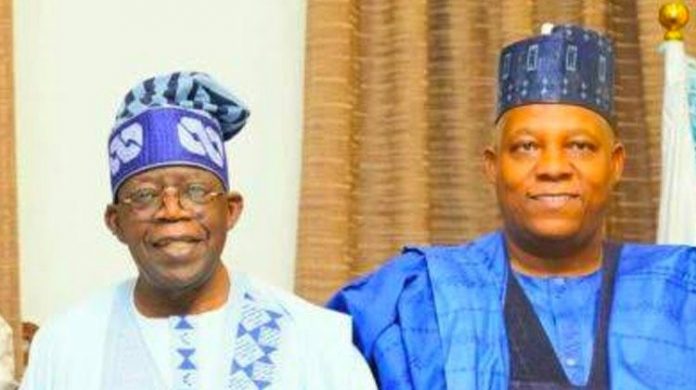
A Chieftain of the All Progressives Congress (APC) and a close political friend of the party’s presidential candidate, Chief Ahmed Bola Tinubu, Engr Babachir David Lawan has said that whoever has the power to force Bola Ahmed Tinubu to reverse his choice of a Muslim Muslim ticket should do so.
Saying, the decision to have a Muslim Muslim ticket to be unwise that is capable of killing the party.
He, however, called on President Muhammadu Buhari to use his authority as the APC leader and Commander-in-Chief to cancel Tinubu’s nomination of a vice president, saying, if the nominations are not revoked, the APC National Chairman should refuse to sign them.
has angered Engr Babachir David Lawan,
Babachir, who has publicly supported Bola in the lead-up to the party’s primaries, has criticized and labeled the choice of Senator Kashim Shettima as his running mate as foolish, which is capable of killing the party.
David, a founding member of the ruling party who was the former Secretary to the government of the federation said Tinubu has been cornered by self-serving hero-worshiping, lapdogs.and this will attract the wrath of the gods
According to him: “But as a popular proverb goes: “Those whom the gods want to destroy they first make mad”. It appears that the gods want to destroy the APC and its Presidential Candidate and have chosen the instrumentality of the northern Moslem governors and their super ambitious tool and Kashim Ibrahim for this purpose. Alhaji Kashim Shetima is a Greek gift from the Northern governors to Tinubu. I advise Bola to make sure Kashima’s two hands are always in his plain sight and empty.” He said
David in a press statement issued in Yola and made available to our correspondent continue to say that
The statement read in parts: “I will love for Bola to be our next President. But I am afraid a Moslem-Moslem ticket will be “Dead on Arrival”. And the arrival date according to INEC’s election time table is 25th February, 2023. This ticket will drag down the whole APC members to the pit. We all should reject it.
“I thought I will be able to avoid commenting on the disastrous error by my very good friend, Sen Bola Ahmed Tinubu in his choice of a running mate.
“I will be the very last person to stand in the way of my very good friend Tinubu’s path to the presidency. This is because since 2011 my consuming passion has been for him to succeed Buhari as President of Nigeria.
“It will not be true if I say that I did not see it coming. I have often read his body language, picked up snippets from several discussions with his lapdogs (some of whom, sadly are Christians but most of whom are moslems) and I have conveyed my reservations to them against the pitfalls of a moslem-moslem ticket towards which I sensed they were drifting.
“As part of my obligation to him, a close friend, I had on many occasions argued the merits and demerits of both ticket permutations to him. I have done so in both verbal and written form and I have likewise, done so with some of his close respectable associates and friends. In all instances I had left him with the sole responsibility for his final decision arguing that in the end the consequences of the outcome of any bad decision will be his to bear. There might be some collateral damages though. I have also on several occasions passed on to him counsels and messages from some well meaning Nigerians intended to alert him on the possible outcomes of the Presidential ticket permutations.
“Tinubu is a very good man. He is a great listener. He has a very humble and friendly disposition to every one. He is very generous in both cash and kind, especially where it could advance his political interests. But I have realized that it is in the nature of power that sycophants and lapdogs have the most influence on leaders with such character traits. They will lie to him, malign and disparage others and generally do any thing to curry his favor and to also put well-meaning associates in bad light. I suspect this is what has happened to my friend. He has been cornered by self-serving, hero-worshiping, lapdogs.
“It never used to be like this. While in his hay-days in Lagos, he surrounded himself with smart, street-wise guys that could tell truth to power. He had Rauph Aregbesola, Yomi Osinbajo, Babatunde Fashola, Dele Alake, Muiz Banire, etc.The Lagos days were the days of think-tanks, strategic planning, monitoring and evaluation, principles and ideologies. But these people have since grown-up and moved up to establish their own systems living my friend stranded. Nature they say abhors vacuum.
“Welcome the Abuja equivalent. But the Abuja equivalent are people inflicted with the modern Nigerian diseases – religious bigotry, sycophancy and morbid tribalism. They are mostly political jobbers who are most times not averse to the application of diabolical means. Gone are the days of think-tanks, and strategic planning. Gone are the days of principles and ideologies. Try and call a meeting; they will not attend. Try and make a plan; they will sabotage it. Everything is ad-hoc, everything is chaotic because they excel in such environments. The result is that they have played on his long-term ambition to be President and have built it into a sort of desperation and a crescendo that easily justifies this satanic resort to a Muslim-Muslim ticket. This is the calamity that has befallen my friend.
“And why Kashim Shetima? He is an overambitious man who has a Machiavellian bent and has lots of money with which to procure a preferred-candidate status among Tinubu’s lapdogs. And as we are beginning to see, to also procure bogus supporters especially from among the Christian community to help launder his no-so-good image.
“True, based on the advise of his new friends, Bola Ahmed Tinubu has made his choice. And I am sure he thinks he is ready for the out come of that choice. He has chosen to bring religion to the front burner of Nigerian politics. And being a Muslim he has chosen to take sides with his own religion. For all he cares, Christians can go to blazes with their votes.
“But he must also be told that there will consequences for this choice. Some of them are that Christians all over the country will revolt against the APC to put the chances of his election in serious jeopardy. It will also put the election of all Christians standing for elections in Christian dominated areas in jeopardy. This could result in APC being a minority party in both the National and State Houses of Assembly.
“Now tell me which Christian will vote for APC with the following contraption: Moslem Presidential Candidate (Lagos), Moslem Vice Presidential Candidate (Borno), Moslem National Chairman (Nasarawa), Moslem Deputy National Chairman (Borno), Moslem President (Katsina); Moslem Senate President (Yobe); Moslem Speaker (Lagos); Moslem Deputy Speaker (Plateau) e.t.c. APC the great! Wu na de try woh!
“The northern governors and some northern moslem elites must have persuaded him that they will never vote for a ticket that has a northern Christian on it. And he has agreed with them. But if he thinks a Moslem-Moslem ticket will win him the northern Muslim votes, he should have a rethink. They will massively vote for one of their sons because it is in their nature to do so. Buhari, their first son will not be on the ballot in 2023. Atiku their second son will be.
“Proof of a possible Islamic agenda was leaked when Governor Ganduje, the “Kadmul Islam”, gave advance notice that Tinubu had assured them he would be nominating a moslem as his running mate. For those who might not know, Governor Ganduje has a foundation called “Ganduje Foundation” which purpose according to its website is to “provide selfless service to humanity and Islam” but whose primary purpose it appears is the conversion of Christians to Islam.
“So if my very good friend Tinubu in a desperate bid to become President allows himself to made into a religious bigot or even a mujahideen, he is welcome. But it is a risk that will not play out positively for his presidential bid. But, we’re to he win and become President of Nigeria, it will be as a sectional President; an Islamic President. And he will surely face massive discontent and opposition even before taking off.
“Expecting Nigerians to ignore this crass insensitivity to the country’s diversity amounts to acceding to the perpetration of very grave injustice and discrimination against a huge segment of the society. No one who seeks to be president of Nigeria should ever deploy the tool of religious extremism and exclusivism as a tool to win elections. This is very very dangerous. And this is very sad.
“But, baring any last minute change of mind, Bola has made his choice. He should be bluntly told that in this choice Nigerian Christians clearly see a pending Islamic Republic of Nigeria in its infancy and are right to be severely anxious.
“There is gloom among the Christian community all over the country since Tinubu announced Kashim Shetima as his running mate. Are the generality of the moslem ummah happy with this? The answer is a resounding NO.
“How then do we respond? The decision as to how to respond to this deliberately senseless act of provocation is both corporate to each religious group and also personal to each voter that love peace, and hate injustice. Christians want to continue to leave peacefully with their moslem neighbors at home, at school, at the work place, in the markets and on the streets as we have always done or desired to do. And I am sure Moslems share this view too. No one person’s ambition to rule over us should be allowed to set us apart and at war with one another.
“Bola Ahmed Tinubu, should be compelled upon by whoever can do so to rescind this decision. President Mohammed Buhari should exercise his powers as the Commander-in-Chief and as the APC Leader to revoke this nomination of a VP by Tinubu. The APC National Chairman should refuse to sign the nomination forms if not rescinded.
“There is a story in the bible on how some people responded to similar provocation:
“And when all Israel saw that the king did not listen to them, the people answered the king, “What portion do we have in David? We have no inheritance from the son of Jesse. To your tents, O Israel! Look now to your own house, David.” So Israel went to their tents” (1 Kings 12:16).
“I will love for Bola to be our next President. But I am afraid a Moslem-Moslem ticket will be “Dead on Arrival”. And the arrival date according to INEC’s election timetable is 25th February 2023. This ticket will drag the whole APC members to the pit. We all should reject it.”
***says Christians will be massively Mobilises to ensure Nigeria’s unity is sustained in 2023
The All Progressives Congress (APC) argument that Senator Kashim Shetitma was chosen as Asiwaju Bola Ahmed Tinubu’s running mate based on competency has been criticized by the Christian Association of Nigeria (CAN) Kaduna State chapter as insulting.
This was stated in a statement that the Chairman of CAN Kaduna State, Reverend John Joseph Hayab, personally signed and made accessible to newsmen on July 11, 2022.
He said that the Nigerian Federal Character Framework was authoritatively incorporated in Nigeria’s 1999 Constitution with the following description, removing prejudice in government against any one tribe, at least in form: “…the government of the Federation or any of its agencies and the conduct of its affairs shall be carried out in such a manner as to reflect the federal character of Nigeria and the need to promote national unity and also to command national loyalty, thereby ensuring that there shall be no predominance of persons from a few states or from a few ethnic or other sectional groups in that government or in any of agencies.”
He explained that the statement is to ensure the principle that all public service institutions fairly reflect the country. the government of the linguistic, religious, ethnic, and geographic diversity of the count.
“Federation or any of its agencies and the conduct of its affairs shall be carried out in such a manner as to reflect the federal character of Nigeria and the need to promote national unity and also to command national loyalty, thereby ensuring that there shall be no predominance of persons from a few states or from a few ethnic or other sectional groups in that government or in any of its agencies,” he said.
According to the statement, today there are a lot of concerns from Nigerians over a particular party’s consideration of a Muslim-Muslim ticket.
” Last week, we stated our position in clear terms to establish that the ill decision of a particular political party is not for us a thing of concern, where we clearly illustrated, that when I wish to eat rice and beans and a particular restaurant chooses to cook only white rice that has not given me any reason to worry because simply what I will need to do is to move to the other restaurants that have prepared what I desire to eat.
“However, just to state the obvious on the matter at hand, though the electorates have no reason to raise eyebrows over wrong decision by any political party.
“But that we have no reason to be worried about it does not also suggest that such a decision is not condemnable.
“The implication of such a decision is that such a candidate has no respect for the unity, peace and progress of Nigeria,
“it also suggests that the candidate is just a candidate that priorities selfishness, greed and personal unhealthy interest over the good of the nation.
“The Federal character principle that we talked of above was the product of Gen Yakubu Gowon Administration when after the Civil War it was believed that a particular group occupied major ministries in the nation,” it said.
The statement further said, “But clearly we all know, many have just course to argue that leadership in Nigeria in the most recent past is with high ethnic nepotism, well one can rightly say this is another phase of it in religious shade.
“It is sad that the constitution clearly states that “The Federal Republic of Nigeria shall not be governed, nor shall any persons or group of persons take control of the Government of Nigeria or any part thereof, except in accordance with the provisions of this Constitution”.
“And that “The Federal Republic of Nigeria shall be a State based on the principles of democracy and social justice”, with the very divisive challenges of poor security, hunger, a dying economy to mention but these.
“At a time when Nigeria needs a unifying and productive leader, a good candidate cannot consider a one sided. divisive selection of a running mate despite all genuine agitations against such.
“This shows that should theses persons be elected they will not be listening leaders, it shows that this candidates are insensitive to the concerns of the people and does not care heating the system for selfish gains as they appear disinterested in the unity of the country but their selfish ambition,” it said.
CAN warned that the refusal to listen to wise counsel on this is a confirmation of the anxiety of the people.
“Well as earlier stated, this is not a problem to us as an association serving as the voice of the church. We have performed our role as the voice of the church in the political and social arena, that is our simple role as far as this and the 2023 elections is concern.
“But every candidate should know that he is just one option among others in the 18 approved political parties for the over 84,004,084 of Nigerian voters in the 176,846 polling units to choose from.
“As leaders we will want every political party to know that we will educate, sensitize, and mobilize our ever faithful followers to vote against anything that we judge as a danger against the unity, peace, progress anddevelopment of Nigeria.
“We will reiterate that the political party has her right of will to make decisions that she judge best for her, but they should know too that their decisions only end as an option to the electorate among many other options. Thankfully 2023 is never going to be business as usual”.
Malam Muhammad Musa Bello, the Minister of the Federal Capital Territory (FCT), has urged all citizens to observe all security-related instructions provided by the security agencies during the Sallah celebrations.
In his message for this year’s Eid-El-Kabir, he made this clear and urged the residents to abide by all current recommendations for preventing the spread of COVID-19 because it had not yet been wiped out and still posed a threat to public health.
His message reads: “I am delighted to convey the greetings of the Federal Capital Territory Administration (FCTA) to all residents as we celebrate, once more, the joyous occasion.
“I urge all of us to use the occasion of the celebration to strengthen the bonds of friendship, unity and to reinforce the values of peaceful coexistence that have been the hallmark of FCT citizens.
“The lessons of Eid El Kabir are sacrifice and piety. All these we, as FCT residents, have exhibited in great measure. As we therefore celebrate, I salute your steadfastness.
“I once again wish to remind residents that the FCT was founded on the noble principles of unity and peace and built on a foundation of national strength and perseverance. We should stand firm on these premises and resist all attempts to truncate our march to attaining our desired goals.
“I enjoined all residents of the FCT to live by the tenets of peace and good neighbourliness, hard work and honesty and to use the occasion of the festivities to pray for our President, Muhammad Buhari and other leaders for security, prosperity and development as well as for peaceful and successful elections in 2023.
“Once again, I wish you all Happy Eid El Kabir celebrations”, the message further stated.
President Muhammad Buhari’s fight against insecurity and plans to expand the economy are being supported by the chairman of the Abuja Municipal Area Council (AMAC), Hon. Christopher Zakka Maikalangu, who is optimistic that better days are ahead.
He also called for prayers for the FCT Administration and success of the country’s leadership under President Buhari, for Allah’s guidance, protection, and wisdom to steer the affairs of the nation as his administration winds up.
In his message for this year’s Eid-el-Kabir, Maikalangu called for more harmony, love, and peaceful coexistence among people.
This message was made available to newsmen in Abuja by his Senior Special Assistant on Media and Public Affairs, Mr. Kingsley Madaki.
The message read in parts “ The Chairman in his Salah messages to residents advised Muslims and all Nigerians to use the Salah period, which he described as a golden opportunity to embrace one another in promoting long-lasting peace and unity in Nigeria.
” Muslims must not fail to sustain such discipline displayed during the last Ramadan fast, to exhibit those qualities that would make Nigeria the best nation in the globe can always be proud of.
“The occasion should also be used to foster unity, by making exemplified sacrifice amongst all in the spirit of the sacrifice made by Prophet Ibrahim culminating in the celebration of Eid-el-Kabir.
He stressed the need for selfless life of love and sacrifice from the people based on the principles behind the Eid-el-Kabir, thereby urging all residents of AMAC to be law-abiding, as his administration will strive to implement necessary policies to improve the economy of the council.
The chairman while appreciating Almighty Allah for being alive to witness this year’s Eid-el-Kabir celebration, enjoined all Nigerians, irrespective of their religious and political affiliation to continue to live in peace and harmony with one another; that they should be their brothers’ keeper.
The Chairman reaffirmed the administration’s determination to strengthen enduring institutions for the emergence of a dynamic, orderly, and all-inclusive council, that everyone must see AMAC as his or her collective heritage.