
Saturday, December 27, 2025
Home Blog Page 30

Adebayo Declares Nigeria “Too Blessed to Be Poor,” Blames Leadership Failures

0

ABUJA –Prince Adewole Adebayo, a former Presidential candidate, has asserted that Nigeria’s pervasive poverty is a result of leadership failure, not a lack of resources, stating the nation is sitting on immense “hidden treasures” waiting to be harnessed.

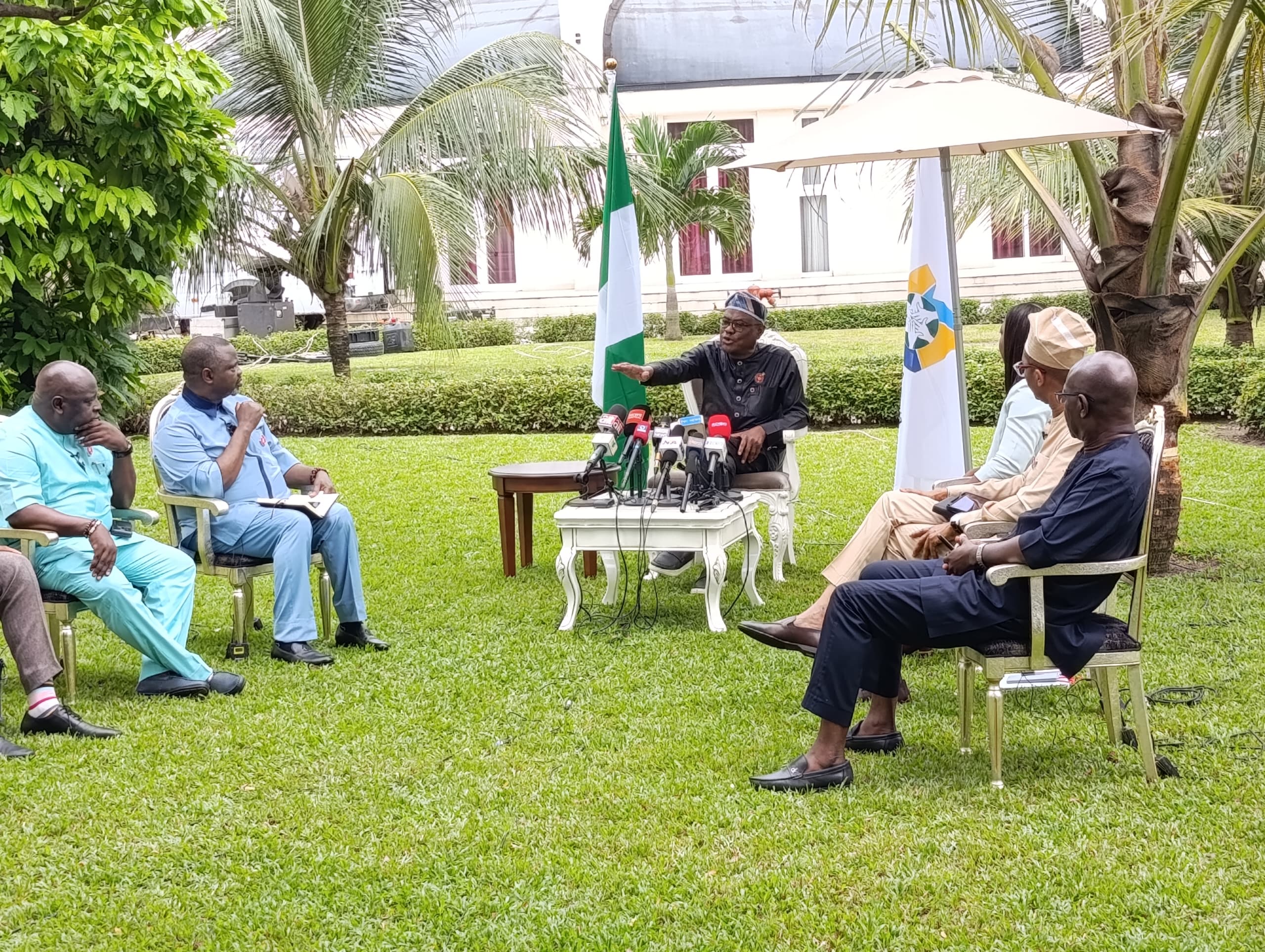
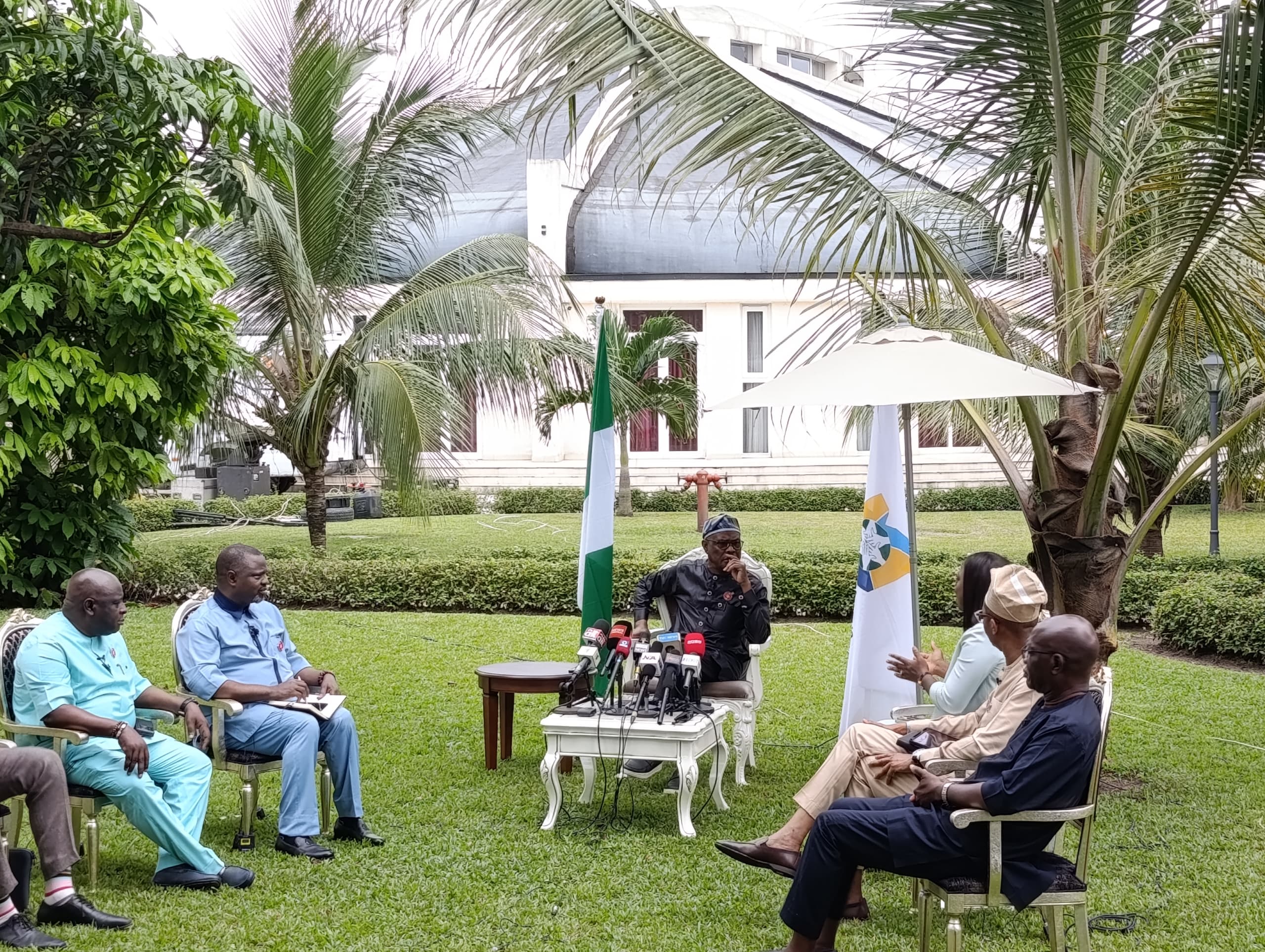
Adebayo made the declaration on Friday in Abuja as the chief launcher at the public presentation of The Hidden Treasures, a book authored by Deacon Chris Iyowaye. He argued that every part of Nigeria holds sufficient human and natural wealth to guarantee national prosperity if properly managed.

“Nigeria is too blessed to be poor. Every square inch of this country contains treasure—human, mineral, solid, liquid, surface and subterranean,” Adebayo stated. “It is impossible for a country with this level of endowment to be poor. Some treasures appear hidden because leadership has been blind to them.

He identified the Niger Delta as a prime example of Nigeria’s strategic value and untapped potential, noting that the region has sustained the national economy and global energy markets for over a century.

“The Niger Delta carries resources that many nations can only dream of,” he said. “Nigeria must repay the Niger Delta with gratitude and development.”

Adebayo emphasized that the nation’s transformation hinges on internal discovery and innovation rather than reliance on external aid or solutions.

“The world is eager to exploit our resources because they see what we fail to see,” he said. “Leadership must stop waiting for windfalls. We must collectively discover, refine and deploy our treasures.”

Author Envisions a Post-Oil Future for Niger Delta

The author of the book, Deacon Chris Iyowaye, explained that The Hidden Treasures is the product of nearly two decades of research and is intended to redefine the narrative around the Niger Delta, shifting the focus from conflict and oil to its vast untapped potential.

He described the region as “a reservoir of brilliance” and warned that global shifts away from hydrocarbons make it imperative for Nigeria to prepare for a post-oil economy.

“Beyond oil and gas, there are treasures—solid minerals, marine resources, agriculture, and human capital—waiting to be responsibly harnessed,” Iyowaye said. “The tragedy is not the absence of wealth, but our failure to develop it.”

He announced that the book provides the conceptual foundation for the New Crete Oil Foundation, an initiative that will channel proceeds from book sales into community development projects in the Niger Delta. These projects will focus on providing clean drinking water, training women in modern agriculture, and funding youth leadership and educational programs.

“If we do not invest in our people, we have no moral right to speak of transformation,” Iyowaye stated. “This project is not just a publication—it is a commitment to shaping a better future.”

Intelligence Links School Abductions to Retaliation for Airstrike That Killed Top Terror Commander

0

ABUJA –Fresh intelligence reports indicate that the recent mass abductions of schoolchildren in Niger and Kebbi States are likely retaliatory attacks by a terrorist faction following the killing of a key commander, Babangida, in a Nigerian Air Force (NAF) airstrike.

According to credible security sources who spoke to the News Agency of Nigeria (NAN), the airstrike occurred on November 18th on the outskirts of Kurebe community, neutralizing several terrorists. Babangida, a key lieutenant to the notorious bandit kingpin Dogo Gideh, later succumbed to injuries sustained in the attack while receiving treatment.

The death of the commander has been met with relief in communities along the riverside axis of Shiroro, where residents have been celebrating the development. However, the security victory appears to have triggered a violent backlash.

A senior security source, speaking on condition of anonymity, stated that the subsequent school abductions were likely orchestrated by Babangida’s loyalists. The attacks are seen as a retaliatory show of force, aimed at reasserting the faction’s dominance after suffering a significant operational and psychological blow.

The faction’s distress was further evidenced when community leaders from villages including Kwaki, Buresidna, and Chukuba visited the Palleli home of Dogo Gideh’s mother on November 19th, where she was observed in a state of mourning.

A senior intelligence officer, who also requested anonymity, described Babangida’s elimination as “a significant blow” to the terrorist network. However, he issued a stern warning, noting that the faction remains dangerous and may attempt further reprisal attacks.

“We assess that this faction may attempt additional reprisals targeting vulnerable communities, schools, and security personnel,” the officer said.

In response, security agencies have been placed on heightened alert. The officer confirmed that ongoing military and intelligence operations have been intensified with a dual focus: to prevent further attacks and to facilitate the rescue of the abducted students.

Military authorities have reiterated their commitment to sustaining coordinated land and air operations until the capabilities of terror groups are fully degraded across the region.

Zelensky Signals Readiness for US-Backed Ukraine Peace Talks, Despite Demands for Major Concessions

0

KYIV, Ukraine** – Ukrainian President Volodymyr Zelensky expressed willingness Thursday to engage “constructively” with a leaked US-Russia peace proposal for ending the nearly four-year war, even as it demands Kyiv cede territory, slash its military, and abandon NATO ambitions—terms long deemed unacceptable.

The 28-point draft, hammered out quietly by US Special Envoy Steve Witkoff and Russian counterpart Kirill Dmitriev, emerged amid Russian advances in eastern Ukraine’s Donetsk region and a domestic corruption probe engulfing Zelensky’s top officials, including a $100 million scandal. Presented to Zelensky by US Army Secretary Dan Driscoll during a Kyiv visit, the plan envisions Ukraine relinquishing swathes of Donetsk it still holds, capping its forces at 600,000 troops, and forgoing NATO membership in exchange for vague “reliable security guarantees”—potentially including NATO-style protections and European jets in Poland.

Kyiv would also disarm much of its arsenal, while Russia anticipates sanction relief, G7 reintegration (reviving the G8), and a non-aggression pledge from NATO. Zelensky, in his evening address, reiterated Ukraine’s core stance: “We need a real peace—one that won’t allow a third invasion.” He plans direct talks with President Donald Trump soon to refine the “American vision,” appreciating US efforts to bolster European security but insisting on a “worthy peace” honoring Ukrainian dignity.

The White House, via Press Secretary Karoline Leavitt, dismissed claims of Ukrainian exclusion, insisting the plan—developed over a month with input from both sides—is “good for both” and prioritizes a “lasting, durable peace.” A senior US official told CBS News that Zelensky’s defense minister, Rustem Umerov, endorsed most points after tweaks, though a Ukrainian MP countered that Kyiv joined discussions late.

European allies, sidelined in the drafting, voiced caution. German Foreign Minister Johann Wadephul called it a mere “list of topics and options,” not a finalized blueprint, echoing US Secretary of State Marco Rubio. EU foreign policy chief Kaja Kallas stressed: “For any plan to work, it needs Ukrainians and Europeans onboard.” With US aid now largely shouldered by NATO partners like the UK and France—who’ve pledged peacekeeping forces—Brussels fears the proposal tilts heavily toward Moscow’s maximalist demands, tantamount to “surrender” in Kyiv’s view.

Moscow downplayed the document, with Kremlin spokesman Dmitry Peskov noting mere “contacts” but no formal consultations. He insisted any deal address the “root causes”—code for Russia’s territorial claims, including annexed Crimea and four partially occupied regions.

Trump’s push reflects frustration after an August Alaska summit with Putin yielded no breakthroughs; fresh sanctions on Russian oil giants Rosneft and Gazprom take effect Friday. Since reclaiming office, Trump has dispatched Witkoff to Moscow multiple times and hosted Zelensky, aiming for a swift resolution as the invasion’s fourth anniversary looms.

Yet the battlefield offers little respite. Russian strikes Thursday killed five in Zaporizhzhia and targeted Ternopil’s apartments, claiming 26 lives earlier this week with 17 still missing. Ukraine’s drone assaults on Russian infrastructure persist, but Moscow’s incremental gains underscore the war’s grind.

Analysts see Zelensky’s measured tone as diplomatic tightrope-walking: embracing talks to sustain US support while bracing for concessions that could fracture domestic unity. As one Kyiv-based expert noted, “This isn’t peace—it’s a pause, unless Europe amplifies Ukraine’s voice.” With Trump eyeing an “aggressive timeline,” the coming days may test whether flexibility yields resolution or merely prolongs the agony.

Bandits Abduct Students, Staff from Niger State Catholic School; Police Deploy Forces for Rescue

0

Bandits Abduct Students, Staff from Niger State Catholic School; Police Deploy Forces for Rescue

MINNA –The Niger State Police Command has confirmed the mass abduction of an unconfirmed number of students from St. Mary’s Private Secondary School in Papiri, Agwara Local Government Area, in a late-night raid by suspected armed bandits.

The attack occurred at approximately 2:00 a.m. on Friday, November 21, 2025. According to local sources, the assailants invaded the school grounds and seized students directly from their hostel.

In a statement from the Catholic Diocese, the Diocesan Secretary, Jatau Luka Joseph, provided further harrowing details, indicating that the attackers were “armed with sophisticated weapons” and abducted not only students but also pupils, teachers, and a security guard. The guard was reportedly shot before being taken captive.

Joseph appealed for prayers “to ensure the safe return of the abductees” and that God would “touch the hearts of those behind the dastardly act.”

In response, the Niger State Police Command has initiated a large-scale rescue operation. A press statement signed by the Police Public Relations Officer, SP Wasiu A. Abiodun, confirmed that tactical units, military components, and other security agencies have been deployed to the scene and are currently combing surrounding forests.

The statement quoted the Commissioner of Police, Adamu Abdullahi Elleman, reiterating the Command’s commitment to rescuing all victims unharmed. The police expressed optimism that the students and staff would be rescued alive and appealed to the public for calm and cooperation, urging anyone with useful information to come forward to aid the operation.

The police statement also revealed a critical factor that may have contributed to the tragedy, noting that the school’s management defied a standing state government directive to close all schools in the area due to prevailing security challenges. The Command stated that this defiance “may have led to the Papiri attack.”

An investigation has been launched, with the police vowing that “necessary actions [will] be taken against anyone or group of persons suspected to have played a significant role in the abduction, including the school’s management.”

Federal High Court Sentences Nnamdi Kanu to Life Imprisonment on Terrorism Charges

0

Justice James Omotosho of the Federal High Court in Abuja has sentenced Nnamdi Kanu, leader of the proscribed Indigenous People of Biafra (IPOB), to life imprisonment after convicting him on seven counts of terrorism, treasonable felony, and operating an unlawful society.

Delivering judgment on Thursday, Justice Omotosho found the evidence presented by the prosecution “uncontroverted,” including audio recordings from Radio Biafra broadcasts between 2018 and 2021 in which Kanu allegedly incited violence against security forces and civilians in Nigeria’s South-East.

The court rejected the death penalty sought by the prosecution on five of the counts, opting instead for life imprisonment on the lead terrorism charge, with concurrent sentences of 20 years and five years on the remaining counts.

Drama preceded the verdict: Kanu, who has been in DSS custody since his 2021 extraordinary rendition from Kenya, was removed from the courtroom after repeatedly interrupting proceedings and demanding that the judge specify the exact laws he had violated. The trial continued in his absence.

Lead prosecutor Chief Adegboyega Awomolo (SAN) had urged the court to impose the maximum penalty, arguing that Kanu’s refusal to present a defence amounted to an admission of guilt and that justice must be served for victims of the violence linked to IPOB activities.

Kanu’s counsel, Alloy Ejimakor, had earlier challenged the court’s jurisdiction and contended that some of the charges were based on repealed provisions of the Terrorism Act. The court overruled those objections.

The case has been one of Nigeria’s most politically charged trials in recent years. Originally arrested in 2015, Kanu jumped bail in 2017. A 2023 Court of Appeal ruling discharging him was overturned by the Supreme Court, which ordered the trial to continue.

Reaction to the sentence has been sharply divided. Supporters of the separatist leader have denounced the verdict as “judicial persecution,” while others hailed it as a decisive blow against violent agitation.

No formal notice of appeal has been filed yet, but Kanu’s legal team has consistently indicated plans to challenge any adverse ruling up to the Supreme Court.

The judgment comes amid ongoing security challenges in the South-East, where sit-at-home orders and attacks attributed to IPOB’s armed wing have disrupted economic and social life for several years.

Nnamdi Kanu to Be Sentenced Today at 4 p.m. After Full Terrorism Conviction

0

ABUJA — Justice James T. Omotosho of the Federal High Court, Abuja, will pronounce sentence on Nnamdi Kanu, leader of the proscribed Indigenous People of Biafra (IPOB), at 4 p.m. today, hours after convicting him on all seven counts of terrorism brought by the Federal Government.

In a judgment delivered Thursday morning, the court found Kanu guilty of committing acts of terrorism, incitement to violence, and continued membership of a terrorist organisation following his Radio Biafra broadcasts between 2018 and 2021. The judge relied heavily on audio and video evidence in which Kanu was heard calling for attacks on security agents and threatening widespread disruption to achieve Biafran independence.

Justice Omotosho described the defendant’s conduct as deliberate and reckless, stating that Kanu “knew exactly what he was doing and was bent on carrying out the threats without regard for the consequences on his own people.”

The conviction marks the culmination of a decade-long legal battle that began with Kanu’s 2015 arrest on treasonable felony charges, his controversial bail jump in 2017, and his dramatic 2021 extraordinary rendition from Kenya. Although the Supreme Court in December 2023 overturned earlier treason charges, it upheld the terrorism counts, clearing the path for Thursday’s verdict.

Kanu declined to enter a defence during the trial, a gamble the court ruled had failed in the face of overwhelming prosecution evidence.

Sentencing under the Terrorism (Prevention) (Amendment) Act carries penalties ranging from lengthy imprisonment, life to death sentence. The courtroom was briefly disrupted when Kanu challenged the proceedings and was removed before the judgment concluded.

IPOB has rejected the verdict as “judicial terrorism” and vowed an immediate appeal, while the Federal Government welcomed it as a victory for the rule of law. Security has been tightened around the court complex and across parts of the South-East ahead of the afternoon session.

Abuja Developer Defends Demolition of Kuchibedna Community, Cites Triple Compensation and Four Court Losses

0

ABUJA — The developer behind the controversial demolition of the Kuchibedna community in Kafe District has defended the action as a long-overdue enforcement of court orders, claiming residents received compensation three times over a decade but repeatedly defied rulings by expanding an illegal settlement on the site.

O. Marx Ikongbeh, counsel for Winning Clause Nigeria Limited—the firm allocated Plot 67, Cadastral Zone C05, in 2011 under the Federal Capital Territory’s Mass Housing Programme—made the assertions during Thursday’s clearance operation, supervised by the FCT Administration (FCTA) with court bailiffs and security personnel.

Upon arrival, the company encountered about 20 houses in a small cluster, Ikongbeh said, prompting negotiations and initial payments in 2011, followed by further compensation in 2015 and 2016, including funds for traditional relocation rites mediated by the Sa’peyi of Garki. “Yet, despite these payments and multiple court judgments, the occupants refused to move,” he told journalists, alleging the community sold parcels illegally to non-natives, ballooning the settlement and encroaching on the alignment of Ring Road 3.

The legal saga, spanning 14 years, culminated in four defeats for the residents: a 2016 FCT High Court ruling by Justice Chizoba Oji declaring them squatters with no claim to compensation; a 2017 judgment by Justice D.Z. Senchi affirming trespass; a 2021 decision by Justice A.O. Ebong upholding the developer’s ownership; and a February 2025 Court of Appeal verdict (Appeal No. CA/ABJ/CV/696/2022) that sealed the matter, directing the FCT Minister to ensure vacant possession.

An August 22, 2025, enrolled order and September 23 warrant of possession triggered Tuesday’s demolition, which Ikongbeh framed as essential to curb crime, including reported killings and drug trafficking in the area.

The exercise, which razed structures despite resident pleas and a brief court stay, has displaced hundreds, with some seeking refuge at the village chief’s palace. Community leader George Kojo decried the action as unjust, insisting ancestral ties predated allocations and questioning the lack of fresh notice. Rights advocates, including those citing a separate August 2025 FCT High Court ruling awarding ₦200 million to demolition victims elsewhere, warn of humanitarian fallout amid Abuja’s aggressive urban renewal.

Ikongbeh dismissed such claims, releasing a digital archive of judgments and payment records to affirm compliance. As bulldozers roll on, the case spotlights tensions between development imperatives and informal settlements in Nigeria’s capital, where over 1,000 structures have fallen to similar drives this year.

CAN Condemns Deadly Attack on Kwara Church, Demands Immediate Action on Abductions

0

ABUJA — The Christian Association of Nigeria (CAN) has strongly condemned Tuesday’s fatal attack on worshippers at Christ Apostolic Church in Eruku, Kwara State, describing it as a painful escalation in the wave of violence targeting Christian communities.

In a statement issued Thursday, CAN President Archbishop Daniel Okoh called the assault — which left two worshippers dead and several others, including the pastor, abducted — “a heartbreaking reminder of the growing insecurity facing Christian communities across the country.”

Okoh extended the Association’s solidarity to the bereaved families, the injured, and the Eruku community, stressing that “their pain is our collective pain.”

The umbrella Christian body highlighted what it described as a disturbing pattern of repeated attacks on Christian populations in vulnerable areas, an issue it has repeatedly brought to the attention of both Nigerian authorities and the international community.

CAN urged security agencies to spare no effort in rescuing the abducted worshippers and ensuring the perpetrators are swiftly brought to justice. It also called for a transparent investigation to identify and address any security lapses that allowed the attack to occur.

Beyond immediate rescue operations, the Association demanded urgent medical, psychological and material support for affected families, alongside stronger, long-term measures to protect places of worship in high-risk zones.

Archbishop Okoh appealed for calm among the Christian community and urged religious, traditional and community leaders to discourage any form of reprisal, emphasising that efforts must remain focused on justice, healing and peace.

“We will continue to monitor developments closely and engage with authorities and partners to ensure the victims of the Eruku attack receive justice and that Christian communities across Nigeria are better protected,” the statement concluded.

The attack in Eruku, the third in the area within weeks, has intensified calls for a comprehensive national strategy to tackle banditry and violent extremism in the North-Central region.

South-West Leaders: Establish State Police Now or Risk Foreign Intervention and National Collapse

0

LAGOS — The Development Agenda for Western Nigeria (DAWN) Commission has issued a stark warning that Nigeria is “standing at a precipice,” declaring that the failure to urgently establish state police could open the door to foreign military intervention, deepen ethnic and religious divisions, and trigger mass displacement across the country.

In an open letter signed by Director-General Dr. Seye Oyeleye and released on Thursday, the South-West regional body described the current security architecture as “woefully inadequate,” arguing that the Nigeria Police Force has become, in many instances, “an instrument of oppression rather than a guardian of peace and order.”

“The daily reality of banditry, kidnapping, farmer-herder clashes and insurgency has exposed the limitations of a centralised policing system,” the statement read. “Foreign intervention, if allowed to occur, will not only undermine Nigeria’s sovereignty but also exacerbate ethnic and religious divisions, leading to long-term instability.”

The Commission insisted that state police — with proper constitutional safeguards, funding mechanisms and oversight — represents the “only credible path” to restoring public confidence, protecting lives and property, and preventing external powers from filling the security vacuum.

Dr. Oyeleye called on the National Assembly and the Federal Government to “expedite legislative action without further delay,” stressing that “every day of inaction costs Nigerian lives and weakens the foundations of our democracy.”

The intervention adds significant weight to the growing chorus from governors, traditional rulers and civil society groups who argue that decentralised policing is now a moral and strategic imperative. The South-West, despite being one of the more stable regions, has seen a surge in kidnappings along its highways and rising tensions in rural communities.

“A systemic approach anchored on state police will demonstrate to Nigerians and the international community that the government is resolute in confronting insecurity and committed to a safer, stronger, and more united Nigeria,” the statement concluded.

With the constitutional amendment process for state police already underway in both chambers of the National Assembly, Thursday’s declaration from the influential DAWN Commission is likely to intensify pressure on lawmakers to fast-track the reforms before the end of the current legislative session.

US Lawmaker Warns Nigeria: End Christian Persecution or Face Consequences

0

WASHINGTON — Republican Congressman Riley Moore issued a blunt warning to Nigeria’s top security officials on Tuesday, telling a high-powered delegation that the United States will no longer tolerate the “horrific violence and persecution” of Christians and expects “tangible steps” to halt attacks by Boko Haram, ISWAP and Fulani militants.

The closed-door meeting at the U.S. Capitol brought National Security Adviser Nuhu Ribadu together with Nigeria’s Attorney General, Inspector-General of Police, Chief of Defence Staff and Minister of State for Foreign Affairs Bianca Ojukwu — one of the highest-level Nigerian delegations to visit Washington in recent years.

In a strongly worded statement released after the talks, Moore invoked President Donald Trump’s repeated pledges to protect persecuted Christians worldwide.

“I made it crystal clear that Christians must not be subjected to violence, persecution, displacement and death simply for their faith,” Moore said. “President Trump and Congress are united and serious in our resolve to end the violence against Christians and destroy terrorist groups inside Nigeria.”

The West Virginia lawmaker, who has championed legislation targeting what advocacy groups call a “genocide” against Nigerian Christians, told the delegation that deepened U.S.-Nigeria security cooperation hinges on visible progress in protecting vulnerable communities, particularly in the northeast and Middle Belt regions.

Nigeria remains one of the deadliest places on earth for Christians, with Open Doors ranking it among the top five countries for Christian persecution for several consecutive years. More than 3,000 people — the majority Christian — were killed in faith-related violence in the first ten months of 2025 alone, according to monitors.

While the delegation outlined Abuja’s counter-terrorism efforts and logistical challenges, Moore stressed that the United States stands ready to provide assistance — but only if Nigeria demonstrates concrete action.

No immediate comment was available from the Nigerian side, though sources familiar with the discussion described the tone as “frank but constructive.”

The meeting comes amid renewed U.S. scrutiny of Nigeria’s human-rights record under the second Trump administration, with several lawmakers threatening sanctions and aid restrictions if the bloodshed continues unchecked.