
Friday, December 19, 2025
Home Blog Page 325

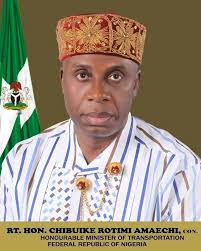
FG Has Repaid $150m Out Of $2Bn Chinese Loan, Says Amaechi

0

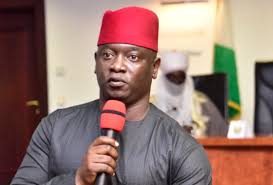
Rotimi Amaechi, the Minister of Transportation, announced on Wednesday that the Federal Government had repaid up to $150 million of a $2 billion Asian loan for rail development.

Amaechi said on Channels Television’s “Politics Today” program, which our correspondent watched.

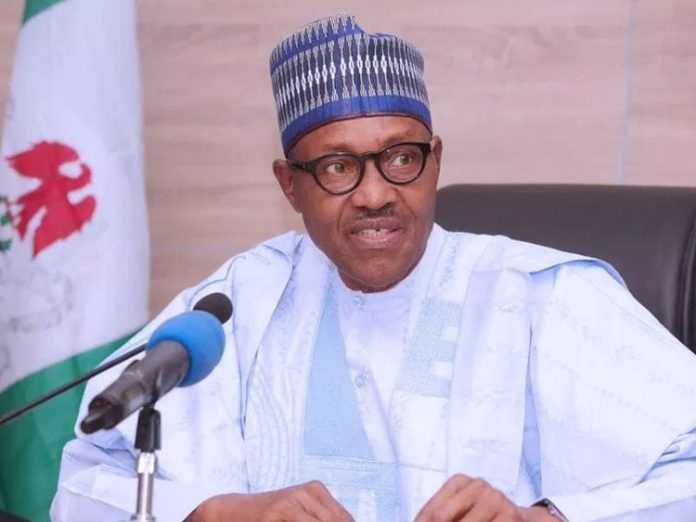
Major General Muhammadu Buhari’s (retd.) administration has been chastised for borrowing billions of dollars from the Chinese government.

The minister, however, stated on Wednesday that the Buhari administration has only borrowed money for the Kaduna-Abuja and Lagos-Ibadan railways.

The minister, however, stated on Wednesday that the Buhari administration has only borrowed money for the Kaduna-Abuja and Lagos-Ibadan railways.

When asked how much of the Chinese loans the Federal Government has repaid, Amaechi said, “The right ministry to respond to that question is the Ministry of Finance; they borrow and they repay, but I think the last I heard about it, it was between a $100 million and $150 million repayment that we have done so far in the Kaduna-Abuja region.”

According to him; “Don’t forget that we’ve not borrowed any money yet, the only money we borrowed is in the Kaduna-Abuja and Lagos-Ibadan. Lagos-Ibadan, what we borrowed is about $1.5bn though it has not matured for repayment, what has matured for repayment is the Kaduna-Abuja which is being repaid.

“Nigerians think we borrow so much but the only projects we have borrowed so far is the Kaduna-Abuja where we borrowed $500m and the Lagos-Ibadan where we borrowed $1.5bn. So, that brings the total loan exposure for us in the Ministry of Transport to about $2bn as far as railway is concerned.”

The minister also said the Chinese are still in charge of the rail services on the Abuja-Kaduna and Lagos-Ibadan lines. According to him, the Chinese drive the trains and will hand over to Nigerians once major areas of operations are ticked

Nollywood stakeholders Hail Bill To Remove Censors Board’s Enabling Laws

0

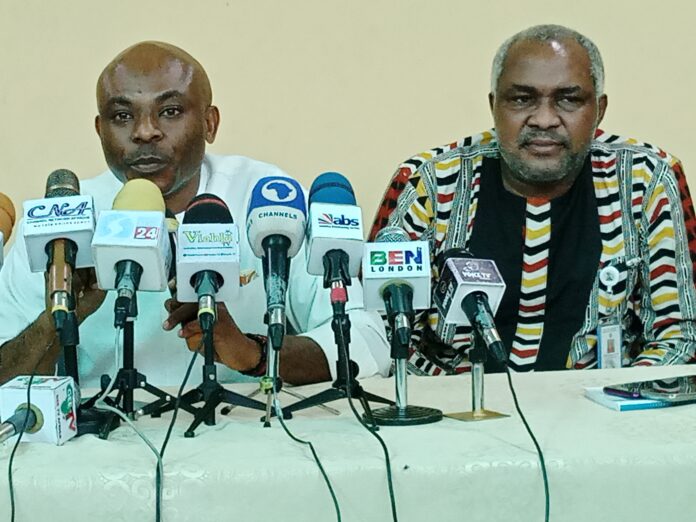
Nollywood filmmakers, actors, industry experts, and other important players have hailed the bill proposing to abolish the National Film and Video Censors Board (NFVCB).

Stakeholders gave the compliments at a roundtable on Wednesday in Abuja.

The gathering was held to obtain input on a bill that has already been scheduled for a public hearing before the National Assembly.

Board members, filmmakers, investors, and executives from several Nollywood guilds from throughout the country attended the occasion.

The bill was sponsored by Hon. Olusegun Odebunmi, a member of the Surulere/Ogo Oluwa constituency, and passed second reading in the House of Representatives in Oyo state.

The National Film and Video Censors Board Act, cap. 40 of the Federation of Nigeria’s laws of 2004, is repealed, and the National Film and Video Regulatory Commission of Nigeria Act is enacted in its place.

It wants the National Film and Video Classification Commission to be renamed National Film and Video Classification Commission.

Mr Adedayo Thomas, the NFVCB’s Executive Director/CEO, indicated in his remarks that the enabling legislation that formed the board nearly three decades ago was no longer adequate to deal with the changing realities of the digital era.

According to him, the proposed regulation will severely restrict the sale of unclassified and unauthorized films, as well as piracy, while also increasing investor returns and ensuring that the motion picture industry contributes more to GDP.

When passed, he added, the new law will make it more difficult to sell, distribute, and show unedited and other illegal local and foreign films.

His words; “Since I was appointed in 2017, I have been battling with these outdated laws which are grossly inadequate to effectively regulate a large film industry like ours.

“The present law has been existing since 1993 when the board was created, and it is some of its provisions are not stringent enough in terms of penalty and other factors.

“This bill is set to open a new and better chapter for our noble film industry, and this is in line with the present Federal Government under President Muhammadu Buhari.

“As you know, the industry provides the highest employment, and with the new law our national economy will experience a boost,” he said.

Also, Peace Anyiam-Osigwe, National President of the Association of Movie Producers and Founder, Africa Movie Academy Awards (AMAA) commended the NFVCB Chief Executive for involving relevant stakeholders in the process of repealing the Act.

She said the bill was a springboard towards a better regulatory framework for the nation’s film industry, and commended the board’s management for the roundtable.

According to her, “We are trying to make sure that the language and the style of the bill at the public hearing will be in accordance with what we as producers will want it to be.

“We are trying to deliberate on it to ensure that it falls in line with global best practices,” she said.

Meanwhile, Veteran Nollywood actor, Keppy Ekpenyong, said: “There is an accommodation in this bill for improvements that will affect every departments of movie production in the industry.”

Mr Agatha Amata, the Managing Director of Rave TV and Trend FM, said the bill was a milestone that addresses modern realities in film sales, distribution and exhibition.

She therefore urged relevant authorities to expedite actions towards ensuring the it was passed into law.

Recalled that the NFVCB, established in 1993, is a Federal Government body that regulates the films and video industry in Nigeria.

The Board is empowered by law to classify all films and videos whether imported or produced locally.

It is also the duty of the Board to register all films and video outlets across the country and to keep a register of such registered outlets.

The board also provides policy advisory support to the federal and state governments in conformance with global best practices.

Nigeria Targets 80 Percent Eradication Of Child Labour By 2025

0

The Federal Government says it is committed towards 80 percent eradication of Child Labour in Nigeria by 2025.

The Minister of Labour and Employment, Senator Chris Ngige, stated this in Abuja while briefing journalists on the 2021 commemoration of World Day against Child Labour.

Ngige said no government has made efforts to eradicate Child Labour in Nigeria like the current administration, which introduced school feeding programme to lure children back to school.

He said the Federal Government through the Ministry of Labour and Employment in collaboration with the International Labour Organisation (ILO) and other stakeholders has the primary responsibility of ensuring that children are not engaged in work that constitutes Child Labour and that young workers of legal working age are duly protected and work in safe conditions.

The Minister noted that this year’s World Day against Child Labour, with the theme “Act Now: End Child Labour,” focuses on pledges made for the 2021 International Year for the Elimination of Child Labour and the need to take immediate action to accelerate progress on the elimination of Child Labour.

He said, “It is the first International Year for the Elimination of Child Labour since the ratification of ILO’s Convention 182 on the ‘Worst Forms of Child Labour’ and it is taking place at the time when COVID-19 crisis threatened to reverse years of progress in tackling Child Labour.

“In June this year, the ILO and UNICEF will release new global estimates and trends on Child Labour under the aegis of Alliance 8.7. The report will include an assessment of how the pace of progress towards ending Child Labour is likely to be affected by COVID-19 pandemic and the unprecedented economic crisis that has accompanied it.”

Ngige maintained that the Federal Government has created the enabling environment for the fight against the menace through the ratification and adoption of key International Labour Organisation (ILO) conventions.

According to him, the ILO conventions ratified and adopted by Nigeria include the Elimination of the Worst Forms of Child Labour Convention, No.182 (1999), the Minimum Age Convention, No.138 (1970), Forced Labour Convention, No.29 (1930), UN Convention on the Right of the child, amongst others.

He said Nigeria has also approved policy documents on National Policy on Child Labour, National Plan for the Elimination of Child Labour in Nigeria and a comprehensive list of hazardous work.

“Among numerous other measures adopted include the Establishment of National Steering Committee on Child Labour (NSCCL) by the Federal Ministry of Labour and Employment, and inauguration of the State Steering Committees on Child Labour (SSCCL) with designated desk officers.”

He added that the Ministry is reviewing the Labour Act, CAP L1, LFN, 2004 and other labour laws in order to address all the gaps and barriers to effective Labour Administration and Elimination of Child Labour in Nigeria.

Earlier, the IL0 country representative, Venessa Phala lamented that 92 million children in Africa were involved in Child Labour, out of which 41 million were involved in the most hazardous one.

Phala urged national governments in Africa to deal with poverty, which is the main driver of the menace.

She assured of ILO’s support for Nigeria in tackling Child Labour, adding that they were committed to working with the Labour Minister in the quest to save Nigerian children from this social malaise.

FG Wants To License , Regulate Internet Broadcasting , Online Media

0

The Federal Government asked for the authority to regulate private broadcasting in the country via the internet and other online sources on Wednesday, claiming that the government has a responsibility to oversee broadcast material.

Alhaji Lai Mohammed, Minister of Information, said the National Assembly should amend the existing NBC law to include internet broadcast and all online media broadcast in the country, speaking at a public hearing on a bill to amend the National Broadcasting Act organized by the House Committee on Information, National Orientation, Ethics and Values.

However, industry players, like as the Institute for Media and Society, International Press Centre and Centre for Media Law and Advocacy said the inclusion of internet broadcast and online media to the category of broadcast service licenses will be injurious to the civic space, freedom of expression and media freedom.

However, Speaker of the House, Rep. Femi Gbajabiamila said when passed the contents of the bill will substantially influence the creation of media content in the country.

But the Broadcasting Organisation of Nigeria who are the major beneficiaries of the regulations of the National Broadcasting Commission was conspicuously missing at the public hearing.
The Minister was reacting to the provisions of section 2c of proposed law which listed the categories of licenses to be granted which include Cable television Services, Direct Satellite broadcast, Direct to Home, IPTV, Radio, EPG and Digital Terrestrial television; radio and television stations owned, stablish or operated by the federal, state and local governments, Broadcast signal distribution, Online broadcast, community broadcasting, public service broadcasting, among others.

He said “I want to add here specifically that internet broadcasting and all online media should be included in this because we have responsibility to monitor content, including twitter.”

Nigeria Has Practically Become A Failed State, Cardinal Okogie

0


On Wednesday, Cardinal Anthony Okogie, Emeritus Archbishop of the Catholic Archdiocese of Lagos, bemoaned the situation of the country, declaring Nigeria to be “essentially a failed state.”

He said that while the problems confronting the country did not begin under the current administration, they have worsened in the last six years. He was speaking at his 85th birthday thanksgiving mass and 50th Episcopal Ordination anniversary at the Catholic Church of Assumption in Lagos.

He described President Muhammadu Buhari’s declaration on the sixth anniversary of his administration that Nigerians were better off than when he took office as “shocking.”

He stated that the country is experiencing all indices of a failed state, lamenting the high level of insecurity.

Okogie, a former President of the Christian Association of Nigeria (CAN), lamented that every part of the country is battling insecurity and insurgency.

According to him, there has been no “articulated and coordinated response” to tackle the challenges apart from the usual “playing to the ostrich.”

He also condemned the recent ban on the micro-blogging platform, Twitter, by the Federal Government, describing it as too harsh.

He stated that what Nigeria needed was national restoration which he observed is not entirely manmade but given by God.

“It seems that Nigeria has become a killing field as impunity and terror reign from one end to the other and there seems to be no end in sight at present,” he stated.

“As they say, the matter speaks for itself as it is evident that Nigeria has practically become a failed state. A country fails when it is no longer able to protect its citizens from harm and secure their welfare.

“A country fails when, instead of being a harbor of refuge for its citizens, it turns out to be a conundrum of fire and sorrow that consumes its citizens.

“A country fails when instead of reassuring its citizens by actions and policies that the future is secure, it becomes a case of most people planning to flee the country to other climes where their governments are truly functioning. Such is practically our case today.

“Well it is true that our problems did not start under this administration, it seems to have worsened economically and politically in these past six years. Insurgency in the northeast is still ongoing and insecurity has spread nationwide in spite of the military being deployed everywhere.

“The avalanche of banditry and kidnapping that has overwhelmed parts of the northwest and central cannot be described as they stroll casually into schools and cart away tens to hundreds of students and mysteriously melt into nearby forests or bushes, the entire security apparatus often seem clueless or helpless.

“The situation in some parts of the southeast also leaves much to be desired, with the officers mobbed, soldiers butchered, innocent citizens killed, properties destroyed, people are no longer safe in the land.

“Unknown gunmen has become our favorite vocabulary in our parlance as they come in and out, operate untraceable. The case of the Fulani herdsmen has been badly handled so far. Cases of unemployment, inflation, fear, poverty and misery are shooting from the roof. The sad part is that there is no articulate coordinated response from the government to curb these downward trends apart from the usual playing the ostrich and throwing tantrums when they are criticized like the rather harsh suspension of Twitter.”

The clergyman, however, called on the government at all levels “to rise up to the situation and carry out their duties and save this nation from drowning.”

“Let them listen to the cries of the people and do the needful. The effects of the insecurity and anxiety in our lives are massive. We need to join hands together to rescue this once favored land,” he added.

ISWAP Fighters Set Military Base On Fire In Borno

0

After a violent gun battle with the troops, insurgents suspected of being members of the Islamic State of West Africa Province (ISWAP) overran a military unit in the southern portion of Borno State on Tuesday and hauled away weapons.

On Tuesday evening, the fighters stormed the military formation at Kwamdi village, Damboa local government area, riding on roughly ten utility vehicles, according to reports.

One Ammour Personal Carrier (APC) and a gun vehicle were claimed to have been burned down.

The lethal group attacked troops camp but not inhabitants, according to Hamidu Abu, a member of the Civilian Joint Task Force (JTF).

He went on to say that the base was burned and that the intruders stole rifles and ammo.

“They came at about 4 p.m. and due to the sand storms it was difficult for soldiers to repel them. They burnt down the base including APC and four other vehicles.

“I can’t ascertain if there was any causality figure,” Abu said.

A security source confirmed that the base came under attack from gunmen believed to be ISWAP fighters at about 4 pm and it lasted for about an hour and 30 minutes.

The source added that fighters seized the opportunity of the sand storm to penetrate the base.

“Our base at Kwamdi came under attack but we didn’t lose any of our personnel to the attackers, unfortunately the base suffered some damages,” the security source revealed.

There has not been any official reaction from the Nigerian military.

Insecurity :Wike Attacks Buhari, Says President Wasn’t Elected Just To Obtain Loans

0

Rivers State Governor Nyesom Wike has urged President Muhammadu Buhari to be more effective in protecting Nigerians’ lives and property.

Wike, speaking about the country’s chronic insecurity, accused Buhari of wanting to delegate his constitutional powers of guarding lives and property to governors.

On Tuesday, the governor spoke at the commissioning of the 21-kilometer Odufor-Akpoku-Umuoye Road in the state’s Etche Local Government Area.

Wike claimed that the federal administration, led by the All Progressives Congress, had no idea how to address the country’s troubling security challenges and make it safe for Nigerians.

He urged the federal government to declare that it can no longer keep its commitments to Nigerians, noting that acknowledging weakness openly when a leader fails earns respect.

“Mr President, you are the Commander-in-Chief of the Federal Republic of Nigeria’s Armed Forces.

You appoint the Inspector-General of Police, the Chiefs of Army and Naval Staffs, the Commissioner of Police, the Director of the Department of State Service, and other security officials.

“Which one do we appoint? How can people appointed by Mr President be under me?

“It is not only to borrow money for Nigeria that you’re in charge. You must also be in charge of other things including security. Who signed order 10? Is it the governors?

“Mr. President was short of calling names of those governors who run to Aso Rock when they are supposed to stay in their states to see the needs of their states and people. Mr. President should have come out openly and said, my APC governors, stop worrying me. Go back to your states and do your work. On that, I support him.

“Thank God, Mr. President knows that I am not one of those that go to visit him over one problem or the other. I, as the governor of Rivers under PDP, you’ll never find me there.”

Critics of the Federal Government have lamented over the level of borrowing by the current administration but the Buhari government has defended its action.

Reps query’s whereabouts Of $44m Recovered From Ex-NIA DG

0

The House of Representatives on Tuesday inquired about the whereabouts of $44 million collected from the Nigeria Intelligence Agency (NIA) by the Economic and Financial Crime Commission (EFCC) in 2017.

The money, however, is not in the possession of the Office of the National Security Adviser (ONSA).

Brig.-Gen. Ja’afaru Mohammed, ONSA’s Director of Finance and Administration, told a House ad hoc committee investigating the management of recovered funds and assets between 2002 and 2020 that the ONSA had nothing to do with them.

According to him : “The NIA was under investigation and the President directed that the ONSA should take charge of the place. I was sent there to take charge of the funds of the agency. I went there and counted the money in their vault and it was about $41 million.

“We kept that money. After the investigation, the President ordered that the money be returned to the agency. We have returned it to the owners, as directed by the President.”

He said funds recovered by the committee were paid directly into the Recovered Funds Account with the Central Bank of Nigeria (CBN), adding that the money could only be deposited into the account without withdrawals from it.

Members of the committee insisted that there were discrepancies in the presentation of the ONSA and the record presented to them by the Office of the Accountant General of the Federation (AGF).

They called for further clarification, especially on the inward and outward flow of funds into the account.

EFCC: How We Captured a Minister Who Illegally Purchased a $37.5 Million Property

0

Abdulrasheed Bawa, the Chairman of the Economic Financial Crimes Commission (EFCC), described how a female minister purchased a $37.5 million property from a bank and deposited $20 million in cash.

Bawa did not say whether the suspect is a current or past minister, and she did not reveal the identity of the suspect.

The anti-graft bureau chief stated resources are being laundered through the real estate sector while appearing on Sunrise Daily, a Channels Television show.

He classified the industry as one of the most corrupt in the country.

According to him , “One of the problems we have in the country is the real estate. Ninety to 100 per cent of the resources are being laundered through the real estate. Of course, they are being regulated but they are not enough in terms of how they give their returns to the Special Control Unit.

“We investigated a matter in which a bank MD marketed a property to a minister and agreed to purchase it at $37.5m. The bank then sent a vehicle to her house to evacuate $20m from her house in the first instance.

“The bank succeeded to put it in their system and paid the developer and then a lawyer set up a special purpose vehicle where the title documents were transferred into and of course, he is posing as the owner of the house.

“Without the help of the banker, the minister couldn’t have imagined collecting $20m from anyone with opportunity from the real sector; she could not have thought of where to launder the proceeds of crime.”

BREAKING: INEC Sets June 18, July 16 Next Year For Ekiti, Osun gutber polls

0

The Governorship elections in Ekiti and Osun states have been set for Saturday, June 18 and Saturday, July 16 in 2022, respectively, by the Independent National Electoral Commission (INEC).

On Wednesday, the Commission made the announcement in Abuja.

Professor Mahmood Yakubu, the Chairman of INEC, stated that the detailed Timetable and Schedule of Activities for the two elections have been posted on the Commission’s website and social media channels.

The Independent National Electoral Commission (INEC) also reported on Wednesday that current Polling Units around the country were successfully expanded from 119,974 to 176,846 full-fledged Polling Units.

As a result, 749 Polling Units were relocated from inconvenient locations to acceptable public facilities or open spaces, in accordance with “our goal of ensuring unrestricted access to Polling Units for all voters.”

“232 were removed from private properties, 145 royal palaces, 6 Mosques, 21 Churches, and 9 Shrines,” according to the report.

As a result of the expansion, the Commission announced that “there will be no voting points in Nigeria for subsequent elections, beginning with the Anambra State Governorship election on November 6, 2021.”

In his remarks at the unveiling ceremony, INEC Commissioner, Professor Mahmood Yakubu, said; “the history of creating and expanding Polling Units in Nigeria has been long and complex. Their adequacy and accessibility in terms of number and location across the country were some of the challenges that had to be addressed in the interest of credible elections.”

According to him, “before 2010, the Commission operated on a round figure of approximately 120,000 Polling Units. However, a census undertaken by the Commission before the 2011 General Election arrived at the precise figure of 119,973 Polling Units. The Commission also made efforts to relocate many Polling Units from inappropriate places such as private residences and properties, palaces of traditional rulers and places of worship to public buildings accessible to voters, polling agents, observers and the media during elections.”

He continued that, “following several unsuccessful attempts to create additional Polling Units despite the obvious pressure from increased number of registered voters, the Commission established Voting Points and Voting Point Settlements across the States of the Federation and the Federal Capital Territory (FCT) as a pragmatic response to necessity. The voting points were tied to the existing Polling Units and Voting Point Settlements.

“The number of registered voters in a Polling Unit and the Voting Point Settlement in the FCT was used to determine their Voting Points, based on the upper and lower thresholds of 500 and 750 voters respectively. These were also the limits used for the 2019 General Election. The number of new Polling Units in a State is the number of Voting Points aggregated from those Polling Units having Voting Points.

“Furthermore, it was discovered that one Polling Unit in Lagos State had been wrongly categorized as a Voting Point and the error was corrected. With this adjustment, the actual number of approved Polling Units came to 119,974. As a result, the Commission arrived at the exact figure of 56,563 Voting Points in addition to 309 Voting Point Settlements in the FCT, making a total of 56,872 Voting Points.”

He added further that, “after wide ranging consultations with stakeholders and fieldwork by our officials, the 56,872 Voting Points and Voting Point Settlements were converted and added to the existing 119,974 Polling Units. Consequently, the Commission is glad to report that 25 years since the current Polling Units were created in 1996; the hard nut is finally and successfully cracked after several unsuccessful attempts. Nigeria now has 176,846 full-fledged Polling Units.

“Similarly, after consultation with stakeholders, the Commission has successfully removed 749 Polling Units from inappropriate locations to appropriate public facilities or open spaces in line with our policy to guarantee unencumbered access to Polling Units for all voters. Of this figure, 232 were removed from private properties, 145 royal palaces, 6 Mosques, 21 Churches and 9 Shrines. The remaining 336 Polling Units were relocated for various reasons which include distance, difficult terrain, congestion, communal conflict, new settlements and general insecurity.”

The INEC boss also noted that “in view of the advanced preparations already made by the Commission, four pending bye-elections in Kaduna, Jigawa and Plateau States will be the last to be conducted using a combination of Polling Units and Voting Points. Two of these elections in Sabon Gari State Constituency in Kaduna State and Gwaram Federal Constituency in Jigawa State are holding this weekend while the Commission awaits the formal declaration of vacancies by the Honourable Speaker of the House of Representatives in respect of Lere Federal Constituency of Kaduna State and Jos North/Bassa Federal Constituency of Plateau State.

“The Resident Electoral Commissioners and staff of the Commission nationwide spared no effort to ensure the success of the exercise. Above all, this historic accomplishment would not have been possible without the support and understanding of all Nigerians.

“On behalf of the Independent National Electoral Commission, I would like to express our profound appreciation to the leadership of political parties, civil society organizations, the media, security agencies, religious leaders, socio-cultural associations, the labour unions, professional bodies, persons with disabilities, women and youth groups, students’ unions, the Federal Executive Council (FEC), the State Governors under the auspices of the National Economic Council (NEC) and the National Assembly. We also acknowledge the invaluable support of the development partners for facilitating some of the stakeholder engagements and the publication of advocacy documents.

“Looking to the near future, the Commission is preparing to conduct the remaining off-season end of tenure elections ahead of the 2023 General Election. Already, activities listed in the timetable for the Anambra State Governorship election are being implemented. So are those of the FCT Area Council election holding on 12th February, 2022.

“In the sequence of off-season elections, the Ekiti and Osun State Governorship elections are holding next year. In keeping with our policy of announcing the dates of elections in advance to enable early and effective preparations by all concerned, the Commission has approved that the Ekiti State Governorship election will hold on Saturday 18th June 2022 while the Osun State Governorship election will hold one month later on Saturday 16th July 2022. The detailed Timetable and Schedule of Activities for the two elections have been uploaded on the Commission’s website and social media platforms. We implore political parties and aspirants to ensure rancour-free primaries and thereafter conduct peaceful electioneering campaigns.”