

Tuesday, December 23, 2025
Home Blog Page 46

$1 in Family Planning Saves $9.8 — Prof. Fatusi Urges States to Fund Reproductive Health, End Maternal Deaths

0

Nigeria stands to gain nearly tenfold returns on every dollar invested in family planning while drastically reducing unsafe abortions and maternal deaths, according to Professor Adesegun Oladapo Fatusi, a foremost public health expert.

Speaking in Abuja at The Challenge Initiative (TCI) National Dissemination Meeting themed “Celebrating Milestones, Inspiring Progress: Empowering Local Leadership for a Sustainable Family Planning Future,” Prof. Fatusi President of the Academy for Health Development (AHEAD) and Immediate Past Vice-Chancellor, University of Medical Sciences, Ondo called on governments at all levels to move from “talk to tangible action.”

“For every one dollar we invest in family planning, we get back $9.8 in savings,” he said. “Investing in family planning isn’t just saving lives it’s smart economics.”

The Professor of Community Medicine at Obafemi Awolowo University, Ile-Ife, explained that evidence-based tools like the Family Planning Impact Calculator show how such investments prevent thousands of unsafe abortions and save women’s lives.

“With just one million dollars, we can prevent about 6,000 unsafe abortions and save thousands of mothers,” he said. “But without that investment, nothing will happen.”

He stated that meeting Nigeria’s family planning needs could reduce unsafe abortions by about 80 percent and maternal deaths by 61 percent outcomes that directly support the country’s Sustainable Development Goals (SDGs).

Fatusi lamented that despite repeated commitments, family planning funding in Nigeria remains grossly inadequate.

“Without funding, there is nothing,” he said. “Up to 2011, the Nigerian government never invested a single dollar in family planning commodities. Even now, the commitment is inconsistent. Many states are yet to allocate at least one percent of their health budgets to family planning.”

He revealed that as of July 2024, the funding gap for family planning commodities stood at 52 percent, with only five states showing consistent support.

“There’s more money in the states today than ever before,” he noted. “So there’s no excuse. What we need is the political will and leadership to prioritize family planning.”

According to Fatusi, family planning remains one of the most effective strategies to curb maternal mortality, teenage pregnancy, and unsafe abortion.

“It has taken us so long to get where we are that falling back would be a disaster,” he warned. “If we don’t fund commodities and sustain access, we could lose years of progress and it may take another five years to recover.”

He underscored that countries investing in family planning reap both health and economic dividends through reduced healthcare costs and improved productivity.

Fatusi stressed that achieving lasting impact requires community ownership and local accountability.

“Without community-based systems, there is no health system,” he said. “Communities must not only benefit from programs they must own them, believe in them, and hold leaders accountable.”

He cited a rural community that mobilized to demand healthcare infrastructure after a maternal death as a powerful example of grassroots leadership driving change.

“The difference between crisis and opportunity is leadership,” he said. “That’s what we need at every level courageous leaders who can turn challenges into reforms.”

While urging sustainable financing, Fatusi also called for investment in human resources and digital capacity to strengthen service delivery.

“Without a strong health workforce, we cannot make progress,” he emphasized. “We must invest in people, in technology, and in locally driven innovations. Each state must find what works best for its people there is no one-size-fits-all approach.”

He further advocated integrating family planning into Nigeria’s broader health system for sustainability.

“If you’re building a house without a strong foundation, you’re wasting your time,” he said. “The health system is the foundation. Family planning, maternal, and child health must all be part of one strong, functional system.”

Commending the Federal Ministry of Health and Social Welfare for renewed focus on maternal and reproductive health under Prof. Muhammad Ali Pate, Fatusi urged that family planning remain at the heart of national health policy.

“I’m excited that the Health Minister is pushing to reduce maternal deaths,” he said. “But if we lose sight of family planning, those gains will not be sustainable.”

He concluded with a call for stronger advocacy and data-driven decision-making.

“People can only act on what they know. That’s why advocacy is key,” he said. “Leaders must understand that family planning is not about politics it’s about saving lives and driving development.”

The TCI meeting brought together state commissioners, development partners, and reproductive health advocates who showcased milestones in promoting local ownership and sustainability of family planning programs across Nigeria.

Wike Vows Total Support for Tinubu, Says FCT Transformation Proof of President’s Vision

0

***Promises to Focus on Education, Complete Kuje Road, and Change Abuja’s Narrative

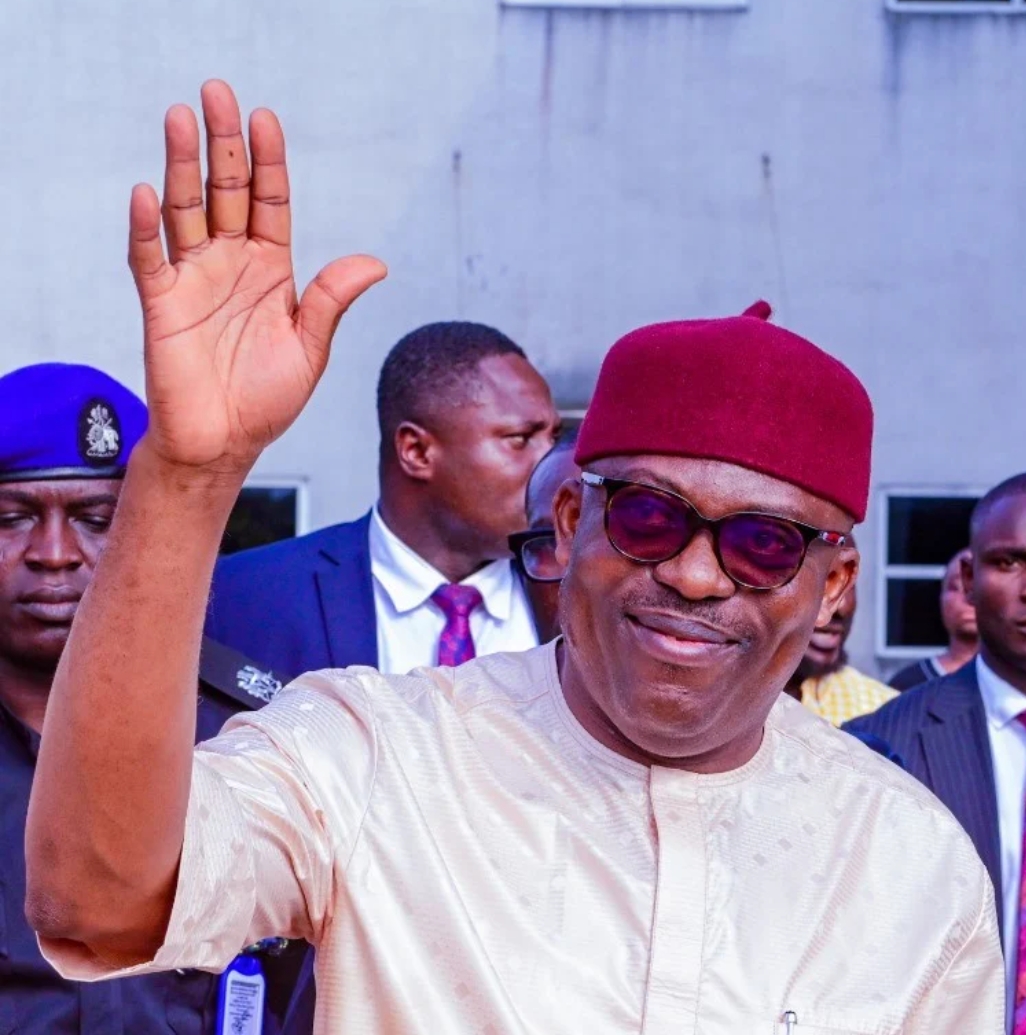
Minister of the Federal Capital Territory (FCT), Barr. Nyesom Wike, has reaffirmed his unwavering loyalty and support for President Bola Ahmed Tinubu, declaring that his administration’s visible transformation of Abuja is a direct reflection of the President’s vision for renewed hope and national development.

Wike, who spoke during a project inspection and commissioning tour, said he had no regrets supporting Tinubu and would continue to align his efforts in the FCT with the President’s developmental agenda. “For all of you who supported Mr. President, be assured I will also support you. I said it here if you are supporting Asiwaju Bola, I’m going to support you. Anywhere you are, the moment I know you are with Asiwaju, you get my support under the FCT. So, if you know you have not changed your mind, don’t change your mind, because very soon there will be a political tsunami,” he declared.

Commending contractors for their dedication to ongoing infrastructure projects, Wike particularly lauded Arab Contractors for their commitment to the completion of the Airport–Kuje road despite outstanding payments. “I thank you sincerely. I’ve seen what you are doing from Airport to Kuje. Those who knew Kuje before should go there now and see what Asiwaju’s government is doing the difference is clear. Asiwaju has changed the entire landscape of our city, not just in the city but also in the satellite towns,” he said.

The Minister also used the occasion to commend the staff of the FCT Administration for their hard work and dedication, urging them to hold their heads high. “Let me thank everybody who works with FCT. All of you have done well. Those who are not happy will never be happy in their life. Everywhere you go as an FCT staff, carry your shoulder high,” he said, adding that his focus would soon shift to revamping education across the territory. “After this round of commissioning, I will take a short rest and come back to focus on education. I will not stop there. I will change the narratives and show the opposition that FCT is working.”

He further emphasized that his commitment to delivering projects was not driven by politics but by service to the people. “What’s important is the job being done. There were no roads, no infrastructure, and our businesses were going down. We are changing that story. It’s not about the religion I belong to it’s about listening to the people and solving their problems,” Wike stated.

In her remarks, the FCT Minister of State, Dr. Mariya Mahmoud, said the project represents a commitment to providing communities with the infrastructure and comfort they have long deserved.

“As we celebrate this achievement, let us remember that every milestone is a promise kept, and every completion marks a new beginning,” she stated.

Dr. Mahmoud expressed profound gratitude to President Bola Ahmed Tinubu, noting that his Renewed Hope Agenda continues to illuminate every corner of the Federal Capital Territory. She also commended the FCT Minister, Barr. Nyesom Wike, for his exemplary leadership and unwavering commitment to delivering projects that touch lives and uplift communities across the territory.

Banigo Reaffirms Senate’s Backing as TCI, Stakeholders Chart Sustainable Future for Family Planning in Nigeria

0

Nigeria’s push toward sustainable family planning received a major boost on Tuesday as the Senate, development partners, and state health officials reaffirmed their commitment to strengthening domestic financing and institutional ownership of reproductive health programmes.

Speaking at The Challenge Initiative (TCI) National Dissemination Meeting held in Abuja with the theme “Celebrating Milestones, Inspiring Progress: Empowering Local Leadership for a Sustainable Family Planning Future,” the Chairman of the Senate Committee on Health, Senator (Dr.) Ipalibo Harry Banigo, announced that the National Assembly ensured the inclusion of ₦2 billion counterpart funding for family planning commodities in the 2024 budget.

“We made sure there was provision for counterpart contribution for family planning,” Banigo said. “Our goal is to ensure that no single girl or woman who needs this service is left behind. Family planning improves maternal and child health outcomes, and as legislators, we will continue to provide resources and oversight to ensure funds are used to touch lives across the nation.”

Banigo, who previously chaired the Rivers State Task Force on Family Healthcare, commended TCI for its state-driven model and innovative interventions that have transformed reproductive health services across Nigeria.

“Family planning allows people to determine who they are in the future,” she said. “When I chaired the Task Force, TCI played a pivotal role in expanding access and shifting community attitudes. Their ‘Makeover Project’ changed the face of primary health centres and made them more attractive to women in rural communities.”

She congratulated TCI Nigeria on launching its Project Compendium and urged states to sustain funding for family planning beyond donor support, adding that “sustainability starts with ownership.”

Welcoming participants, Dr. Taiwo Johnson, Project Director of The Challenge Initiative (TCI) Nigeria, highlighted the programme’s evolution since 2017, describing it as a model of government ownership and co-financing.

“From the pilot phase to NextGen, TCI has remained government-led, co-financed, and co-implemented,” she said. “Our focus has shifted from demonstrating effectiveness to institutionalizing interventions within state systems. Over 50 percent of TCI-supported states now have dedicated budget lines for family planning and have integrated funding into their annual operational plans.”

She emphasized that the project’s focus on data-driven decision-making and commodity security had changed how states plan and deliver family planning services.

“There’s a saying that goes, ‘no product, no service.’ That’s why we’ve worked closely with states to ensure commodity security. We are proud that data-driven decision-making is now part of the culture where we work.”

Representing the Coordinating Minister of Health and Social Welfare, Dr. Binyerem Ukaire, Director, Department of Family Health, reaffirmed the Federal Government’s commitment to family planning as a key pillar of human capital development.

“Without family planning, we cannot achieve sustainable development,” she said. “The Ministry is committed to ensuring that reproductive, maternal, newborn, and child health services are delivered effectively and equitably. The TCI model has demonstrated that government ownership and sustainability are possible when states take the lead.”

Dr. Ukaire commended TCI for aligning its work with national policies and data systems, stressing that the model had successfully moved from donor-driven to government-owned implementation.

“Even when TCI ceases to exist, the work will continue because the model promotes sustainable investment and long-term programming.

Representing the Johns Hopkins Center for Communication Programs (CCP), Andrea Anschel, global lead for TCI, described the meeting as “a celebration of resilience, innovation, and collective achievement.”

“When TCI Nigeria began, the vision was not just to do more for governments but to build systems that governments could own,” she said. “Today, that vision has become a reality. Across many states, we see reduced dependence on external funding and increased domestic financing for family planning.”

Anschel praised the Bill & Melinda Gates Foundation and Bayer AG for their consistent support and hailed Nigerian states for “writing their own success stories.”

“Sustainability is not about leavingbit’s about staying differently, standing beside government as a coach and ally. The true measure of success is not what we celebrate today but the lives transformed tomorrow.”

Regional Representative of TCI Global, Kojo Lokko, also applauded Nigeria’s exemplary performance within the 13-country TCI network that has reached more than 280 million people worldwide.

“Here in Nigeria, working in 22 states, TCI has helped increase contraceptive uptake, improve adolescent-friendly services, and strengthen leadership capacity,” Lokko said.
“However, the sustainability of this work rests with youbthe state governments. Commodity stock-outs threaten the trust we’ve built. I urge all commissioners and permanent secretaries to make commodity security a top priority.”

Adding a strong media and advocacy perspective, Mr. Akinlabi Jimoh, Executive Director of Development Communications (DevComs) Network, decried Nigeria’s recurring cycle of family planning interventions that fail to outlive donor funding.

“As far back as the 1990s, I reported on family planning and mental health issues, and by 2008, my organization’s work earned the One Africa Award from Bono and Angkor. Yet, despite all the awards and initiatives, it’s still the same old story—projects come and go, but the underlying issues remain,” he said.

Jimoh stressed that family planning affects all sectors of national life, from education to economic stability.

“When you go to your bank platform, you’re sending money to one person, then to another education group; your wife has given birth, your son is going back to schoolbthese things are all connected. Family planning affects virtually all of us,” he said.

He called for innovation and long-term, community-driven strategies.

“Perhaps at the community level, we can start doing things differently. Nigeria’s future in family planning depends on building systems that ensure continuity, ownership, and long-term impact rather than changing the dynamics of proposals with every new funding round.”

Delivering a goodwill message, Dr. Ejike Oji, Country Coordinator of Advance Family Planning (AFP), commended TCI for complementing national efforts.

“TCI has shown that it is better to cook the rice than to eat it raw,” he joked. “They have done extremely well in expanding access and are now on the pathway to sustainability.”

He emphasized collaboration and transparency, urging timely release and judicious use of family planning funds.

“Together with UNFPA and other partners, we will continue to ensure that funds allocated for family planning are released and used for their intended purpose,” he assured.

The meeting drew participants from state health ministries, commissioners, traditional rulers, civil society, and development partners all united in a shared vision of a Nigeria where family planning is locally funded, owned, and sustained.

As participants applauded the unveiling of TCI’s Compendium of Achievements, the consensus was clear: family planning is no longer a donor-driven initiative but a homegrown national priority.

“The future of family planning in Nigeria,” Senator Banigo concluded, “lies in our collective will to ensure that every woman and girl can decide freely and safely when and how to have children because that is the foundation of a healthier, more prosperous nation.”

Reps Demand Full Disclosure of FG’s Financial Bailouts to States, LGs Since 2023

0

The House of Representatives has asked the Federal Government to provide a detailed account of all financial interventions granted to states and local governments outside the regular monthly allocations from the Federation Account Allocation Committee (FAAC) since 2023.

This followed a motion raised on Tuesday by Hon. Abdussamad Dasuki, who expressed concern over the lack of transparency surrounding several bailout and support packages disbursed by the Federal Government to subnational governments in recent years.

Dasuki noted that while these interventions—ranging from budget support facilities and infrastructure development funds to ecological and emergency relief grants—were designed to stabilize state economies and spur development, there is currently no public record showing how much was disbursed, to whom, and under what terms.

“The absence of a transparent and accessible record of these financial interventions raises legitimate concerns about fiscal accountability and value for money,” he said. “As representatives of the people, it is our duty to ensure proper oversight of public funds and to guarantee that these interventions are used for their intended purposes.”

He stressed that the current opacity makes it difficult for both the legislature and citizens to track the impact of the funds or ensure they align with national development priorities.

Adopting the motion, the House directed the Minister of Finance and the Governor of the Central Bank of Nigeria (CBN) to, within two weeks, submit a detailed report outlining all such interventions since 2023—including the type, amount, date of release, recipient entities, and any conditions attached.

The House also mandated its Committees on Finance, Inter-Governmental Affairs, and Public Accounts to scrutinize the submissions, engage relevant stakeholders, and report back within four weeks for further legislative action.

Lawmakers said the move demonstrates the National Assembly’s renewed commitment to transparency, accountability, and equitable distribution of national resources, stressing that all public funds must deliver measurable benefits to Nigerians.

Reps Move to End Delta–Edo Border Tension, Probe Mosogar ‘Incursion’ into Edo Communities

0

The House of Representatives has called for urgent federal intervention to stop what it described as “unwarranted incursions” by the people of Mosogar in Delta State into neighbouring Edo communities, warning that the situation could escalate into a violent interstate conflict if not addressed.

This followed a motion of urgent national importance sponsored by Hon. (Dr.) Billy F. Osawaru, who raised alarm over the repeated attacks on Oben, Ikobi, and Obazogbe-N’Ugu communities in Orhionmwon Local Government Area of Edo State.

Presenting the motion titled “Need to Stop the Unwarranted Incursion by Mosogar Community in Delta State on Oben, Ikobi, and Obazogbe-N’Ugu Communities,” Osawaru said the affected Edo communities had lived peacefully with their Delta neighbours since the creation of both states in 1991, until recent incursions disrupted that harmony.

He alleged that the people of Mosogar, reportedly under the directive of some traditional authorities, had crossed into Edo territory and attacked residents, creating fear and tension.

“This incursion, allegedly carried out under the authority of the Ovie of Mosogar and some undisclosed chiefs, has left the affected communities in fear and could snowball into a full-blown crisis if not urgently addressed,” Osawaru stated.

The lawmaker warned that the continued invasion by hoodlums and thugs from Mosogar threatens lives, property, and the fragile peace in the border area.

Adopting the motion, the House directed its Committees on Special Duties and National Security and Intelligence to investigate the alleged incursion and report back within four weeks.

It also urged the Nigeria Police Force, Nigerian Army, and National Intelligence Agency (NIA) to take immediate steps to restore peace and ensure the protection of residents in the affected communities.

In addition, the House appealed to the Governments of Edo and Delta States to engage in dialogue and expedite resolution of the boundary dispute to forestall further conflict.

Deputy Speaker Rt. Hon. Benjamin Kalu, who presided over the session, referred the matter to the relevant committees for legislative action.

Nigeria Sitting on a Moral Volcano — Elder Oyelese Warns Tinubu, Political Leaders

0

Former Minister of Power and Steel, Elder Wole Oyelese, has warned that Nigeria is edging dangerously close to a national implosion as corruption festers, morality declines, and the masses continue to suffer in silence.

In a strongly worded statement on Tuesday, the elder statesman and chieftain of the Peoples Democratic Party (PDP) said the country is “sitting on a moral volcano,” cautioning that if leaders fail to act decisively, public anger could soon erupt.

“Each act of injustice, every looted fund, and every display of indifference to the suffering of the people adds heat to that volcano,” Oyelese declared. “When leadership loses its conscience, the governed will eventually rise—not out of disloyalty, but because they can no longer breathe.”

He decried the trend of shielding corrupt officials and quietly writing off stolen billions while millions of Nigerians go hungry. According to him, “Nothing threatens a nation more than when thieves become kings and the law becomes their protector.”

Oyelese urged President Bola Tinubu to “step on toes, no matter how large,” and confront entrenched corruption with courage, warning that Nigeria “cannot survive on selective courage.”

He also criticised state governors for what he described as the “emperorship mentality” that has overtaken public office, arguing that with huge monthly allocations, no governor has the moral right to shift blame to Abuja for poor governance.

“The people are hungry and angry, but not foolish,” he cautioned. “Their silence must not be mistaken for consent or cowardice.”

The former minister called for genuine social intervention and full local government autonomy to restore development at the grassroots. He maintained that President Tinubu must “do the needful” to ensure administrative and financial independence for local councils.

“Local Government Autonomy is not a constitutional ornament—it is the lifeline of democracy,” Oyelese said. “When councils are free to function, development breathes again, and hope returns to the villages and towns.”

He urged political leaders to recover the moral compass of leadership before it is too late, warning that “those who sit atop the mountain of privilege must remember that when the base erupts, it swallows the peak.”

“The poor do not want revenge; they want relief,” he concluded. “Let us heal this nation before frustration turns to fury. True social intervention begins with a morality-fueled conscience.”

Reps Probe $4.6bn Global Fund, USAID Health Grants Over Poor Disease Outcomes

0

The House of Representatives has launched an investigation into the management of more than $4.6 billion in international health grants received by Nigeria from the Global Fund and the United States Agency for International Development (USAID) between 2021 and 2025.

The funds, meant to fight HIV/AIDS, tuberculosis (TB), malaria, and polio, as well as strengthen health systems, have come under scrutiny following concerns about poor health outcomes despite huge donor support.

The resolution followed a motion moved on Tuesday by Hon. Amobi Godwin Ogah, who decried the lack of transparency and accountability in the handling of the funds, warning that billions of dollars in aid have failed to yield visible impact.

Ogah revealed that Nigeria received about $1.8 billion from the Global Fund between 2021 and 2024 to support disease control and implement the Resilient and Sustainable Systems for Health (RSSH) project, while USAID provided over $2.8 billion within the same period.

He noted that the U.S. government, through the President’s Emergency Plan for AIDS Relief (PEPFAR), has contributed more than $6 billion to Nigeria’s HIV/AIDS response since inception, yet the country remains among the worst-hit globally.

According to him, Nigeria recorded 51,000 AIDS-related deaths in 2023 15,000 of them children under 14 and still accounts for 26.6 percent of global malaria cases, 31 percent of malaria deaths, and ranks first in Africa for TB burden.

“These figures are troubling,” Ogah said. “Despite the billions of dollars in international aid, Nigeria continues to lose lives to preventable diseases. It is imperative that we evaluate how these funds are being utilized.”

Following debate, the House mandated its Committee on HIV/AIDS, Tuberculosis, and Malaria Control to investigate the disbursement and utilization of the funds from 2021 to 2025 and report back within four weeks.

Lawmakers stressed that effective oversight of donor funds is vital to ensuring transparency, accountability, and measurable impact in Nigeria’s health sector, especially in line with the United Nations’ Sustainable Development Goal of ending HIV, TB, and malaria by 2030.

ADC to Tinubu: Address Nigerians, Stop Politicising Alleged Coup Plot

0

The African Democratic Congress (ADC) has urged President Bola Ahmed Tinubu’s administration to openly brief Nigerians on the alleged coup plot making headlines across the country, warning against using the issue as a political tool to intimidate opposition figures.

In a statement issued on Monday by its National Publicity Secretary, Mallam Bolaji Abdullahi, the party said while it strongly condemns any attempt to subvert Nigeria’s democratic order, the government must not exploit the situation to justify surveillance, harassment, or political persecution.

“While we vehemently oppose any effort to undermine Nigeria’s constitutional order, we are equally concerned about the potential misuse of such allegations to justify political witch-hunts, suppress dissent, or manipulate public sentiment,” the statement read.

The ADC expressed concern over reports linking some detained military officers to a purported coup plot and allegations that a former southern governor is being investigated for allegedly funding the suspects.

It faulted what it called “conflicting signals” from government sources, noting that while some media reports suggested a coup investigation, the Defence Headquarters had denied confirming such claims.

“Such inconsistency raises serious fears that the coup narrative may have been politically engineered,” the party stated, accusing the government of allowing the story to fester as a distraction from pressing governance challenges.

“The government appears to be using the coup story to divert attention from national issues and to justify surveillance or clampdowns on opposition figures,” the ADC alleged.

The party urged the federal government to either “decisively quash the swirling rumours” or brief Nigerians if there is any credible threat to national security, insisting that transparency and accountability remain vital in a democracy.

Reaffirming its commitment to democratic values, the ADC warned that national security must never be weaponised for political gain.

“We support all lawful measures to defend democracy, but we reject any ploy to intimidate citizens under the guise of national security,” the statement added.

Osinbajo Leads ECOWAS Election Mission to Côte d’Ivoire

0

Former Vice President of Nigeria, Professor Yemi Osinbajo, has arrived in Abidjan, Côte d’Ivoire, to lead the ECOWAS Election Observation Mission ahead of the country’s October 25 presidential election.

According to a statement issued by ECOWAS on Tuesday, the deployment underscores the regional bloc’s commitment to democracy, peace, and stability across West Africa, in line with the 2001 Additional Protocol on Democracy and Good Governance.

Osinbajo, who served as Nigeria’s Vice President from 2015 to 2023, heads a 187-member ECOWAS team comprising 150 short-term observers, 22 youth observers, and 15 long-term experts monitoring pre-election, election-day, and post-election developments.

He is supported by Baboucarr Blaise Ismaïla Jagne, former Minister of Foreign Affairs of The Gambia, and Mahamat Saleh Annadif, former Foreign Minister of Chad. In addition, 66 African Union observers have joined the mission.

Upon arrival, Osinbajo was received by Ambassador Abdel-Fatau Musah, ECOWAS Commissioner for Political Affairs, Peace, and Security, and Fanta Cissé, the ECOWAS Resident Representative in Côte d’Ivoire.

Speaking shortly after his arrival, Osinbajo expressed optimism that the Ivorian election would be peaceful, credible, and transparent, conducted in accordance with international standards.

“It is an honour to lead this mission to such a peaceful and welcoming country. We are hopeful that the process will strengthen democracy in Côte d’Ivoire and set an example for the region,” Osinbajo said.

The presidential election, set for October 25, 2025, will see President Alassane Ouattara, 83, seeking a fourth term in office, in what is expected to be one of West Africa’s most closely watched elections.

Teenager Takes Over as Nigeria’s ‘Vice President for a Day,’ Champions Girl-Child Education

0

A Nigerian teenager, Joy Ogah, on Monday symbolically stepped into the role of Vice President Kashim Shettima for a day using the rare platform to call for stronger government action on girl-child education and protection.

The symbolic handover took place during a meeting between Vice President Shettima and a delegation from PLAN International, led by Helen Mfonobong Idiong, Director of Programme, Quality and Innovation.

From the Vice President’s chair, Ogah decried the growing number of out-of-school children in Nigeria over 10.5 million, with girls making up more than 60 percent urging policymakers to invest in safe, inclusive, and equitable education.

“We must invest in education that is safe and inclusive for every child in Nigeria. When girls are protected, peace becomes possible,” she said.
“I may be Vice President for a day, but the struggles I represent cannot end in a day. They must continue in our policies, classrooms, and budgets.”

Ogah also called for free sanitary products, access to clean water, and better nutrition in schools to ensure girls can learn with dignity.

Vice President Shettima commended Ogah’s courage and reaffirmed the Tinubu administration’s commitment to advancing girl-child education and gender equality.

“In President Bola Tinubu, you have an ally you can trust. We will continue to work with PLAN International to strengthen girl-child education and inclusive learning across the country,” Shettima assured.

The initiative, part of PLAN International’s “Girls Take Over” campaign, aims to amplify young girls’ voices in leadership and policy spaces, promoting their rights to education, equality, and empowerment.