


The Edo State Government has opened up the state’s electricity market to private investors, issuing more than 12 provisional licences for power generation and distribution under the newly operational Edo State Electricity Regulatory Commission (ESERC).
The move followed the enforcement of the Edo State Electricity Law, which has transferred greater regulatory responsibility for the power sector to the state.
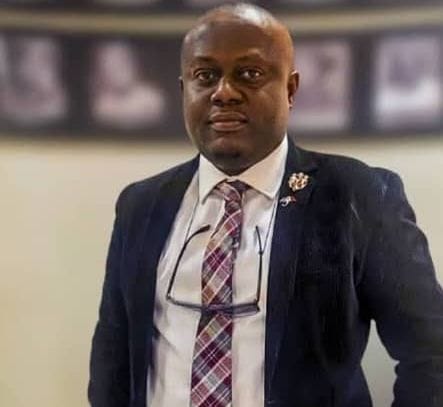
Commissioner for Power, Hon. Paul Usenbor, disclosed this in an interview, saying the new regulatory framework was designed to diversify electricity generation and improve supply across the state.
Among the companies granted provisional licences is GTL Power Ltd, which received a distribution licence to operate in Edo South Senatorial District.
Others include CCETC Ogua Energy Limited, licensed for a 100MW Independent Power Project (IPP) at Ologbo in Ikpoba-Okha Local Government Area, and Edo North Electricity Company Ltd, with a 200MW Independent Power Plant covering the six local government areas in Edo North Senatorial District.
The commissioner also listed Etin Power Limited, which received a 2.5MW mini-grid licence covering Ajakurama, Okomu, Nikorogha, Ugbolukanga, Gbelebu, Evbuwa and Iguemokhua in Orhionmwon, Ovia North East and Ovia South West Local Government Areas.
Halimatu Musa Hospital Limited was granted a licence for a 3MW mini-grid project at Okpella in Etsako East Local Government Area.
Similarly, Mid Western Bulk Electricity Trading Company Ltd was issued a generation licence to produce 50MW at Iguigho, Ovia South West Local Government Area.
Usenbor said other investors, including Victoria Power & Infrastructure Co. Ltd and Hydra Energy Solutions Ltd, were also seeking to deploy renewable energy solutions as part of efforts to achieve greater energy sufficiency in the state.
According to him, the licences marked a major shift from Edo’s previous heavy dependence on the national grid and existing distribution infrastructure to a more diversified electricity market.
He said the new system would involve multiple sources of generation, transmission, distribution, mini-grids and renewable energy.
Explaining the significance of the investments, Usenbor said the projects with capacities ranging from 100MW to 200MW represented major new generation investments for the state.
“Its significance goes beyond the 100MW generation capacity because the accompanying transmission and distribution infrastructure will allow the electricity generated to be delivered to consumers,” he said.
The commissioner added that the mini-grid projects, despite their smaller capacities, would provide decentralised electricity to communities and critical facilities that may not be adequately served by the conventional grid.
Usenbor, however, expressed concern over the continued shutdown of Ossiomo Power Company, which previously supplied electricity to government facilities, businesses, industries and communities across the state.
He said the absence of the company’s services had created significant consequences for businesses, hospitals, artisans, households and the wider economy.
“Ossiomo previously supplied electricity to residents of Edo State, SME, business owners, industries as well as several government facilities,” he said.
According to him, the state government had been forced to reconnect some government facilities to BEDC following the shutdown, while dealing with the wider impact of inadequate electricity supply.
He said reports indicated that Ossiomo had been generating about 11MW before its shutdown.
“These concerns and the impact on businesses, industries, hospitals, artisans, households and the overall economy draws the attention of the Government, who have indeed focused to proffer solutions to these issues,” he said.
Usenbor stressed that every megawatt lost had an economic cost, saying the government wanted the dispute surrounding Ossiomo resolved, its investment protected and electricity restored to consumers in accordance with the law.
He acknowledged growing frustration among residents over the electricity situation.
“Yes, we are aware of the concerns of the people, and we understand their frustration. Edo people want electricity. They do not want explanations; they want results,” he said.
The commissioner clarified that the state government did not own or operate Ossiomo Power Company and therefore could not simply take over its facilities or impose a commercial settlement on parties involved in a private dispute.
He said the government was instead facilitating dialogue, providing regulatory support, protecting lawful investments and working with security agencies and other relevant authorities to ensure compliance with the law.
Usenbor noted that there were reports in August 2026 that Ossiomo attempted to resume generation but encountered further disruption at its Ologbo facility.
On measures to restore electricity supply from the company, the commissioner said all parties must respect the rule of law, contracts and legitimate investments.
He said the government would continue to facilitate structured negotiations without taking sides, while also ensuring the security of critical electricity infrastructure.
“No community, individual or private interest should be allowed to vandalise or unlawfully take control of power infrastructure,” he stressed.
Usenbor said the state would also continue to encourage multiple sources of electricity generation as part of its long-term strategy.
He sympathised with residents over the current challenges, assuring them that the government was not complacent.
The commissioner said reliable electricity was no longer being treated merely as a social service, but as critical economic infrastructure needed to drive industrialisation, job creation, healthcare, education and improved living standards.
He said the reforms under the Governor Monday Okpebholo administration were designed to permanently change the structure of the power sector.
“We therefore ask Edo people to remain patient but also to hold us accountable. Our destination is an Edo State where reliable electricity is available to homes, businesses, industries and public institutions not as a promise, but as a dependable service,” he said.
“Governor Monday Okpebholo administration’s commitment is clear: we will continue to work until Edo has the electricity required to power its economic transformation,” he added.