


Group urges governments to use oil, gas wealth to power Africa’s industrial revolution
The Independent Petroleum Producers Group (IPPG) has challenged African leaders to stop exporting crude oil alongside poverty and begin deploying the continent’s vast hydrocarbon resources to drive industrialisation, create jobs and expand access to energy.
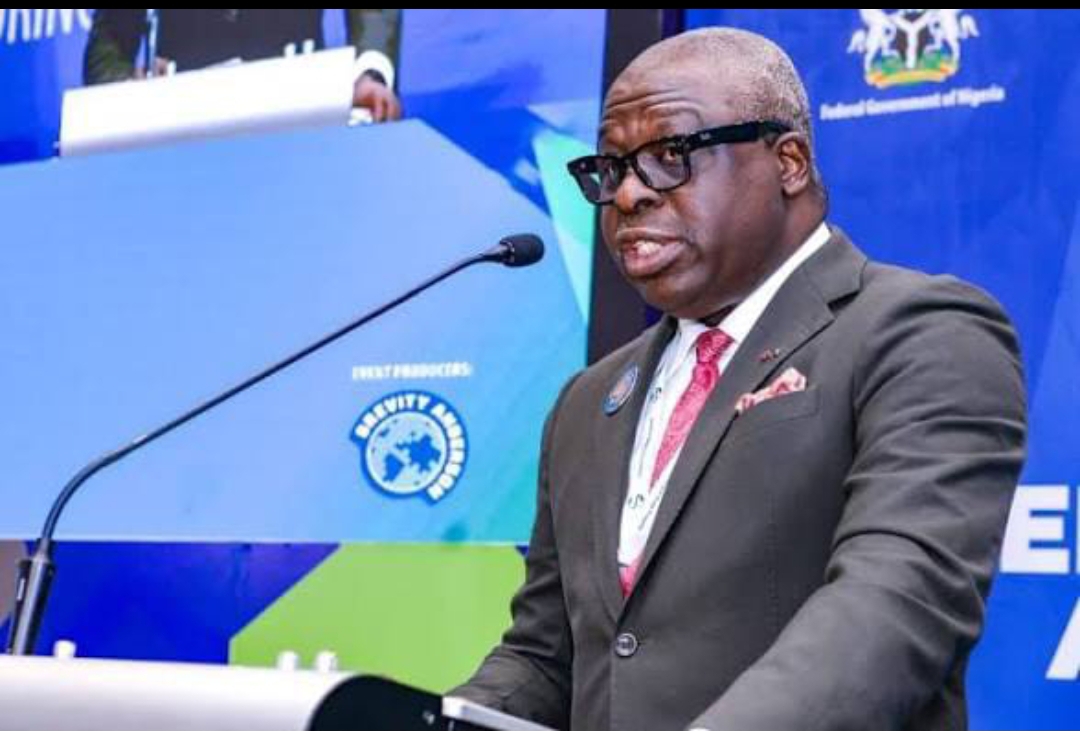
Chairman of the group, Adegbite Falade, made the call on Wednesday in Accra, Ghana, while delivering the opening keynote address at AOW: Energy 2026.
Falade said Africa holds more than 125 billion barrels of proven crude oil reserves and over 620 trillion cubic feet of proven natural gas, accounting for about nine per cent and eight per cent of global reserves, respectively.
He, however, lamented that despite the continent’s vast resource endowment, Africa accounts for only about six per cent of global exploration spending and upstream capital deployment.
“This gap between endowment and investment is the single largest opportunity before us at this conference,” he said.
Falade described Africa’s energy situation as a paradox, noting that the continent produces about eight million barrels of crude oil daily but refines barely half of it, forcing African countries to spend more than $60 billion annually importing refined petroleum products.
He said the situation was similar in the gas sector, where production reached about 262 billion cubic metres in 2025 while domestic consumption stood at about 185 billion cubic metres.
The IPPG chairman said the continent continued to battle severe energy poverty despite its enormous oil and gas resources.
“Close to 600 million Africans still live without access to electricity. Nearly a billion Africans still cook with wood and charcoal — a practice that alone claims over 800,000 lives every year, overwhelmingly women and children,” he said.
According to Falade, hydrocarbons should no longer be viewed merely as export commodities but as catalysts for industrialisation, employment and reliable energy.
He traced the growth of indigenous participation in Nigeria’s oil industry, saying local companies had moved from controlling less than three per cent of production about three decades ago to accounting for more than 50 per cent today following the divestment of assets by international oil companies.
He attributed the transformation to the Nigerian Oil and Gas Industry Content Development Act, the Petroleum Industry Act of 2021 and executive policies introduced under President Bola Tinubu’s administration.
“The question the market asked was: can they run it? The answer, increasingly, is on record,” Falade said.
“Assets that were in decline have been returned to growth. Idle wells have been re-entered. Flares have been captured and monetised.”
Falade pointed to the Dangote Refinery, which processes around 650,000 barrels of crude oil daily, as an example of the benefits of refining petroleum products within Africa.
He said local refining could reduce fuel imports, preserve foreign exchange, create jobs and strengthen the continent’s industrial base.
The IPPG chairman warned that the window for monetising Africa’s hydrocarbon resources was narrowing as international capital retreated in the name of decarbonisation.
He said more than 150 critical energy projects were stalled across the continent, despite Africa accounting for less than three per cent of global greenhouse gas emissions.
Falade maintained that Africa’s oil and gas resources must become the primary engine of the continent’s industrialisation rather than raw materials destined for refineries and power plants overseas.
He called on African countries to strengthen energy financing through the Africa Energy Bank, which has an initial capital base of $5 billion and ambitions to grow to $10 billion.
Falade said Africa needed more than $200 billion annually by 2030 to meet its energy and development needs, citing estimates by the International Energy Agency.
He also called for massive investment in gas infrastructure, noting that Europe has more than 200,000 kilometres of oil and gas pipelines.
“Reserves without pipelines are simply stranded molecules benefiting no one,” he said.
Falade urged African countries to deepen regional energy integration under the African Continental Free Trade Area, with a dedicated energy protocol to facilitate the movement of equipment, gas and petroleum products across borders.
He also advocated the deployment of gas and renewable energy together, noting that Africa holds about 60 per cent of the world’s best solar potential but currently harnesses only about one per cent.
He said training, secondments and technology transfer must be built into every new upstream partnership to strengthen African capacity.
“For a century, African hydrocarbons have been developed primarily as an export commodity. Crude out, refined product in. Gas out, energy poverty retained. That model generated revenue for treasuries. It did not build industrial economies,” he said.
“Africa’s energy must first power Africa. That means gas-to-power, gas-to-fertiliser and gas-to-industry. We are not asking for permission to pollute. We are asserting the right to develop.”
Falade urged African governments to provide fiscal stability and accelerate permit approvals, while calling on financiers to assess African energy projects based on evidence rather than perception.
He also charged indigenous producers to ensure their operations translate into tangible benefits for host communities, including access to electricity, water, jobs and improved living conditions.